The short answer
EmberGuard Chimney Sweep serves Downtown Brooklyn (ZIP 11201) with chimney sweeping, inspection, repair, liners, waterproofing, and dryer vent and air duct cleaning. The best time to schedule is before New York City's heat season starts on October 1, and the NFPA 211 standard calls for a chimney inspection once a year.
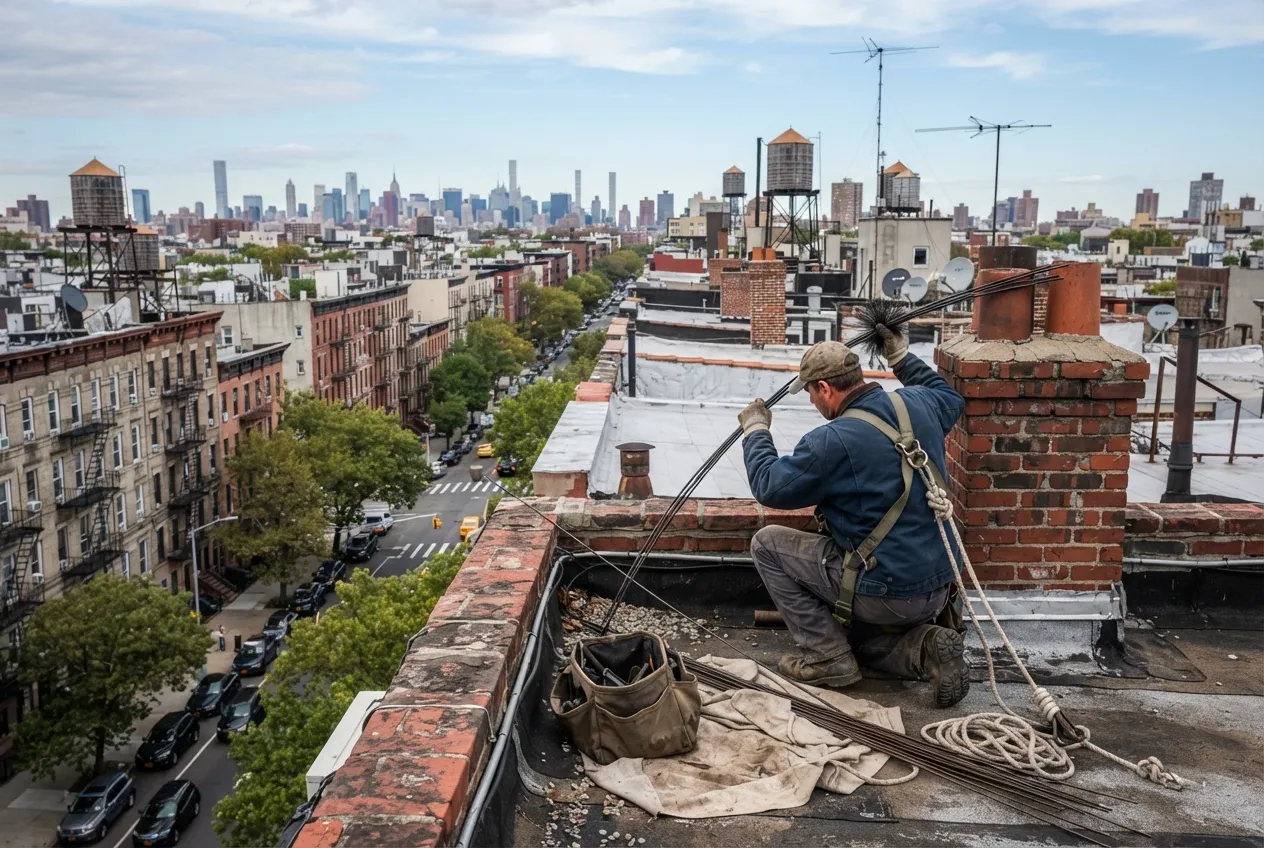
Downtown Brooklyn sits about 2 miles southeast of our Manhattan office, so EmberGuard Chimney Sweep technicians work in the 11201 ZIP code regularly. The neighborhood mixes pre-war apartment buildings, newer residential buildings, and brownstones and rowhouses, and each type has different chimney, flue and vent needs. Our certified technicians handle chimney sweeping, inspection, repair, liner installation, caps and chase covers, waterproofing, fireplace and damper repair, rebuilding, and air duct and dryer vent cleaning. This page explains what we typically look for in Downtown Brooklyn homes and how to plan your service around the heating season.
Chimneys and vents in Downtown Brooklyn housing
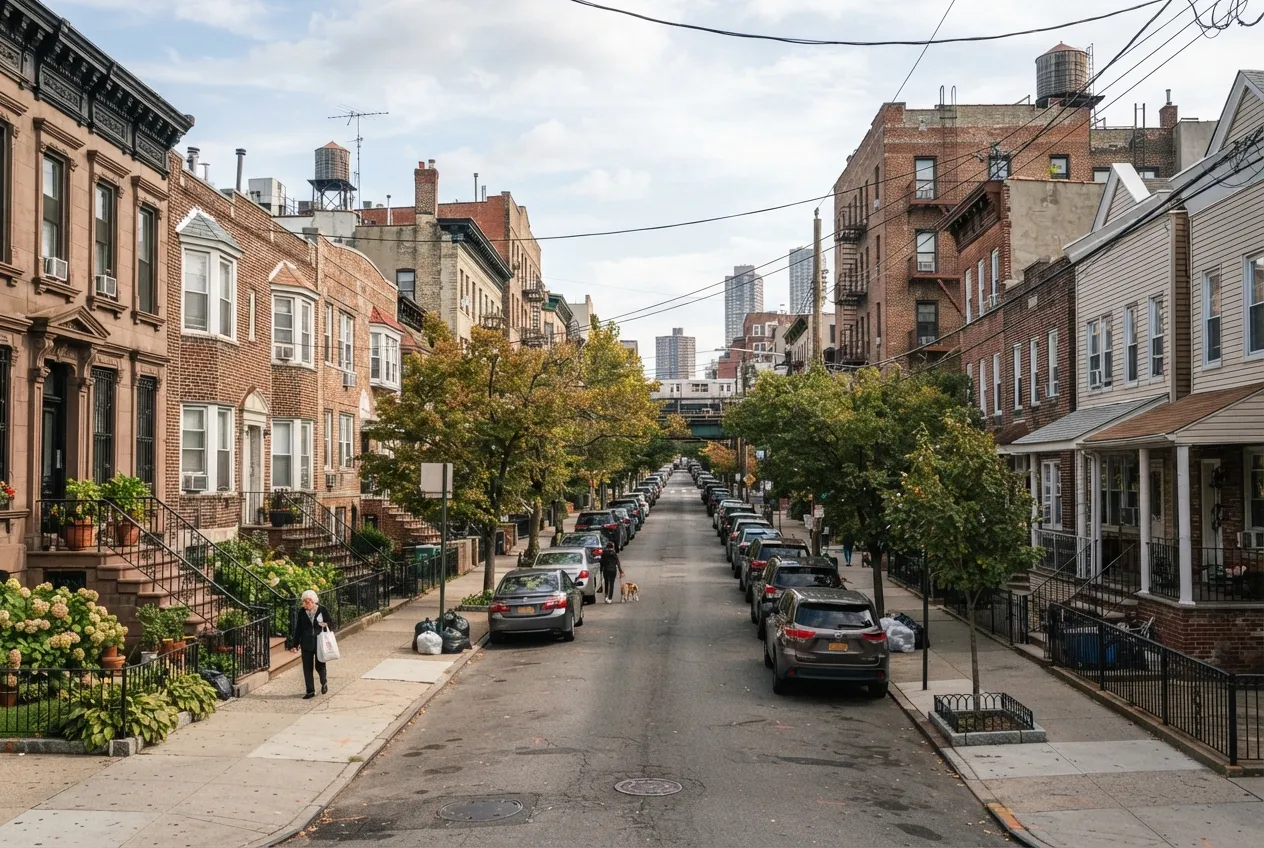
Older brownstones and rowhouses often have masonry chimneys built for coal or wood fireplaces long before they were connected to a modern boiler or furnace. Many of those fireplaces are now decorative or rarely used, but the flues still run up through the walls and still need to be sound and properly capped. Pre-war apartment buildings usually depend on a central boiler chimney, while some individual units have their own fireplaces, dryer vents and ductwork.
Because these buildings differ so much, we start each visit by confirming what every flue actually serves and how its use has changed over the years. That tells us which inspection, cleaning or repair makes sense.
- Brownstones and rowhouses: masonry flues, fireplace dampers, and chimney crowns exposed at the roofline
- Pre-war apartment buildings: boiler chimneys, flue liners, and unit-level fireplaces
- Newer residential buildings: dryer vents and duct systems serving individual apartments
Annual inspections and the heat season
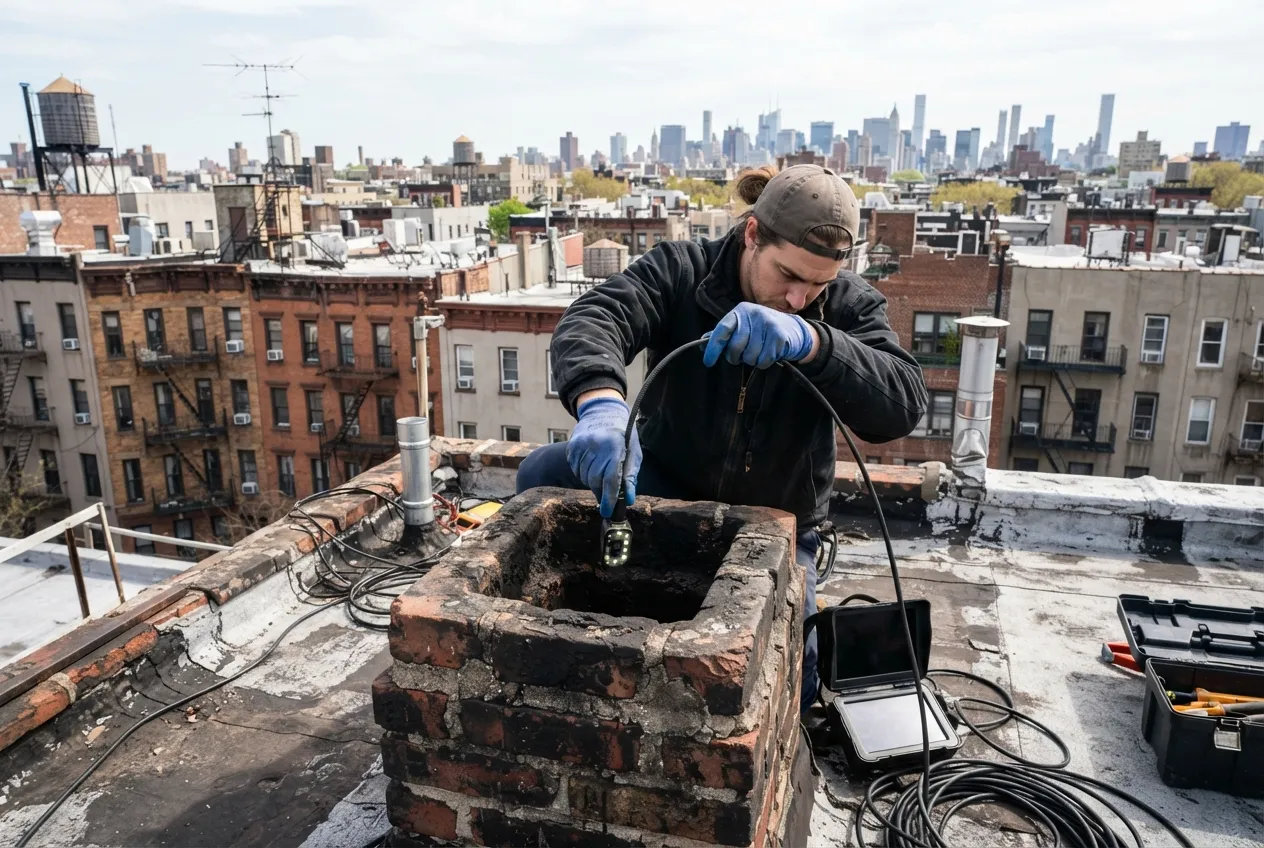
The NFPA 211 standard calls for chimneys, fireplaces and vents to be inspected once a year. A Level 1 inspection fits when nothing about the system has changed. A Level 2 inspection is used when the system changes, such as a new appliance or a switch in fuel, or when the home is sold. A Level 3 inspection is needed when a suspected hidden hazard can only be reached by opening part of the chimney or building.
New York City's heat season runs from October 1 through May 31, and building owners must keep apartments heated to the city's minimum temperatures during that time. For a boiler chimney, that leaves little room for surprise repairs in winter. Scheduling inspection and sweeping in late spring, summer or early fall gives time to fix problems before the heat has to stay on.
Oil-to-gas conversions and chimney liners
When a New York City building converts its boiler from oil to gas, the chimney has to be evaluated as part of the work. A new liner is often needed, because gas exhaust produces acidic condensate that can corrode an unlined or poorly lined masonry flue over time.
For Downtown Brooklyn building owners planning a conversion, we inspect the existing flue, report its condition, and install a liner suited to the new appliance when one is needed. Planning this before the heat season keeps the conversion from running into the months when heat is required.
Time for your annual chimney check?
Weather, masonry and water
Brooklyn winters bring repeated freeze-thaw cycles, and coastal storms can drive rain sideways into brick and mortar. Water that soaks into a chimney expands when it freezes, which cracks crowns, loosens mortar joints and can eventually push bricks out of place. Humid summers can also bring musty odors from a damp flue.
We address water at its source with chimney caps and chase covers, crown repair, and breathable waterproofing for masonry. When the damage goes beyond repointing, we can rebuild the affected section of the chimney. We also repair fireplaces and dampers so a closed damper actually seals when the fireplace is not in use.
Dryer vents and air ducts in apartments and homes
According to the U.S. Fire Administration, failure to clean is the leading factor contributing to clothes dryer fires in homes. Apartment dryer vents often run long distances with several turns before reaching an outside wall, which lets lint build up faster. Clothes taking longer to dry, or a laundry area that feels unusually hot, are signs the vent needs attention.
For air ducts, we follow the U.S. EPA's guidance: cleaning makes sense when there is substantial visible mold growth, vermin, or excessive dust and debris. The EPA notes that duct cleaning has not been shown to prevent health problems, so we will not promise that it will. We explain our process clearly and discuss any chemical treatment with you before using one.
Beyond Downtown Brooklyn, we also serve nearby Chinatown, Two Bridges, the Lower East Side, the Financial District and Tribeca.
ZIP codes we serve
- 11201