
The short answer
Dryer vent cleaning removes the lint that builds up inside the duct between your dryer and the outside, from the dryer connection to the exterior hood or roof cap. According to the U.S. Fire Administration, failure to clean is the leading factor contributing to home clothes dryer fires. Most homes benefit from a yearly check, and sooner if drying times get longer or the laundry room gets hot.
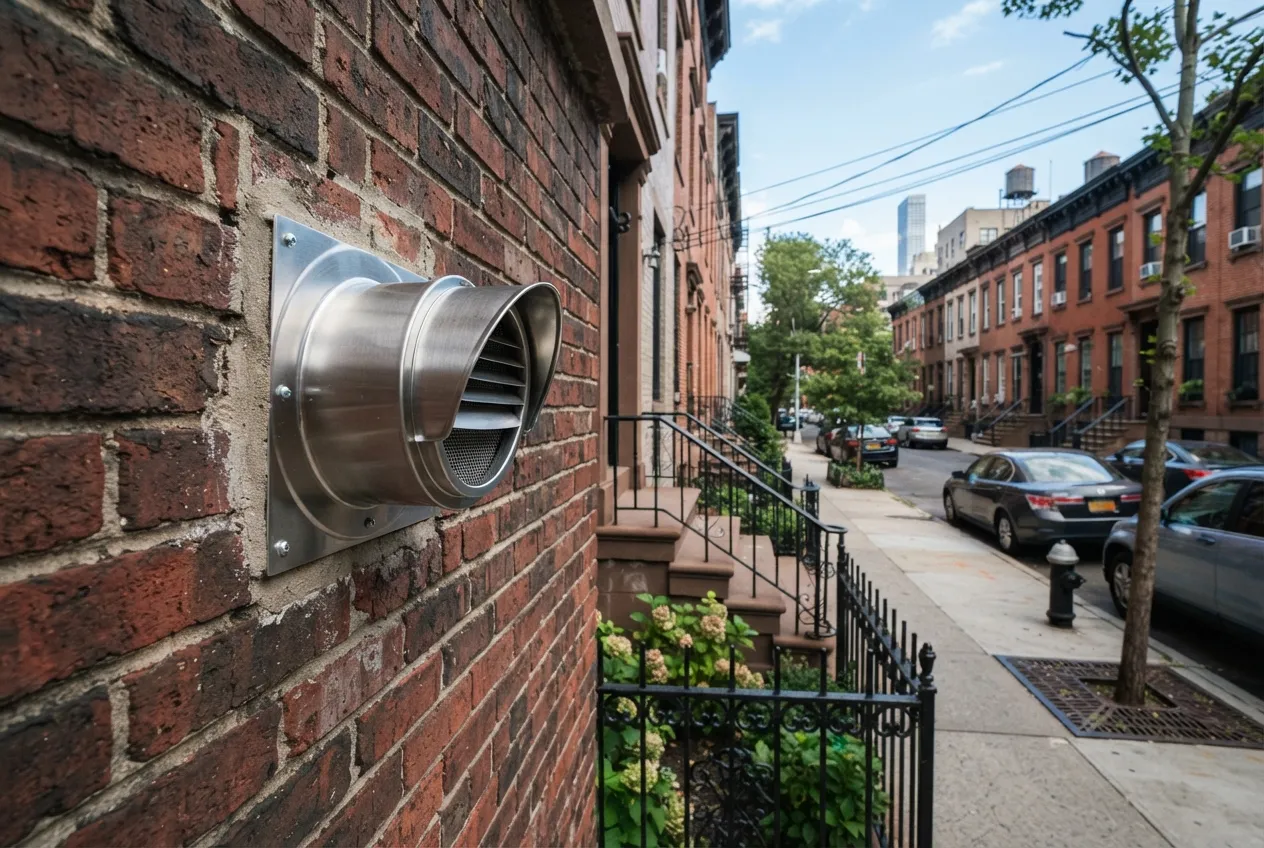
Your clothes dryer pushes hot, damp, lint-filled air through a duct to the outside. Some lint always slips past the lint trap, and it settles along the walls of that duct, collects in the bends, and packs into the exterior hood. In New York homes, dryer vents often run long distances through walls, closets, ceilings, or up to the roof, so buildup can grow for years before anyone notices. EmberGuard Chimney Sweep cleans dryer vents from the back of the dryer all the way to the outside termination for homeowners in New York City and nearby communities. We clear the lint, check the duct and the exterior opening, and show you what we found before we leave.
Signs you need it
A clogged dryer vent rarely fails all at once. It usually shows up as small changes in how the dryer runs. If you notice any of the following, it is worth having the vent checked before the next heavy laundry week.
- Clothes take two or more cycles to dry, or come out hot but still damp
- The top of the dryer or the laundry room feels much hotter than it used to
- A burning or scorched smell while the dryer is running
- Lint or dust collecting around the dryer, behind it, or around the exterior vent hood
- Weak or no airflow at the outside vent when the dryer is on
- The exterior flap stays shut or is stuck partway open
- Chirping, scratching, or fluttering near the vent, which can mean birds or rodents are nesting in it
- Moisture, condensation, or water stains near the duct or on the wall behind the dryer
What is included in a dryer vent cleaning
Every visit covers the full run of the vent, not just the first few feet you can reach from the laundry room. Here is what our certified technicians do on a standard cleaning.
- Pull the dryer out carefully and disconnect the transition duct
- Inspect and clean the transition duct, and point out foil or vinyl ducting that should be replaced
- Brush the full length of the vent run from the inside, including bends
- Clean the exterior hood, flap, or roof cap and confirm it opens freely
- Remove nests or debris from the termination when present
- Vacuum lint from the dryer's lint trap housing and the floor area behind the dryer
- Reconnect the dryer and run it to check airflow at the outside opening
- Walk you through what we found, with photos or camera footage when we use it
How our crew works in your home and on the roof
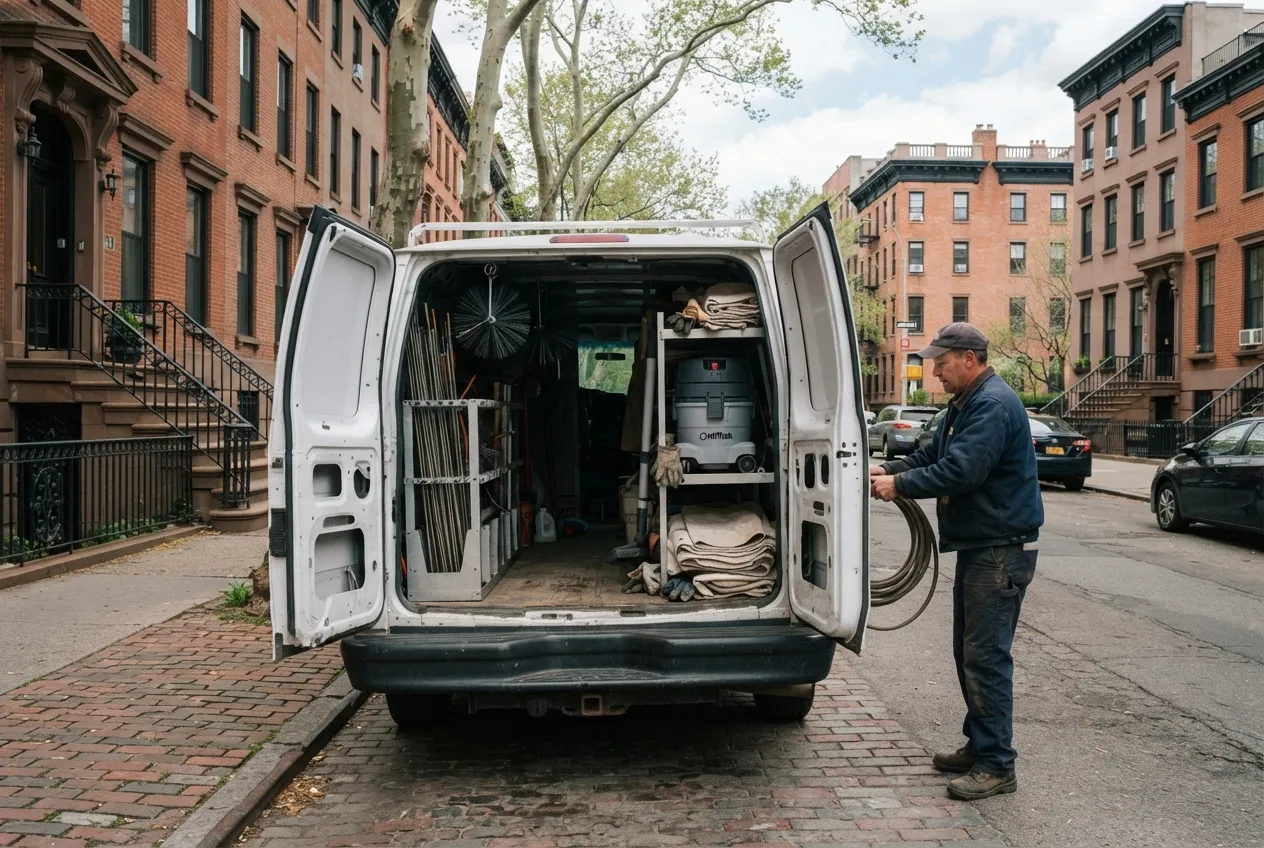
Before any brushing starts, we lay drop cloths from the entry to the laundry area and around the dryer. Lint is light and spreads easily, so we connect a HEPA-filtered vacuum to the duct to pull loosened lint and dust into the machine instead of into your home.
We clean the duct with rotary brushes on flexible rods that spin through straight runs and around elbows, scrubbing the walls of the duct as they go. On longer or more complicated runs, or when airflow is still weak after brushing, we use a camera to look inside for crushed sections, disconnected joints, or blockages that a brush alone cannot clear.
Many homes and buildings in and around New York vent dryers through the roof. When yours does, we work from the roof cap as well, clearing the termination and making sure the cap screen or damper is not trapping lint. We only go on the roof when it can be reached safely with the access available, and we let you know ahead of time if roof work is needed.
Time for your annual chimney check?
Why regular cleaning matters
According to the U.S. Fire Administration, failure to clean is the leading factor contributing to clothes dryer fires in homes. Lint is fine, dry, and burns easily, and a blocked vent traps heat inside the dryer and the duct.
A restricted vent also makes the dryer work harder. Longer cycles mean more wear on the machine and more time spent on laundry. With a gas dryer, a blocked vent can also keep combustion exhaust from leaving the home the way it should. We suggest having your vent checked about once a year, and sooner if you have a large household, run the dryer daily, or notice any of the signs above.
What affects the price
We quote each job after learning about your vent, because no two runs are the same. These are the main factors that change the scope of the work.
- Length of the vent run and the number of bends
- Where it ends: a side wall, a basement rim, or a roof, plus building height and roof access
- Whether the dryer is gas or electric
- Duct size, material, and condition, including crushed or disconnected sections
- How much lint has built up, and whether nests or other debris are present
- Whether a camera inspection is needed
- Repairs such as replacing a transition duct or a damaged exterior hood or roof cap
How a visit works
When you schedule, we ask where the dryer sits, where the vent exits, and whether it is gas or electric. That helps us bring the right rods, brushes, and ladders. Please clear a path to the laundry area and, if possible, a few feet of space around the dryer.
On arrival, the technician looks over the setup, explains the plan, and confirms the scope with you before starting. After cleaning, we reconnect the dryer, test airflow at the outside opening, and clean up the work area. You get a plain explanation of what we found and any recommended repairs. We never start additional work without your approval.