The short answer
You need a chimney rebuild when the masonry is loose, leaning or crumbling beyond what repointing can fix. We inspect first, take damaged sections down to solid brick, and rebuild them with new brick, mortar, crown and flashing. We inspect the flue again before you use the fireplace.
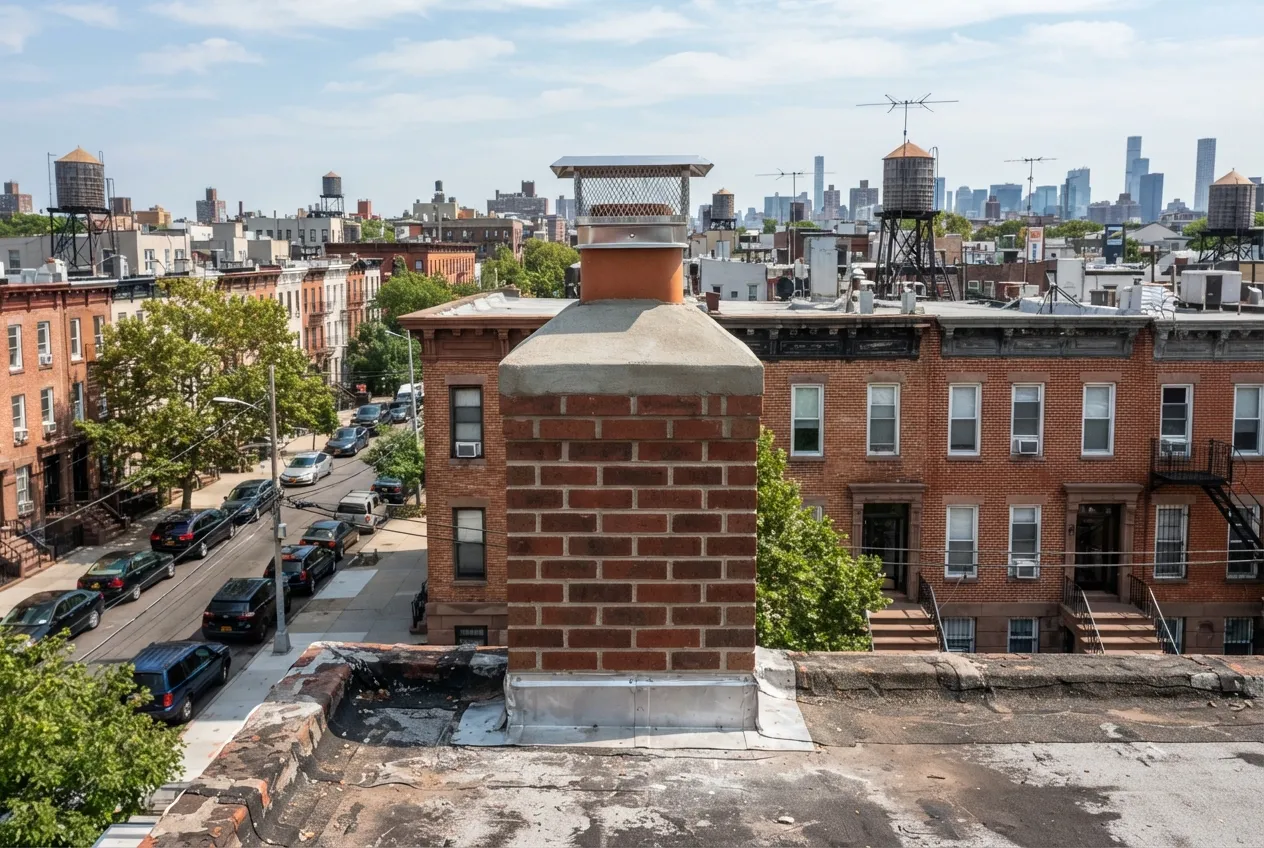
When bricks loosen, mortar washes out and the crown cracks, patching eventually stops working. Chimney rebuilding takes the damaged masonry down to sound brick and builds it back with new brick, mortar, a new crown and flashing, so the chimney stands straight and sheds water again. EmberGuard Chimney Sweep's certified technicians rebuild chimneys on houses, brownstones and small buildings in New York and nearby cities. This page covers the signs that point to a rebuild, what the work includes, how we protect your home, the standard we follow, what changes the cost, and how a visit works.
Signs you need it
Most rebuilds start with something small that gets worse over a few winters. Water soaks into brick and mortar, freezes, expands and pushes the masonry apart. Each freeze-thaw cycle widens the damage, and the top of the chimney, which takes the most weather, usually goes first. If you notice any of the following, have the chimney inspected before your next fire.
- Brick flakes, sand or bits of mortar in the firebox or on the smoke shelf
- White, chalky staining on the brick, which means water is moving through the masonry
- Water in the firebox, or damp stains on the ceiling or wall next to the chimney
- Bricks that are cracked, crumbling or shedding their faces
- Mortar joints that are sandy, recessed or missing
- A chimney that leans, pulls away from the house, or has loose bricks near the top
- A cracked or broken crown, or a cap that has come loose
- Poor draft or smoke spilling into the room, which can mean fallen masonry is partly blocking the flue
What's included
Every rebuild is sized to the damage. Some chimneys only need the top few courses above the roofline rebuilt. Others need everything taken down to the roof deck or lower. We write down the scope before work starts, and it typically includes:
- A full chimney inspection, including a camera look down the flue
- Removal of loose and damaged brick down to sound masonry
- New brick matched to the existing color and size as closely as available material allows
- Mortar mixed to suit the age and hardness of the existing brick
- A new crown, sloped to shed water away from the flue
- New or reset flashing where the chimney meets the roof
- A chimney cap with screening to keep out rain, animals and debris
- Flue tile repair or a new liner when the existing flue is damaged
- Sweeping the flue and clearing rebuild debris from the smoke chamber and firebox
- A final inspection, with photos of the finished work
How the crew works inside your home and on the roof
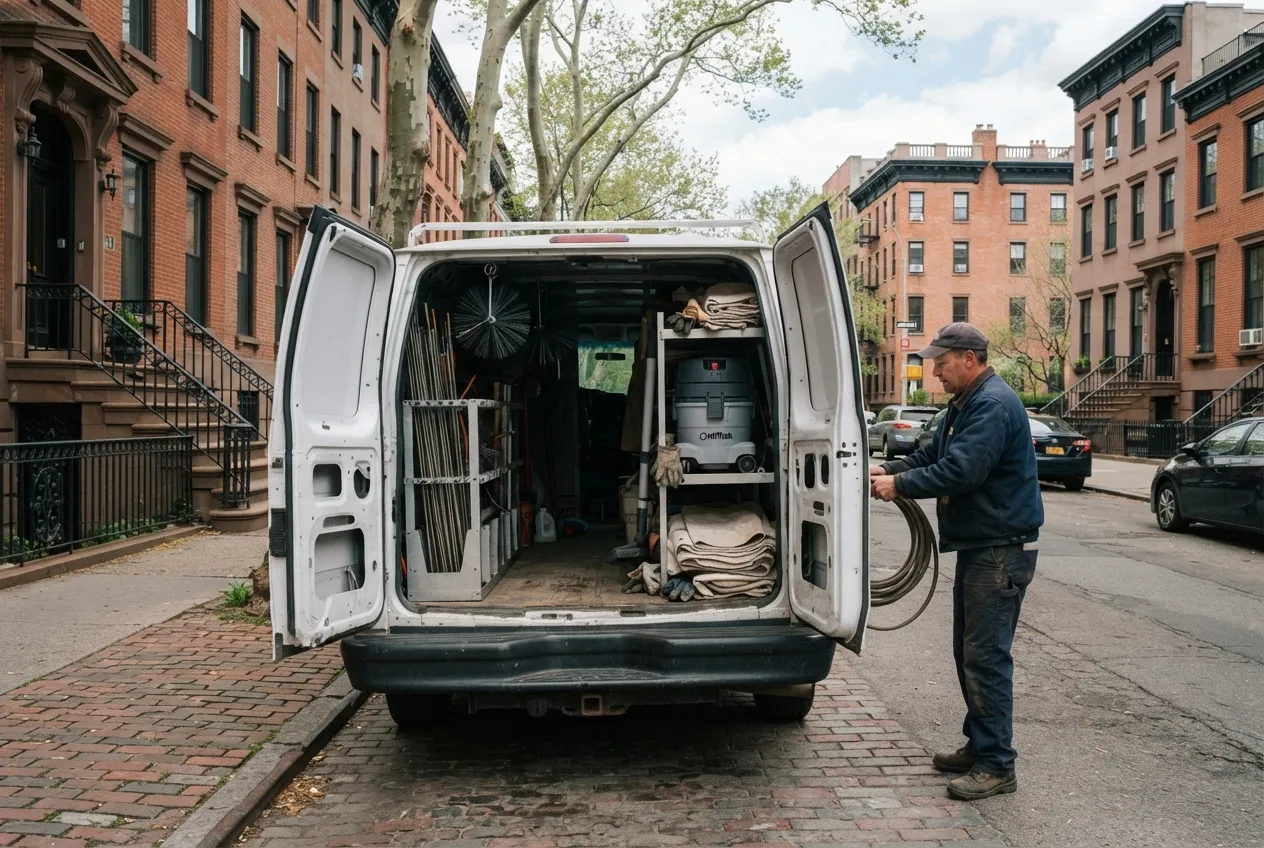
Inside, we lay drop cloths from the entry to the fireplace and cover nearby furniture. We seal the fireplace opening while work happens overhead, so falling mortar and dust stay in the firebox. HEPA vacuums run while we sweep, which keeps soot and brick dust out of the room. We clean the flue with rotary brushes. Then we run a camera up the chimney to check the tiles and joints before the rebuild, and again after it.
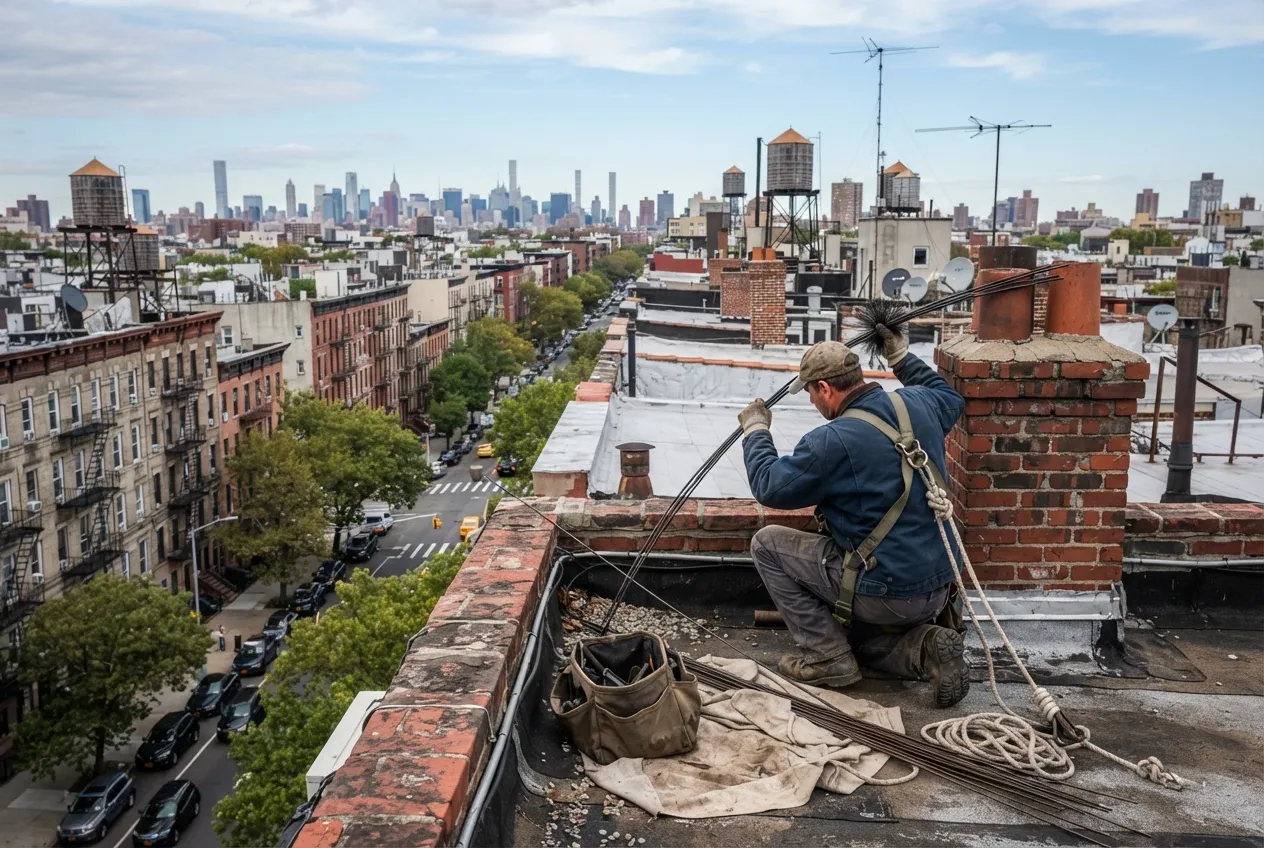
On the roof, the crew sets up safe access and protects the roofing around the chimney. We take old brick down by hand, one course at a time, and lower it instead of tossing it. That protects the roof, gutters and the yard or sidewalk below. We bag debris and haul it away. New brick goes up level and plumb. We finish the crown and flashing before the job is called done, so the chimney isn't left open to rain.
If weather stops work partway through, we cover and secure the open chimney until the crew returns.
Time for your annual chimney check?
The standard we follow
The NFPA 211 standard calls for chimneys, fireplaces and vents to be inspected once a year. Chimney professionals use three inspection levels. Level 1 is for when nothing has changed. Level 2 is for when the system changes, such as a new appliance or a switch of fuel, or when the home is sold. Level 3 is for when a hidden hazard can only be reached by opening part of the chimney or building.
A rebuild usually starts with a Level 2 inspection, because we need the camera to see inside the flue. If damage is hidden behind a wall or inside the chimney structure, a Level 3 inspection may be needed. After the rebuild, the chimney goes back on a yearly inspection schedule.
If you're converting from oil to gas, plan both jobs together. When a New York City building converts its boiler from oil to gas, the chimney has to be evaluated as part of the work. A new liner is often needed, because gas exhaust produces acidic condensate that can corrode a masonry flue. Doing the liner and the rebuild together means the chimney only gets opened once.
What affects the price
We give you a written estimate after the inspection. The main things that change the cost are:
- Chimney height and how hard it is to reach the roof safely
- How much of the chimney has to come down and be rebuilt
- The fuel type the chimney serves: wood, gas or oil
- Flue size, and the condition of the existing tiles or liner
- How much creosote, soot or fallen debris has to be cleared first
- Whether a camera inspection, liner or other repair is needed
- Whether the brick has to be matched to an older or unusual style
How a visit works
First we schedule an inspection. A technician looks at the chimney from the roof and from inside, sweeps if needed, and runs the camera. You get photos and a plain explanation of what we found: whether repointing or a partial rebuild will do, or whether more of the chimney has to come down. If a rebuild makes sense, we send a written scope and estimate.
Once you approve the work, we set a start date. Masonry needs dry weather, so a rebuild can take a few days and may shift with the forecast. If you own a building with tenants, keep in mind that New York City's heat season runs from October 1 through May 31. During that time, apartments must stay heated to the city's minimum temperatures, so plan boiler-chimney work with that in mind.
At the end, we clean up inside and out, inspect the finished chimney, and walk you through the photos. We also tell you when to put the next yearly inspection on the calendar.