The short answer
Chimney repair fixes the parts that keep water out and move exhaust safely: mortar, bricks, crown, cap, flashing, damper and flue liner. If you notice water in the firebox, white staining, brick flakes, smoke smells or poor draft, stop using the fireplace or appliance and have the chimney inspected before the next fire.
A chimney takes a beating in New York. Freeze-thaw cycles crack mortar, rain works into gaps around the crown and flashing, and years of exhaust wear down the flue lining. Small problems usually stay quiet until they show up as a damp firebox, a stained wall or a smoky room. EmberGuard Chimney Sweep repairs masonry chimneys, flues, crowns, caps, dampers and flashing for homeowners in New York and nearby cities. Our certified technicians look for the cause, not just the symptom. They explain what they found and what the repair involves before any work begins. The goal is a chimney that keeps water out, vents safely and holds up through the next heating season.
Signs you need chimney repair
Most chimney damage starts small and on the outside, where it's hard to see. These are the signs homeowners usually notice first. If you see any of them, stop using the fireplace or stove until the chimney has been checked.
- Water in the firebox, or damp spots on the ceiling or wall next to the chimney, especially after rain or snowmelt
- White, chalky staining on the brick, which means water is moving through the masonry
- Brick flakes, crumbled mortar or pieces of flue tile collecting in the firebox
- A smoky or tar-like creosote smell in the room, often stronger in humid weather
- Poor draft: smoke rolling into the room, fires that are hard to start, or a stove that won't burn cleanly
- Scratching, chirping or nesting noises in the flue, which usually point to a missing or damaged chimney cap
- A rusted damper that won't open or close fully
- Cracked or leaning masonry, or gaps where the chimney meets the roof
What our chimney repair service includes
Every repair job starts with an inspection so the work matches the actual problem. Depending on what we find, a repair visit can include any of the following.
Before we start, we walk you through the findings with photos or camera footage. We also explain which items need attention now and which can wait.
- Inspection of the chimney exterior, crown, cap, flashing, firebox, damper and flue
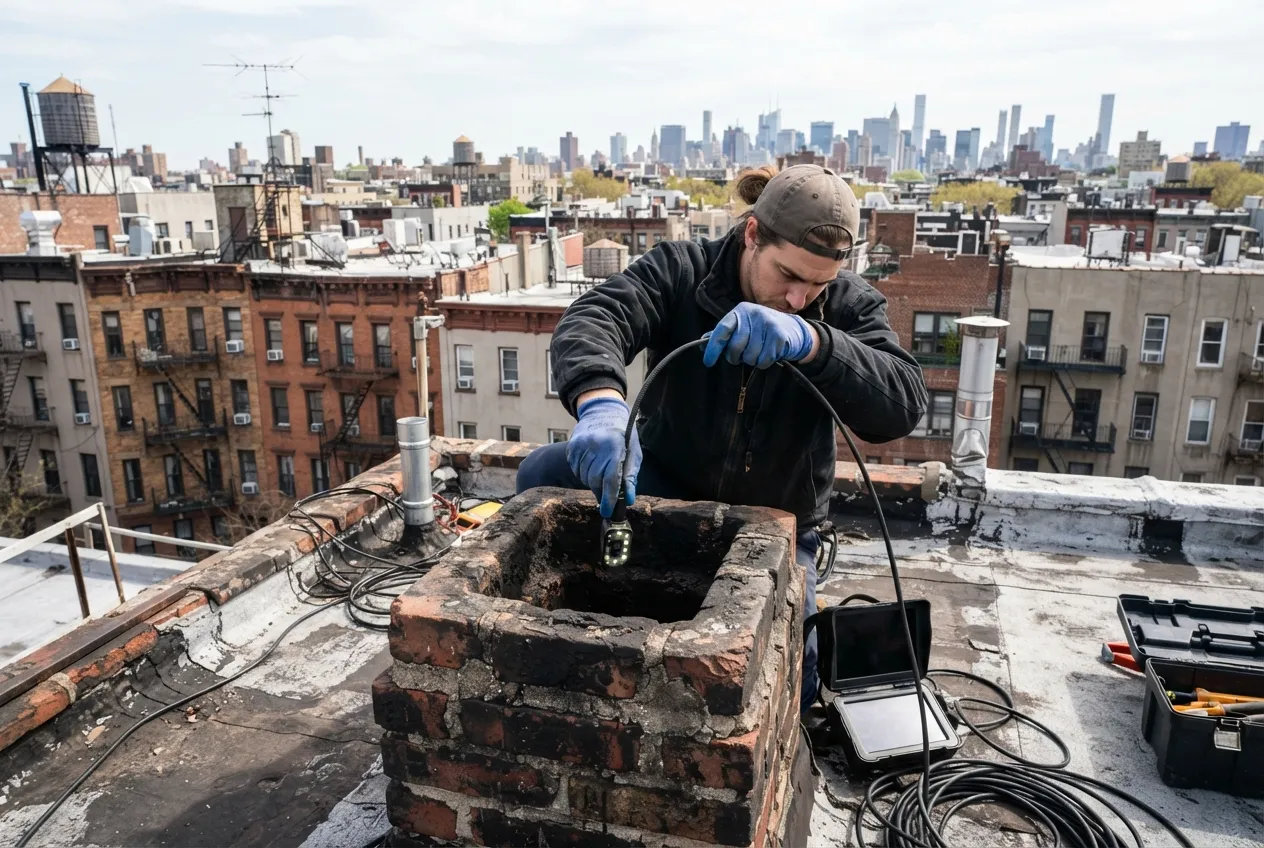
- Camera inspection of the flue when the lining can't be seen from the top or bottom
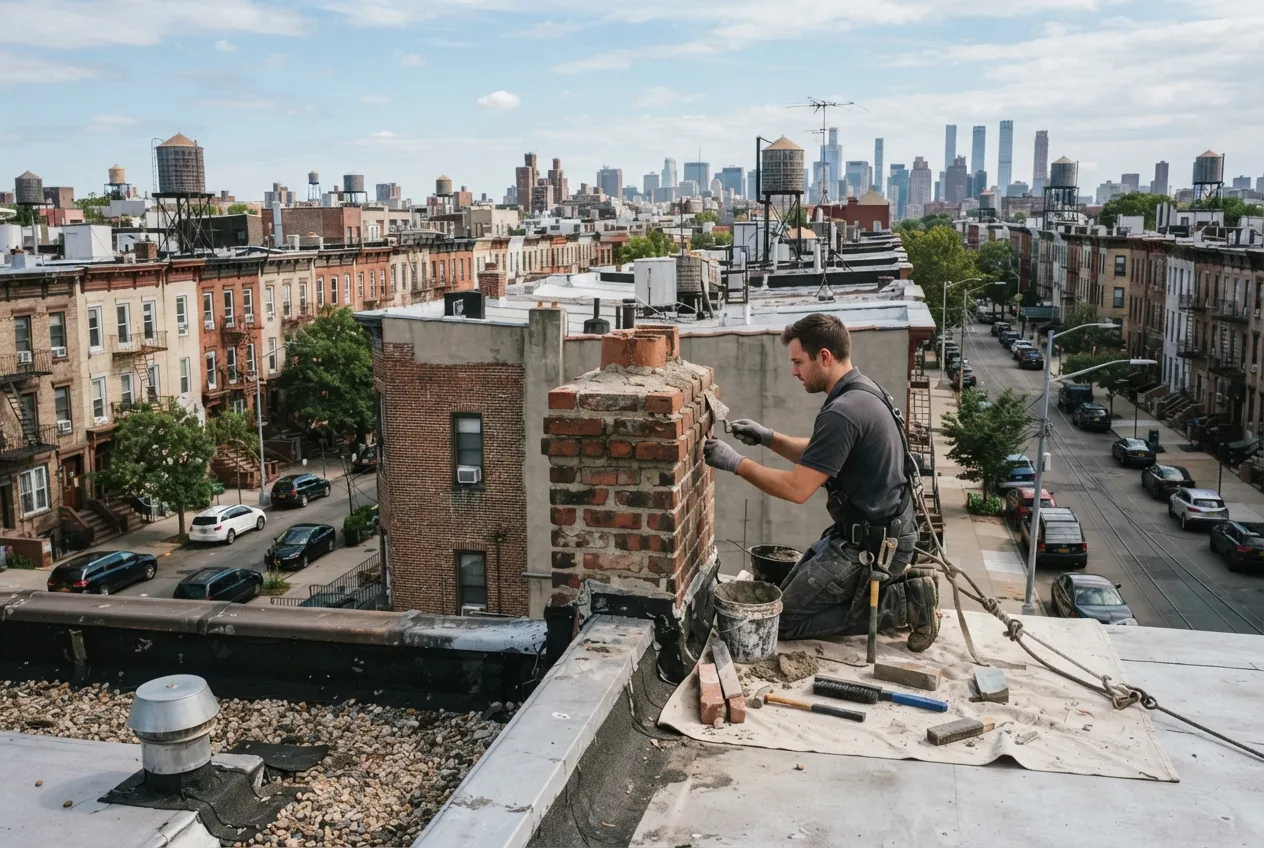
- Repointing: removing failed mortar and replacing it with new mortar matched to the existing joints
- Replacing cracked, spalled or loose bricks
- Repairing or rebuilding the chimney crown and sealing cracks
- Installing or replacing a screened chimney cap to keep out rain and animals
- Resealing or replacing flashing where the chimney meets the roof
- Repairing or replacing the damper
- Repairing firebox brick and joints
- Relining the flue when the original lining is cracked or the appliance has changed
- Cleanup and a written summary of the work done
How our crew works inside your home and on the roof
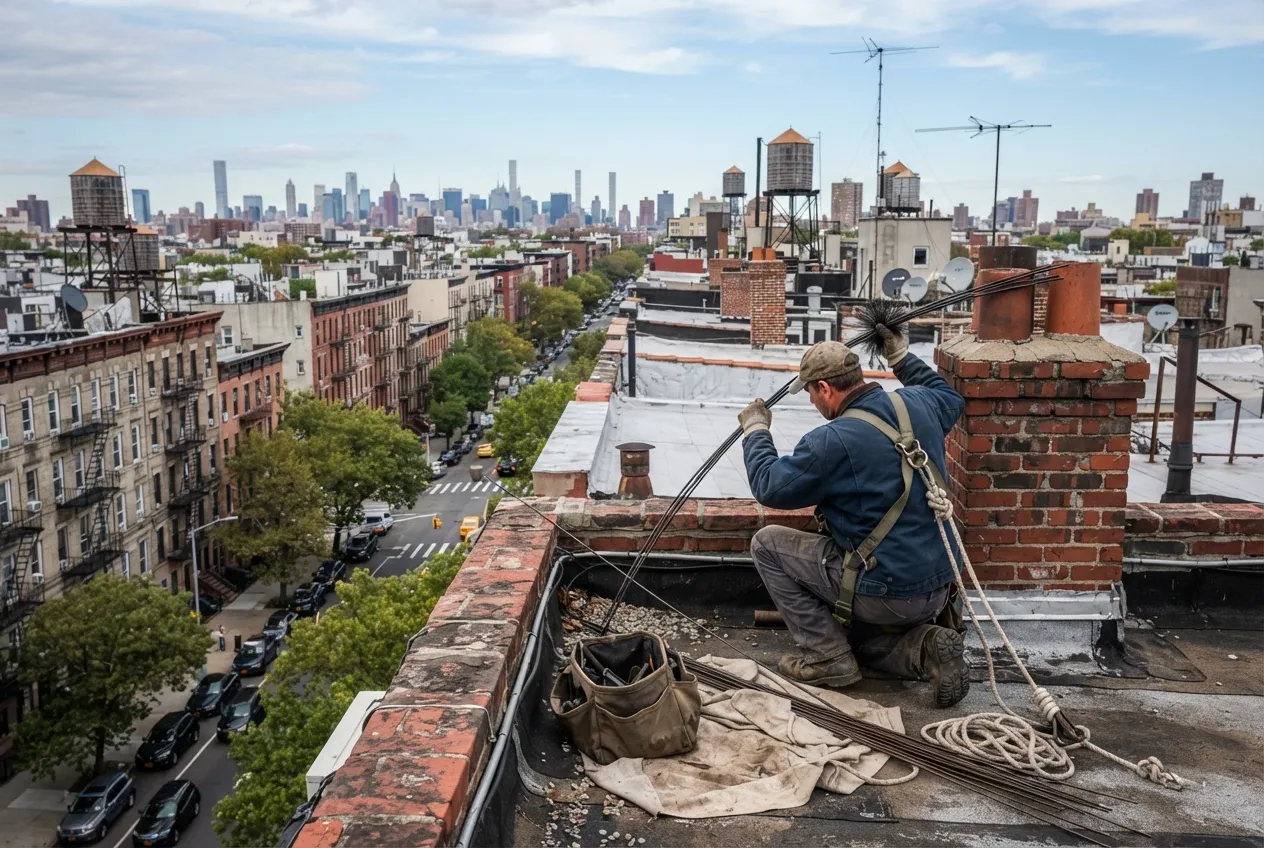
Inside, the crew lays drop cloths from the door to the fireplace and covers the hearth and nearby furniture. We seal the fireplace opening and run HEPA vacuums during any work that disturbs soot or debris, so dust stays out of your room. If the flue needs cleaning before repairs, we use rotary brushes sized to the flue. Then we run a camera through it to check the liner, joints and smoke chamber.
On the roof, technicians work only when weather and access make it safe. We protect the roofing around the chimney, keep mortar and debris contained, and haul away old materials. For rowhouses and homes with tight or shared roof access, we plan the approach ahead of time.
When we finish, we vacuum the work area, remove the drop cloths, and check the damper and draft with you.
Time for your annual chimney check?
The standard we follow
Our work follows NFPA 211, the national standard for chimneys, fireplaces and vents. It calls for these systems to be inspected once a year.
Chimney professionals use three inspection levels. Level 1 is for chimneys where nothing about the system has changed. Level 2 is called for when the system changes, such as a new appliance or a switch of fuel, or when the home is sold. Level 3 is needed when a hidden hazard can only be reached by opening part of the chimney or building. We recommend the level that fits your situation and explain why.
If a New York City building is converting its boiler from oil to gas, the chimney has to be evaluated as part of that work. A new liner is often needed, because gas exhaust produces acidic condensate that can corrode a masonry flue. We can inspect the flue and reline it as part of the conversion.
New York City's heat season runs from October 1 through May 31. Late spring and summer are the easiest times to schedule repairs that take a heating system out of service.
What affects the price
Every chimney is different, so we price repairs after the inspection. These are the main factors.
You get a written estimate before repair work begins. If we find something new during the job, we stop and talk with you before doing anything extra.
- Chimney height and roof access, including roof pitch and number of stories
- Fuel type, such as wood, gas or oil, which affects which liners and dampers are suitable
- Flue size, shape and condition, and whether a new liner is needed
- How much creosote or soot buildup has to be removed before repairs can start
- Whether a camera inspection or a Level 2 or Level 3 inspection is required
- The extent of masonry, crown or flashing damage and the materials needed to match it
How a visit works
When you contact us, we ask what you've noticed, what the chimney serves (a fireplace, stove, furnace or boiler) and how the roof is reached. That helps us send the right crew and equipment.
On the first visit, a certified technician inspects the chimney, takes photos or camera footage, and explains what's wrong and what it will take to fix it. Simple repairs, such as replacing a cap or fixing a damper, can often be done the same day. Larger jobs like rebuilding a crown, repointing or relining are scheduled separately.
After the work, we clean up, show you before-and-after photos, and leave a written summary. That gives you a record for your next annual inspection or a future home sale.
Chimney Repair by city
- Chimney Repair in SoHoLocal service & repairs
- Chimney Repair in Little ItalyLocal service & repairs
- Chimney Repair in Hudson SquareLocal service & repairs
- Chimney Repair in TribecaLocal service & repairs
- Chimney Repair in Civic CenterLocal service & repairs
- Chimney Repair in Greenwich VillageLocal service & repairs
- Chimney Repair in ChinatownLocal service & repairs
- Chimney Repair in West VillageLocal service & repairs
- Chimney Repair in Two BridgesLocal service & repairs
- Chimney Repair in Lower East SideLocal service & repairs
- Chimney Repair in East VillageLocal service & repairs
- Chimney Repair in Financial DistrictLocal service & repairs