The short answer
Fireplace and damper repair fixes the parts that control smoke and heat: the damper, firebrick, mortar joints, smoke chamber and hearth. If your fireplace smokes, smells, leaks or won't close off, a certified technician can inspect it, show you the problem, and repair or replace the failing parts.
A fireplace that smokes into the room, a damper that won't close, or firebrick that crumbles when you sweep out the ashes are all signs that something in the firebox or throat of the chimney has worn out. EmberGuard Chimney Sweep repairs fireplaces and dampers for homeowners in New York City and nearby cities, from wood-burning fireplaces in brownstones to gas log sets in single-family homes. Our certified technicians find the cause, show you what they see, and fix the parts that keep smoke, heat and weather where they belong.
Signs you need it
Most fireplace problems show up slowly. Homeowners usually notice one or more of these first:
One sign doesn't always mean a big repair. A stuck damper may only need cleaning and adjustment, not replacement. The visit is how you find out which it is.
- A smoke or creosote smell in the room, especially on humid days or when the heat or a kitchen fan is running
- Poor draft: smoke rolls out of the opening instead of rising, or the fire is hard to keep going
- Debris, mortar sand or flakes of brick collecting in the firebox
- White staining on the brick inside or around the fireplace, which means moisture is moving through the masonry
- Water in the firebox or rust on the damper after rain
- Scratching, chirping or rustling above the damper, often a sign an animal got in through an uncapped flue
- A damper handle that is stuck or loose, or won't stay latched, or cold air you can feel when the fireplace is off
What's included
Every visit starts with an inspection. Depending on what we find, the repair can include:
- A visual inspection of the firebox, damper, smoke chamber and visible flue
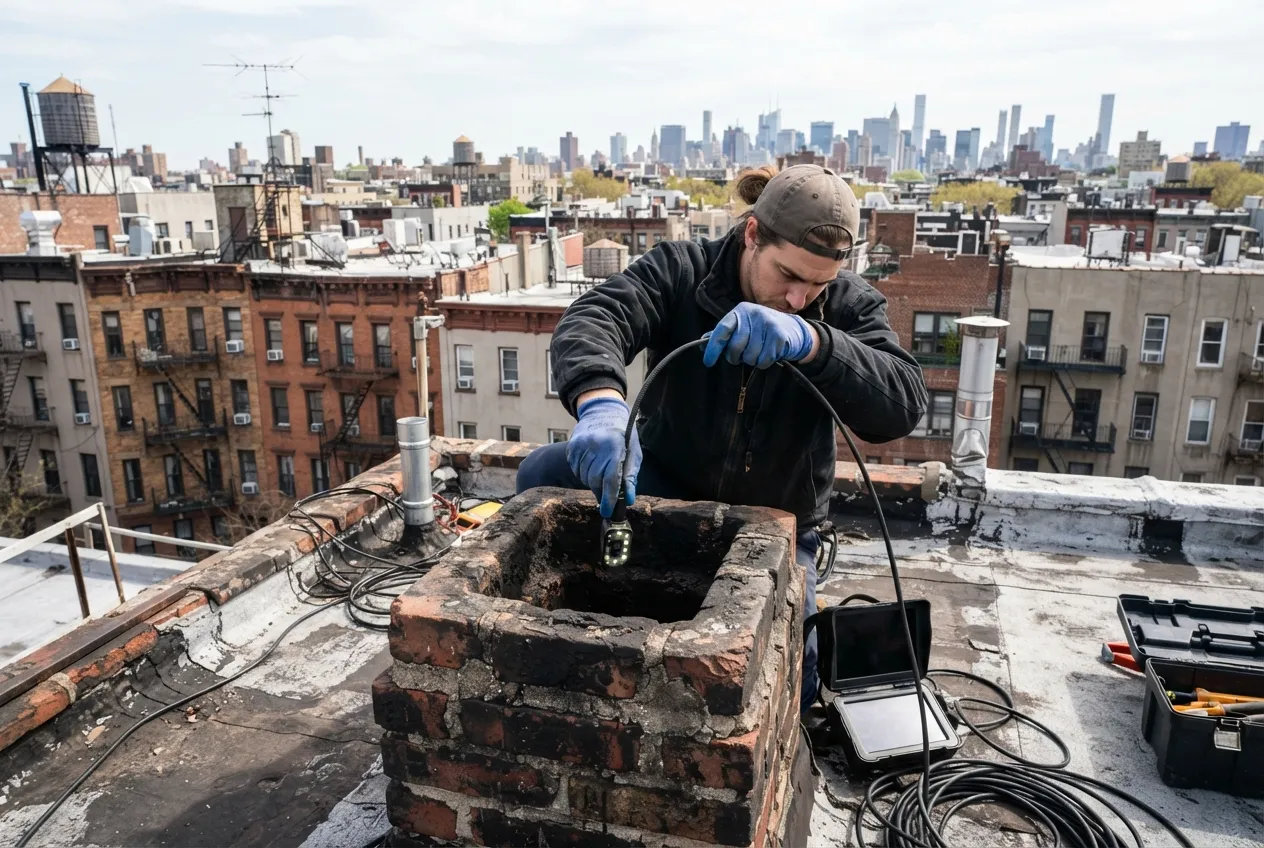
- A camera inspection of the flue when the problem can't be seen from the firebox
- Cleaning, freeing and adjusting a stuck or binding throat damper
- Replacing a damper that is rusted through, warped or missing parts, or installing a top-sealing damper at the top of the flue when the original can't be repaired
- Replacing cracked or loose firebrick and repointing firebox joints with refractory mortar made for fireplace heat
- Parging or repairing the smoke chamber when gaps or rough masonry are hurting draft
- Repairing cracks in the hearth
- Checking the cap and crown for the source of water or animal entry
- A written summary with photos of what we found and what we fixed
How our crew works inside your home and on the roof
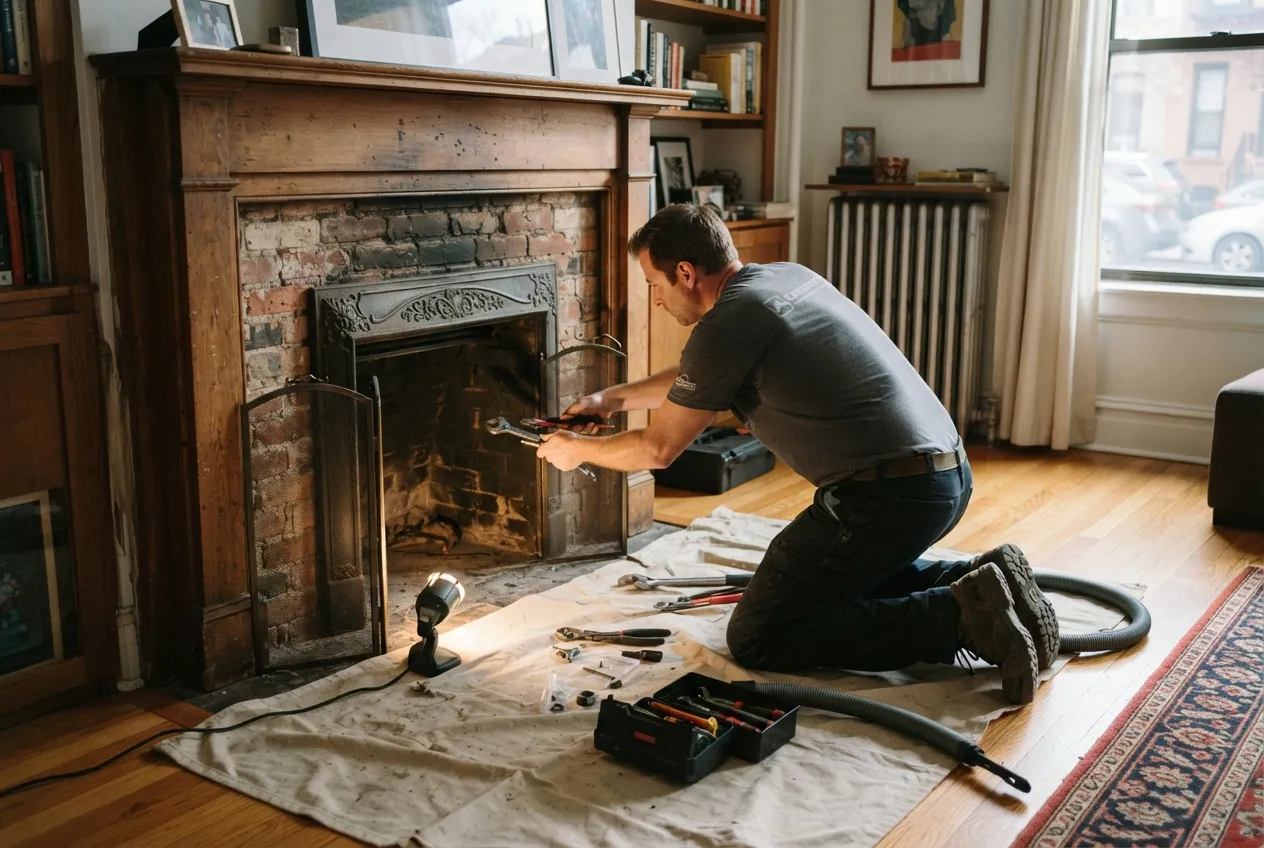
Inside, the crew lays drop cloths from your door to the hearth and covers furniture near the fireplace. A HEPA vacuum runs at the firebox opening while we work, so soot and mortar dust are pulled away instead of drifting into the room. If the flue has to be cleaned before a repair can be judged or done, we use rotary brushes sized to the flue and keep the vacuum running the whole time.
When the problem is out of sight, we run a camera up the flue to look at the damper seat, smoke chamber and liner. We show you the footage before recommending any repair.
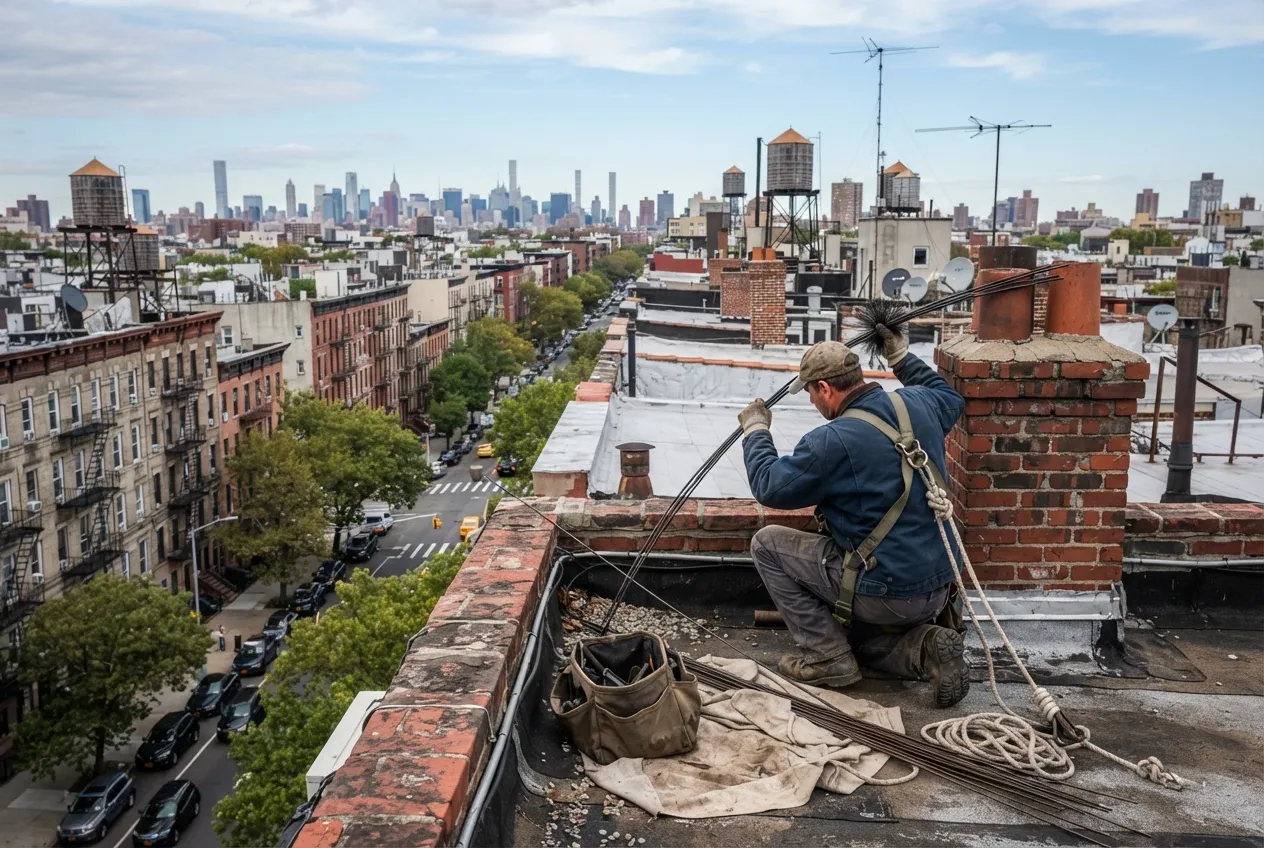
On the roof, technicians check the cap, crown and top of the flue, and install or service top-sealing dampers. They go up only where roof access is safe. In apartment and co-op buildings, we arrange roof access with building management ahead of time.
Before we leave, we vacuum the hearth, pick up our drop cloths, and work the damper with you so you know how it opens, closes and latches.
Time for your annual chimney check?
The standard we follow
We work to NFPA 211, the standard that calls for chimneys, fireplaces and vents to be inspected once a year. Chimney professionals use three inspection levels, and we tell you which one your situation calls for:
Most damper and firebox repairs start with a Level 1 or Level 2 inspection. Converting a wood fireplace to gas logs or adding an insert counts as a change to the system, so it calls for a Level 2 inspection.
- Level 1: nothing about the system has changed and you use it as before
- Level 2: the system has changed, such as a new appliance or a switch of fuel, or the home is being sold
- Level 3: a hidden hazard has to be reached by opening part of the chimney or building
What affects the price
We quote after we've seen the fireplace, and you get the quote in writing before any repair starts. The main factors are:
- Chimney height and how hard the roof is to reach
- Fuel type: wood, gas, or a fireplace converted from one to the other
- Flue size and condition, including the damper style and whether parts are still available
- How much soot and creosote has built up, since a heavily coated flue has to be cleaned before repair
- Whether a camera inspection is needed to find the problem
- How much repair is needed, from one stuck damper to replacing firebrick or smoke chamber work
How a visit works
Here is what to expect from first call to finished repair:
Many owners book repairs before the cold months. In New York City, heat season runs from October 1 through May 31, and that's when fireplaces get the most use.
- You contact us and describe what you're seeing. Photos of the firebox and damper help us bring the right parts.
- We schedule a time and, for apartment buildings, confirm roof access with management.
- Please don't use the fireplace the day before or the day of the visit, so the firebox is cool.
- The technician inspects, shows you the findings, and gives you a written quote.
- Simple repairs are often done the same visit. Larger work, like new firebrick or a top-sealing damper, is scheduled once parts are ready.
- You get a written summary with photos when the work is done.