The short answer
A chimney sweep cleans soot, creosote and blockages from your firebox, smoke chamber and flue, then inspects the system for damage. The NFPA 211 standard calls for chimneys, fireplaces and vents to be inspected once a year, so an annual sweep and inspection before the heating season is the safest routine.
A chimney sweep removes the soot and creosote that build up inside a flue every time you burn a fire. It also gives a technician a clear look at the parts of the chimney you can't see from your living room. EmberGuard Chimney Sweep cleans and inspects fireplace, wood stove and heating appliance flues for homeowners in New York City and nearby cities. This page covers the signs that a sweep is due, what each visit includes, how our certified crew protects your home while working, and what determines the cost.
Signs you need a chimney sweep
Most chimney problems show warning signs before they become dangerous. If you notice any of these, schedule a sweep and inspection before your next fire.
Don't ignore these signs. Creosote can catch fire, and water and animals both damage a chimney from the inside.
- A smoky or campfire smell from the fireplace, especially on humid days or when the air conditioning runs
- Smoke rolling back into the room instead of rising up the flue, or fires that are hard to start and keep going
- Black flakes, crumbly creosote, or bits of brick and mortar collecting in the firebox
- White, chalky staining on the exterior brick, which means water is moving through the masonry
- Scratching, chirping or rustling inside the chimney, which usually means birds or animals have moved in
- Water dripping or pooling in the firebox after rain
What's included in every sweep
Every chimney sweep covers the full path smoke takes, from the firebox to the top of the chimney.
If you burn a wood stove or fireplace insert, we also clean the connector pipe and the appliance flue. For oil and gas appliance flues, we check for soot, scale and blockages that can interfere with venting.
- Firebox cleaning to remove ash, soot and loose debris
- Smoke chamber and smoke shelf cleaning, where creosote tends to collect behind the damper
- Damper cleaning and a check that it opens, closes and seals
- Full-length flue brushing with a brush sized to your liner
- A check of the liner for cracks, gaps and missing mortar joints
- Removal of nests and debris blockages that can be reached safely
- A look at the chimney crown, cap, spark arrestor and flashing
- Written notes and photos of what we found, with any recommended repairs explained in plain terms
How our crew works inside your home and on the roof
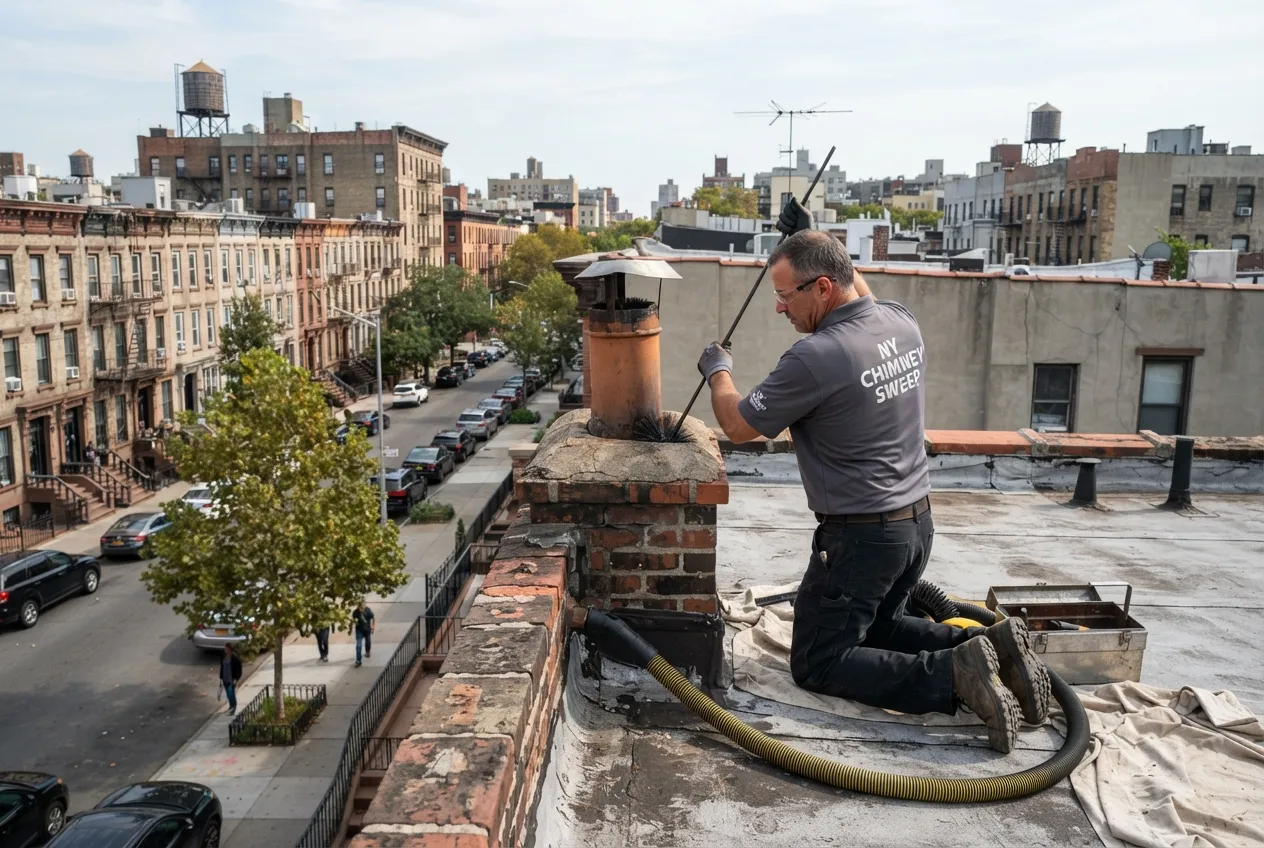
Before opening anything, the crew lays drop cloths from your door to the fireplace and covers the hearth and nearby floor. We seal off the fireplace opening and run a HEPA-filtered vacuum for the whole job, which keeps soot and fine ash from drifting into the room.
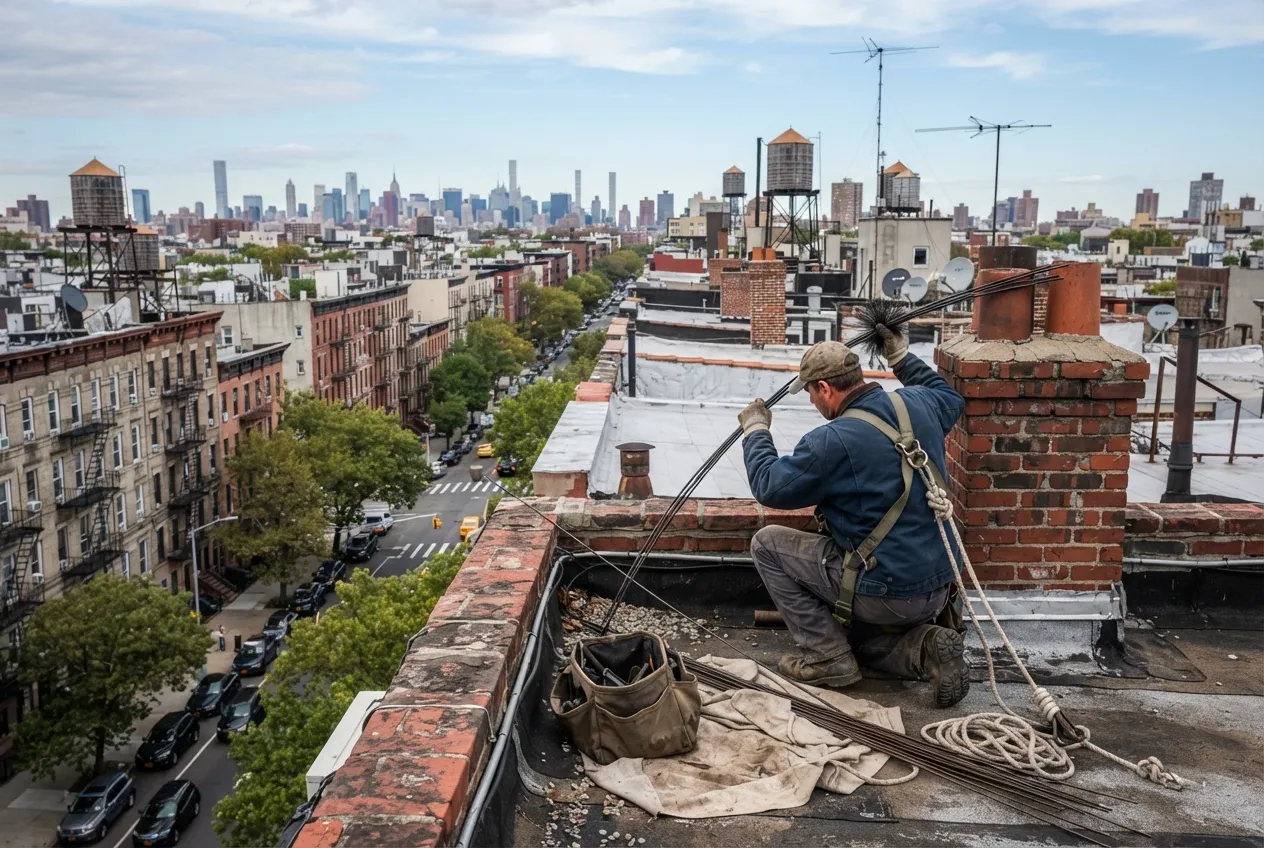
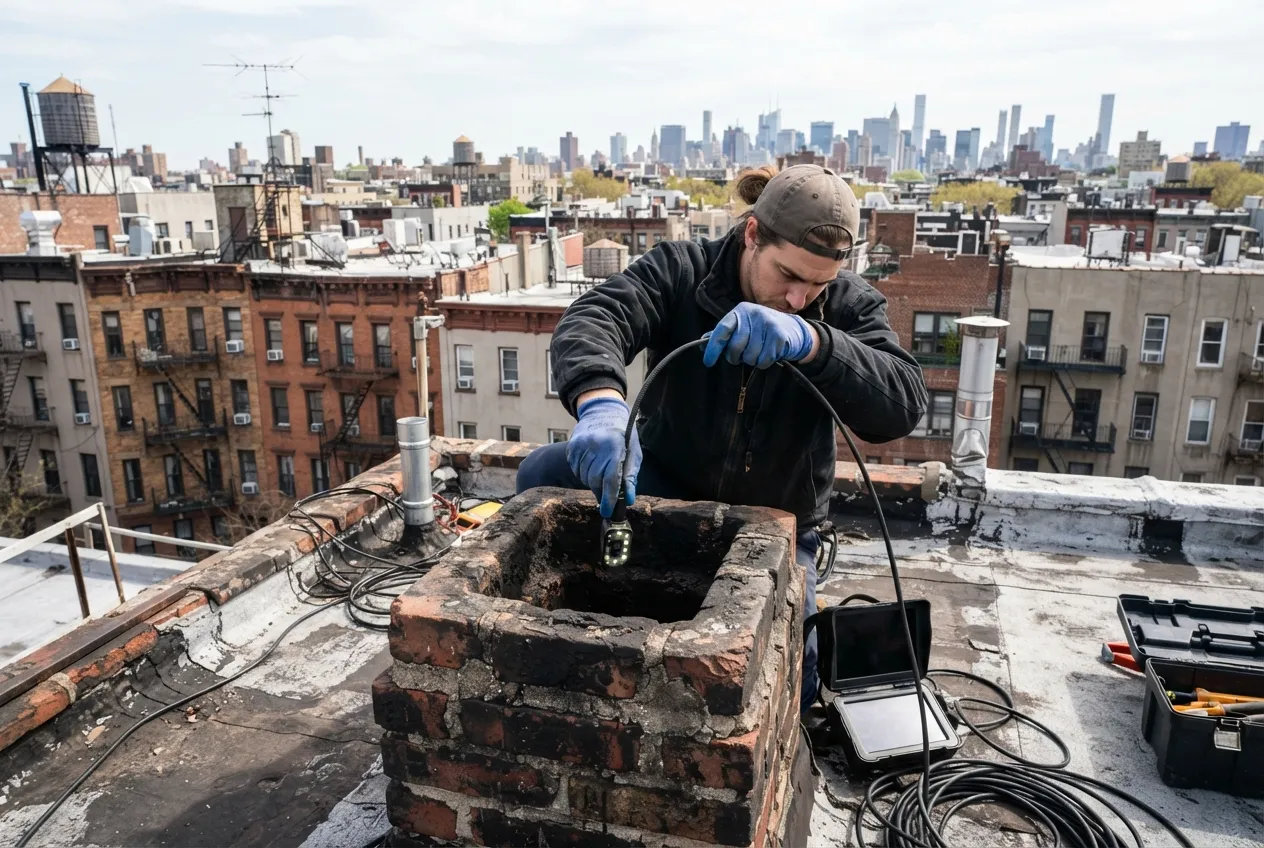
Most flues are cleaned with rotary brushes on flexible rods. The spinning brush scrubs the entire inside surface of the liner instead of just pushing debris down. When a flue needs a closer look, we run a camera up the chimney to record the condition of the liner and joints, so you can see what we see.
On the roof, technicians work from secured ladders and use fall protection where the building allows it. From the top, we check the cap and crown, clear any blockage at the flue outlet, and brush downward when that works better for the liner. If roof access isn't safe or the building doesn't allow it, we clean from below and tell you what we could and couldn't inspect.
When we finish, we vacuum the work area and fold the drop cloths inward to hold the debris. We either leave the fireplace ready to use or tell you what should be fixed first.
Time for your annual chimney check?
The standard we follow: NFPA 211 and the three inspection levels
We follow NFPA 211, the national standard for chimneys, fireplaces and vents. It calls for an inspection once a year, even if you rarely use your fireplace. Chimney professionals use three inspection levels, and every sweep includes the one that fits your situation.
If your building is converting its boiler from oil to gas, New York City requires the chimney to be evaluated as part of that work. A new liner is often needed, because gas exhaust produces acidic condensate that can corrode a masonry flue. New York City's heat season runs from October 1 through May 31, so late summer and early fall are good times to book your sweep before the heat comes on.
- Level 1: for a chimney that hasn't changed and is used the same way as before
- Level 2: when the system changes, such as a new appliance or a switch of fuel, or when the home is being sold
- Level 3: when a hidden hazard has to be reached by opening part of the chimney or the building
What affects the price
Every chimney is different, so we quote after learning about yours. These are the main factors:
We'll explain the quote before any work starts. If we find something during the sweep that needs repair, we'll show you and discuss it before doing anything extra.
- Chimney height and how easy it is to reach the roof
- Fuel type, since wood, oil and gas leave different kinds of buildup
- Flue size, shape and the condition of the liner
- How much creosote, soot or debris has built up
- Whether a camera inspection is needed
- Whether repairs are needed, such as a new cap, crown work or liner work
How a visit works
When you contact us, we ask what you burn, how often you use the fireplace, and whether you've noticed any of the warning signs above. Please don't use the fireplace for at least a day before the visit so the firebox and flue are cool.
On the day of the visit, the crew walks through the job with you, sets up protection, and cleans and inspects the system. Afterward, we go over our findings with you, share photos or camera footage, and leave written notes. If everything looks good, you're ready for the season. If something needs attention, you'll know exactly what it is and why it matters.
Chimney Sweep by city
- Chimney Sweep in SoHoLocal service & repairs
- Chimney Sweep in Little ItalyLocal service & repairs
- Chimney Sweep in Hudson SquareLocal service & repairs
- Chimney Sweep in TribecaLocal service & repairs
- Chimney Sweep in Civic CenterLocal service & repairs
- Chimney Sweep in Greenwich VillageLocal service & repairs
- Chimney Sweep in ChinatownLocal service & repairs
- Chimney Sweep in West VillageLocal service & repairs
- Chimney Sweep in Two BridgesLocal service & repairs
- Chimney Sweep in Lower East SideLocal service & repairs
- Chimney Sweep in East VillageLocal service & repairs
- Chimney Sweep in Financial DistrictLocal service & repairs