The short answer
EmberGuard Chimney Sweep cleans and inspects chimneys in SoHo and the surrounding neighborhoods from our office on Broome St. Plan on a yearly inspection and a sweep whenever buildup is found, ideally before the heat season begins on October 1.
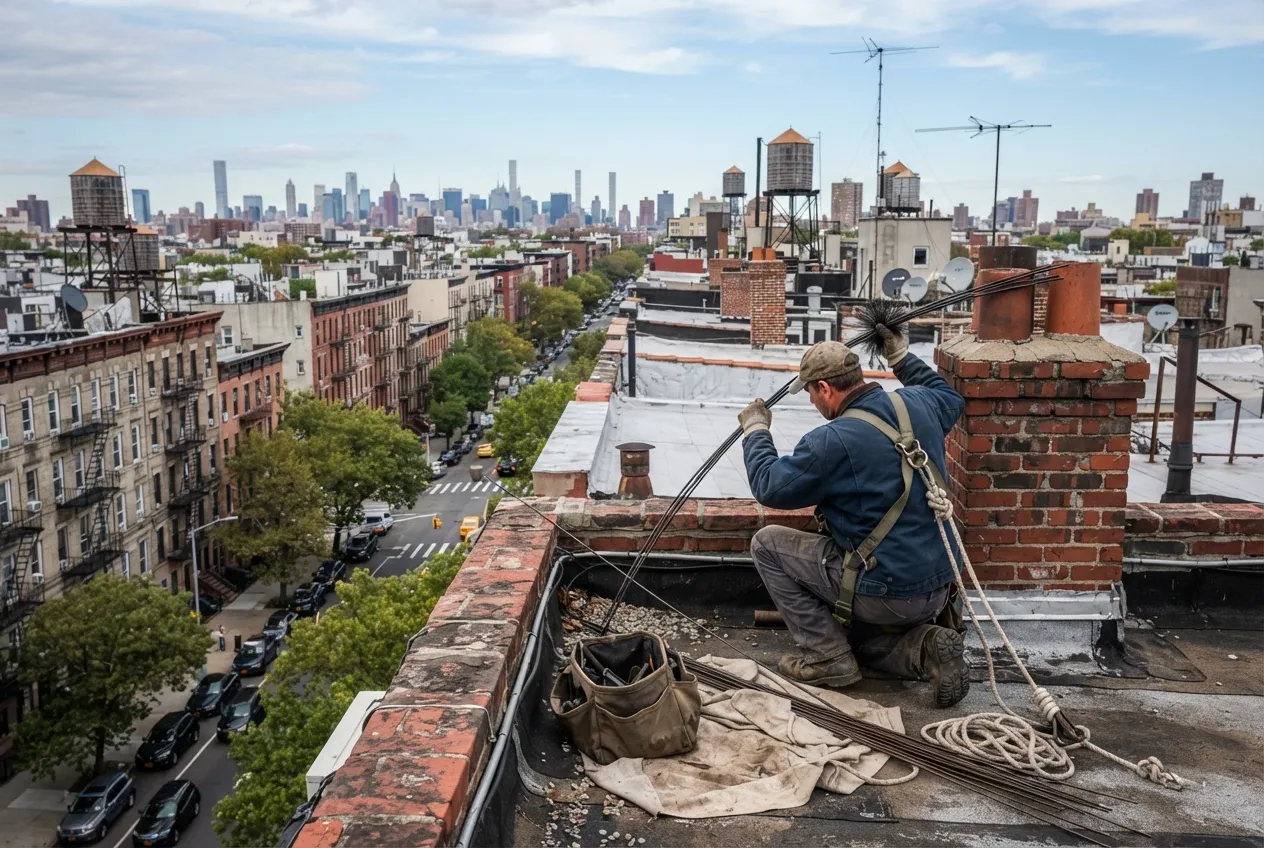
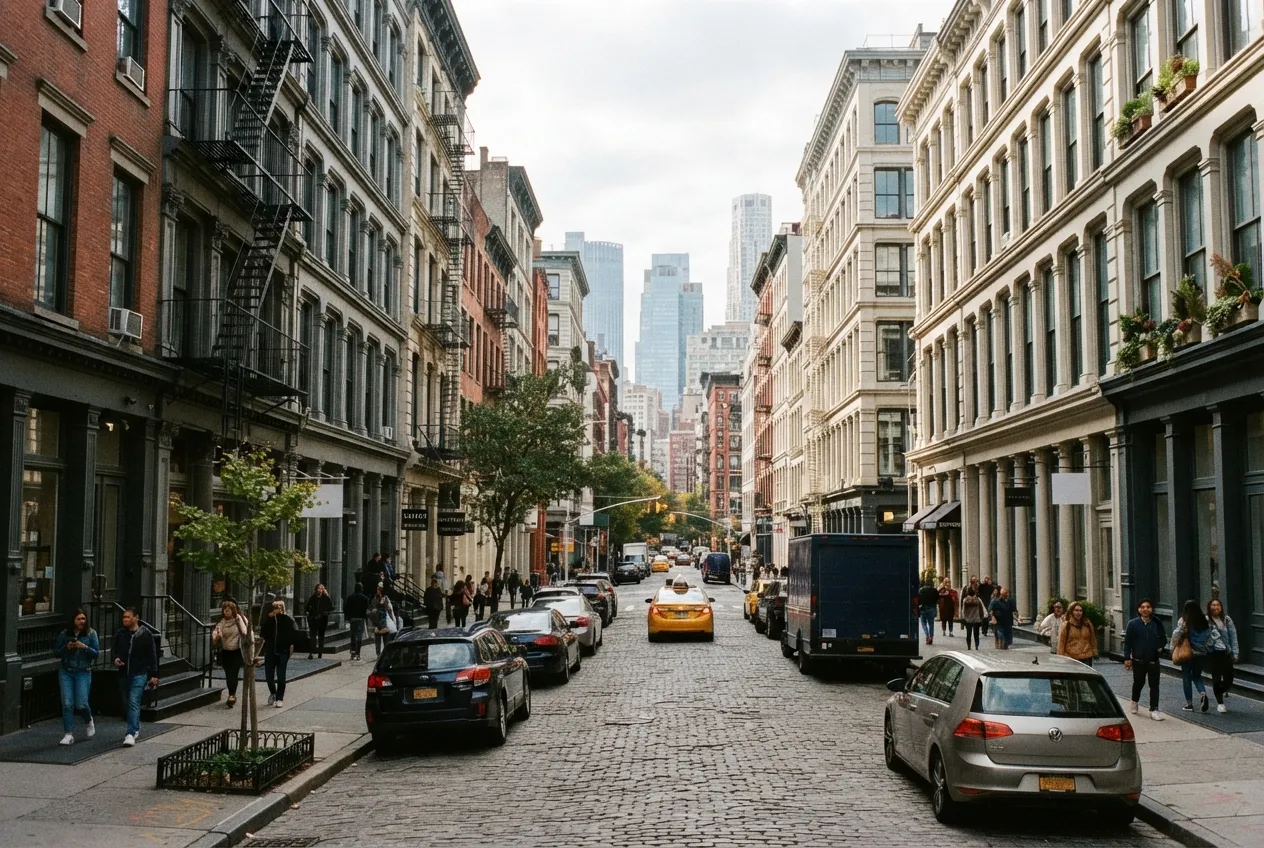
EmberGuard Chimney Sweep cleans and inspects chimneys for homes in SoHo, and our office is right here at 489 Broome St. Our certified technicians work in the neighborhood's converted loft buildings, rowhouses and pre-war apartment buildings. We also serve nearby Little Italy, Hudson Square, Tribeca, Civic Center and Greenwich Village. Some homeowners light a wood fire on winter weekends, and others have a flue that vents a gas appliance. Either way, a sweep removes the soot, creosote and debris that restrict draft and can feed a chimney fire. It also gives us a clear look at the condition of the flue, so you know whether it is ready for the season.
What a chimney sweep visit includes
A sweep is more than running a brush up the flue. In an apartment or loft, the fireplace usually sits in a finished living space, so we set up carefully and keep soot contained from start to finish. Before we leave, we explain what we cleaned and what we noticed.
- Covering the floor and furniture near the fireplace before work starts
- Sweeping the firebox, smoke chamber and flue with brushes and rods sized to your flue
- Running a vacuum throughout the job to keep soot and dust out of the room
- Checking the damper, firebox and visible flue for cracks, gaps or missing mortar
- Looking at the crown, cap and flashing when roof access is available
- Walking you through our findings, with photos when we use a camera
Chimneys in SoHo's older buildings
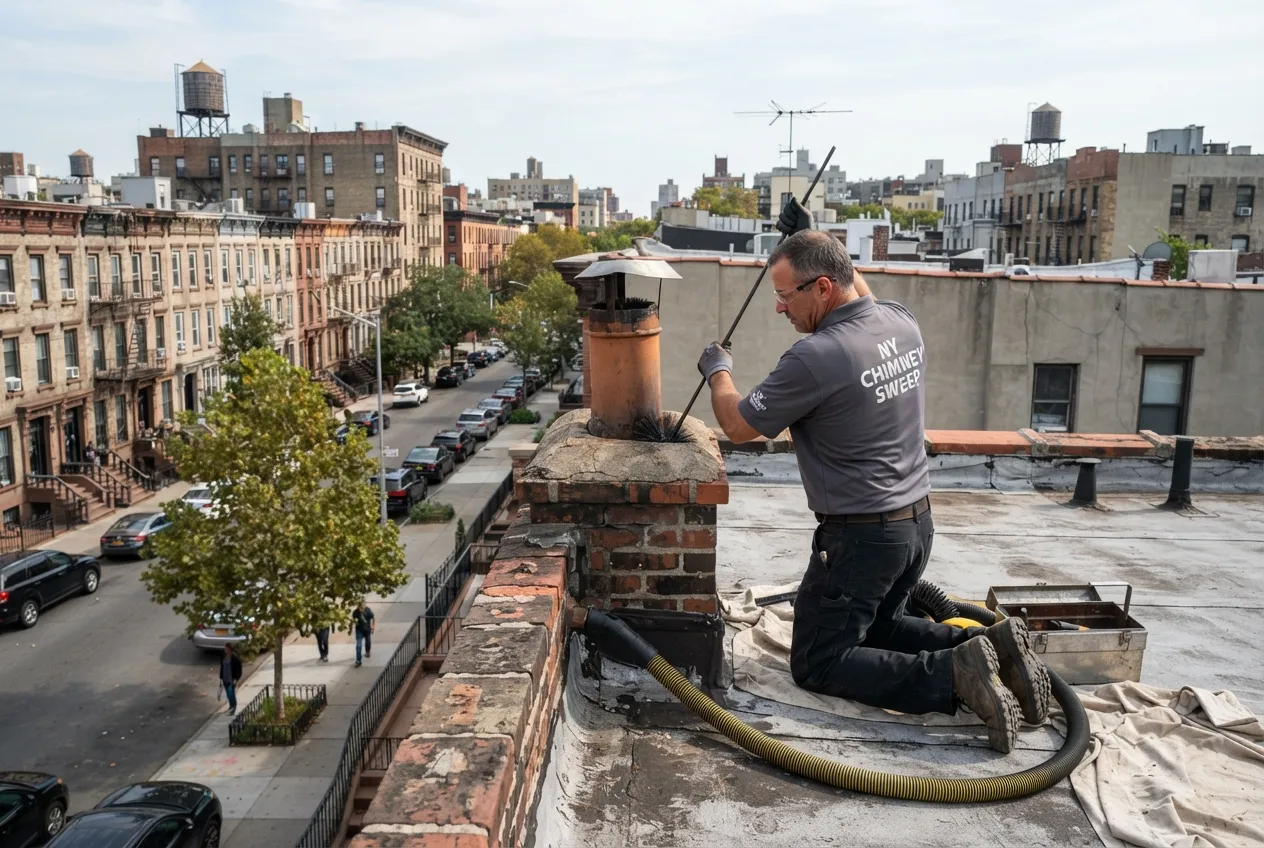
Many SoHo homes are in older masonry buildings where a single chimney stack may hold several flues serving different units. Some fireplaces were closed off for years and later reopened. Others have flues that bend or offset on their way to the roof. Older flues can have cracked or missing tile liners, eroded mortar joints, or debris and nesting material that built up while the fireplace sat unused.
Reaching the top of the chimney often means coordinating roof access with a building manager, super or co-op board. When you book, let us know who handles access and whether the building has rules for contractors. That way we can plan the visit around them.
Yearly inspections and the three levels
The NFPA 211 standard calls for chimneys, fireplaces and vents to be inspected once a year, even if you rarely use them. An inspection tells you whether a sweep is needed and whether anything needs repair.
Chimney professionals use three inspection levels. Level 1 is the routine check when nothing about your system has changed. Level 2 applies when the system changes, such as a new appliance or a switch to a different fuel, or when the home is being sold. It typically includes a camera look inside the flue. Level 3 is reserved for hidden hazards that can only be reached by opening part of the chimney or building. We will tell you which level fits your situation and why.
Time for your annual chimney check?
Oil-to-gas conversions and flue liners
When a New York City building converts its boiler from oil to gas, the chimney has to be evaluated as part of the work. Gas exhaust produces acidic condensate that can corrode a masonry flue, so a new liner is often needed.
If your building is planning a conversion, or has completed one recently, we can sweep the old flue and inspect its condition. We will then explain what the evaluation shows so the owner or board can make an informed decision.
When to schedule your sweep
New York City's heat season runs from October 1 through May 31. During those months, building owners must keep apartments heated to the city's minimum temperatures. Getting chimneys and flues checked before October means any problems can be repaired before the heating system and fireplaces are running daily.
Late spring and summer are also good times to book a sweep. Scheduling is more flexible, and creosote left in a flue over humid months can produce strong odors indoors. If you notice smoke backing into the room, a campfire smell when the fireplace is cold, or debris falling into the firebox, call for a visit rather than waiting for the next annual check.
More services in SoHo
- Chimney Inspection in SoHoLocal service & repairs
- Chimney Repair in SoHoLocal service & repairs
- Air Duct Cleaning in SoHoLocal service & repairs
- Chimney Liner Installation in SoHoLocal service & repairs