The short answer
SoHo homes often need a new chimney liner after a boiler or furnace switches from oil to gas, when an old clay or unlined masonry flue has cracked, or when a fireplace or stove is added. EmberGuard inspects the flue first, then installs a liner matched to the fuel and appliance.
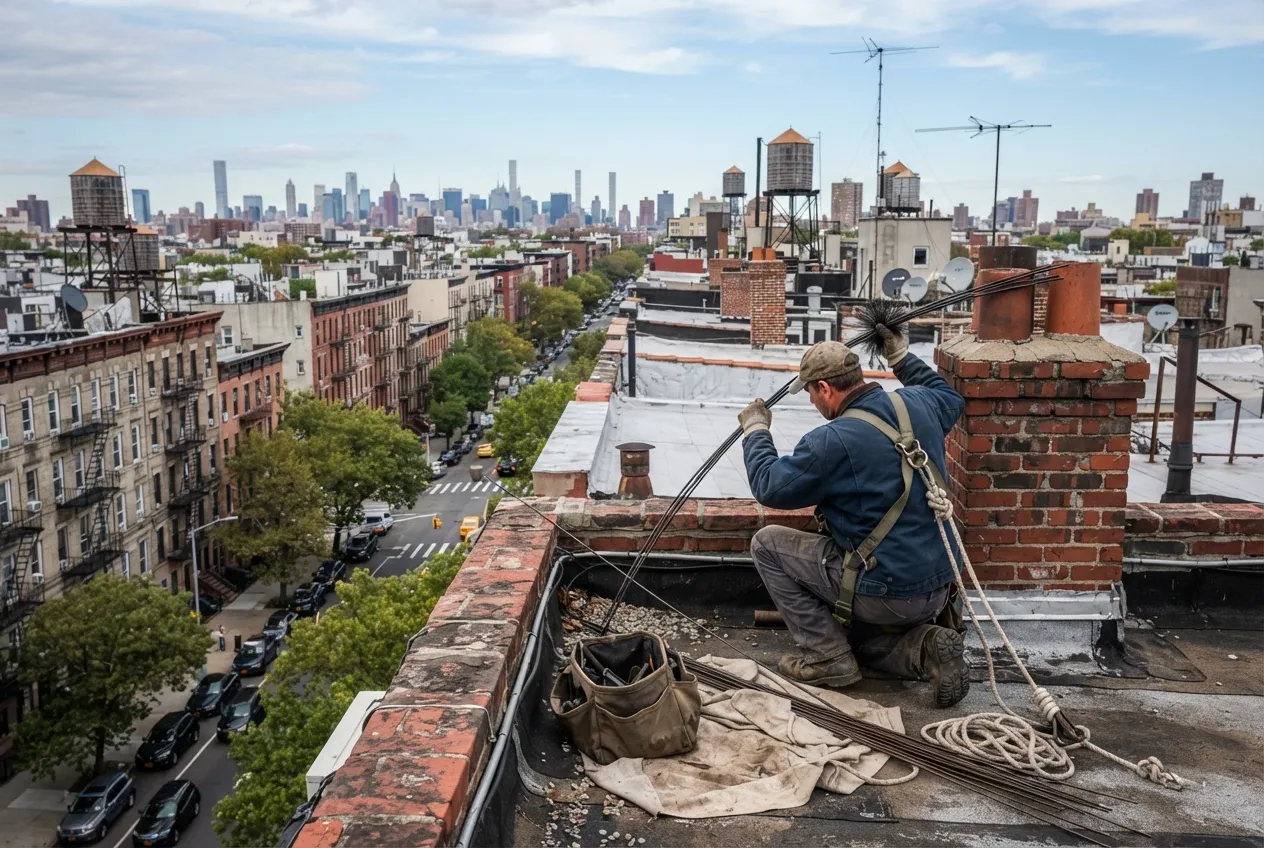
A chimney liner is the inner channel that carries smoke and exhaust out of your home and keeps heat and acidic byproducts away from the surrounding brick and framing. In SoHo, many chimneys run through older masonry in converted loft buildings, rowhouses and pre-war apartment buildings. Some were built before modern liners were standard. Others were lined for one fuel and now serve another. EmberGuard Chimney Sweep works out of 489 Broome St, so liner work in SoHo is close to home for us. Our certified technicians start by finding out what your flue actually needs, then install a liner sized and matched to the appliance or fireplace it serves.
Why SoHo Chimneys Often Need a New Liner
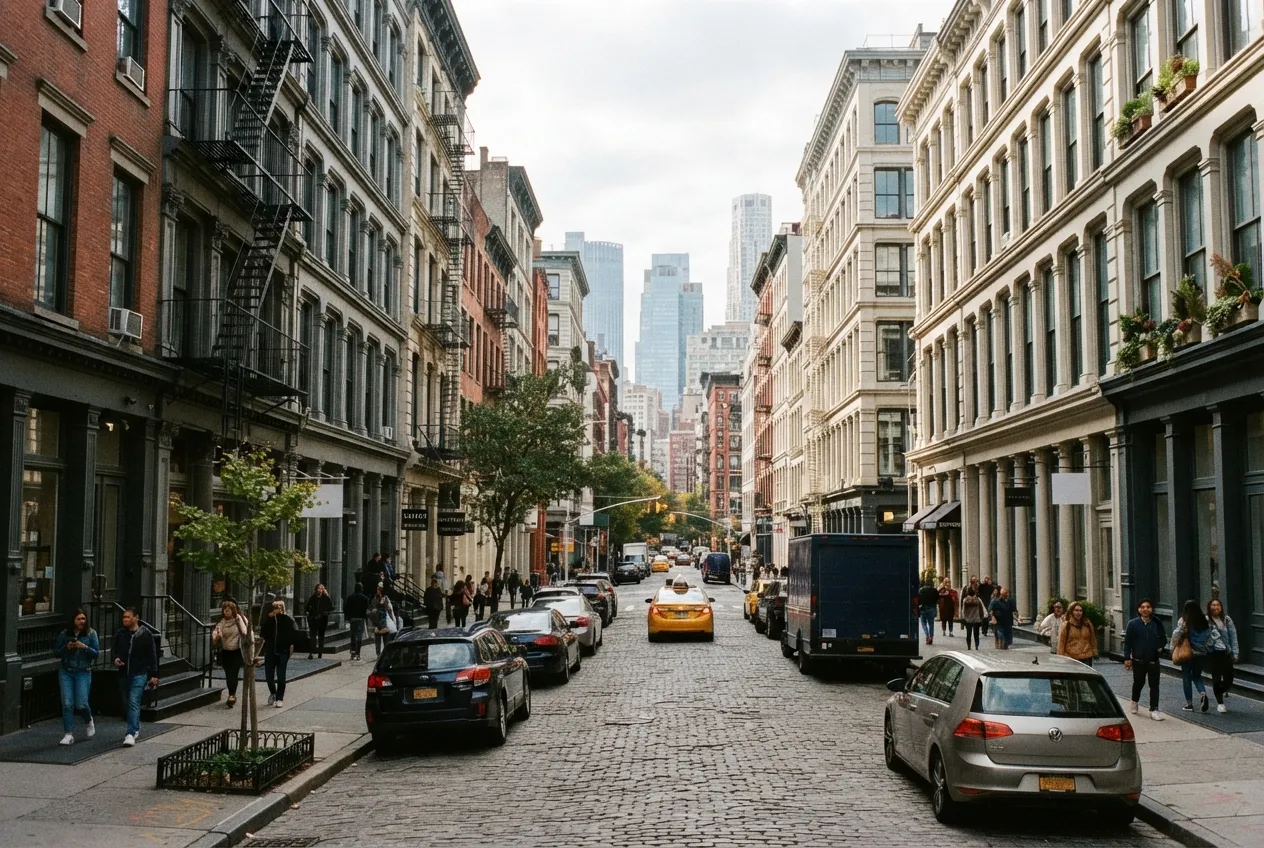
Much of SoHo's housing is older masonry construction: loft buildings converted to residences, townhouses and rowhouses, and pre-war apartment buildings with shared or long interior flues. Over decades, mortar joints wear, clay tiles crack, and some flues were never lined at all. A damaged or missing liner can let heat, smoke or exhaust reach parts of the building they shouldn't. It can also let moisture and condensate soak into the brick.
Loft conversions and renovations add another layer. A chimney that once vented a coal stove or an old boiler may now be asked to serve a gas water heater, a new wood-burning fireplace or a high-efficiency appliance. Each of these needs a flue of the right size and material. A liner is usually how an old chimney is brought into line with what it is now venting.
Oil-to-Gas Conversions and Liners
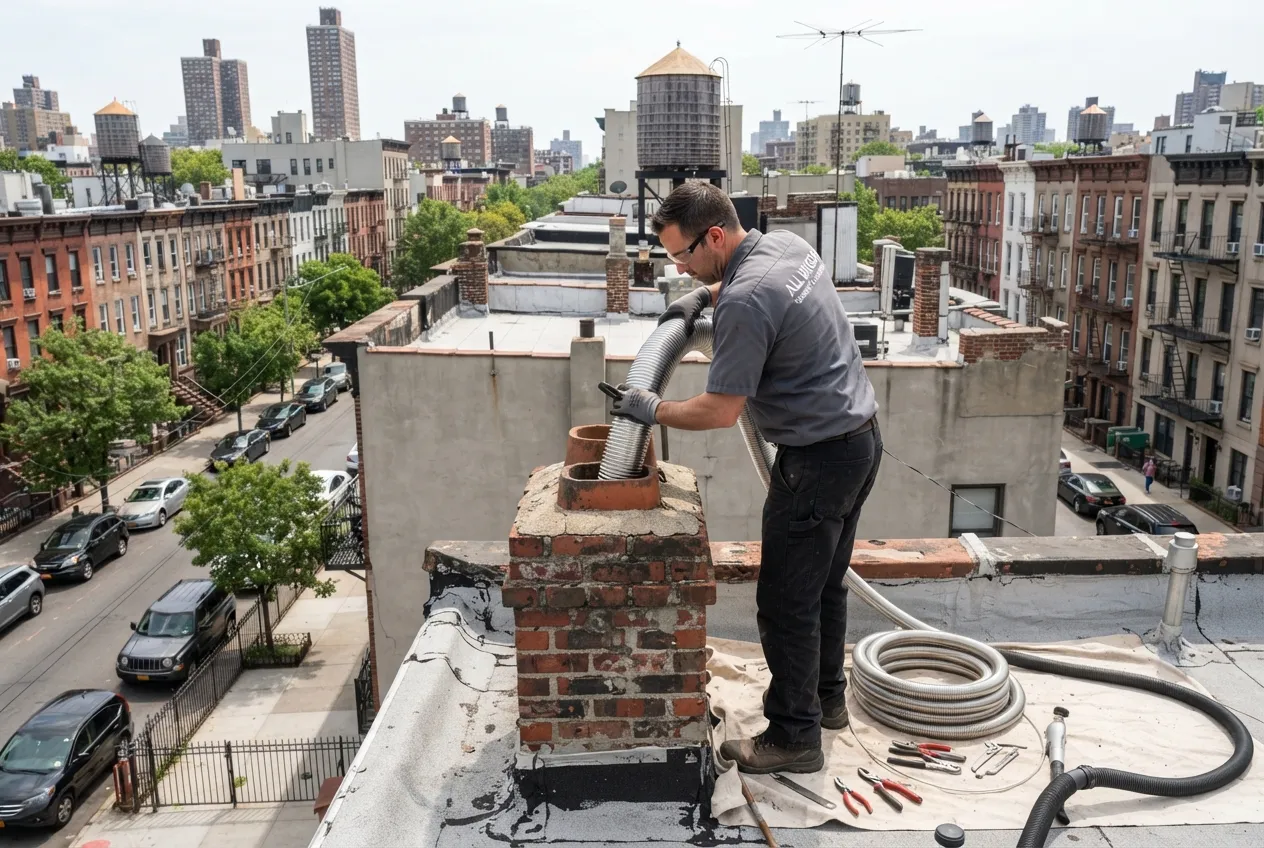
Oil-to-gas conversions are one of the most common reasons we reline chimneys in Manhattan. When a New York City building converts its boiler from oil to gas, the chimney has to be evaluated as part of the work. A new liner is often needed because gas exhaust produces acidic condensate that can corrode a masonry flue.
A change of fuel is also the kind of system change that calls for a Level 2 inspection. If you are planning a conversion in a SoHo building, bring the chimney into the conversation early. Liner sizing depends on the new appliance, and coordinating with your heating contractor keeps the project from stalling at the end.
How a Liner Installation Works
Every job starts with an inspection. We check the existing flue's size, condition and path, and we confirm what the chimney will be venting. If a hidden problem has to be reached by opening part of the chimney or wall, that is a Level 3 inspection, and we explain why before any opening is made.
- Inspect the flue and document its condition, including camera inspection where useful
- Confirm the appliance or fireplace the liner will serve and size the liner to match
- Clean the flue so the new liner goes into a clear passage
- Install the liner from the top down, with the fittings and connections the system needs
- Fit or replace the chimney cap to keep out rain, debris and animals
- Walk you through what was done and show you photos of the finished work
Time for your annual chimney check?
Choosing the Right Liner Material
There is no single right liner for every SoHo chimney. Stainless steel liners are widely used for gas and oil appliances and for many wood-burning setups, and flexible versions can follow the bends common in older buildings. Cast-in-place liners form a new interior surface inside the existing masonry and can help where a flue is irregular or deteriorated. Clay tile is traditional, but it is harder to replace in an existing chimney.
We recommend a material based on the fuel, the appliance, the flue's shape and the condition of the masonry. If one option is a poor fit for your chimney, we will tell you why.
Timing Liner Work Around Heat Season
New York City's heat season runs from October 1 through May 31. During that period, building owners must keep apartments heated to the city's minimum temperatures. For buildings where the chimney serves the boiler, liner work is easiest to plan outside those months, or at least well ahead of fall. Scheduling early leaves time to sort out sizing, access and coordination with other trades without leaving residents cold.
The NFPA 211 standard calls for chimneys, fireplaces and vents to be inspected once a year. A yearly inspection is often how a failing liner gets caught before it becomes urgent.
From our Broome St office we serve SoHo (10012) and nearby Little Italy, Hudson Square, Tribeca, Civic Center and Greenwich Village.
More services in SoHo
- Chimney Sweep in SoHoLocal service & repairs
- Chimney Inspection in SoHoLocal service & repairs
- Chimney Repair in SoHoLocal service & repairs
- Air Duct Cleaning in SoHoLocal service & repairs