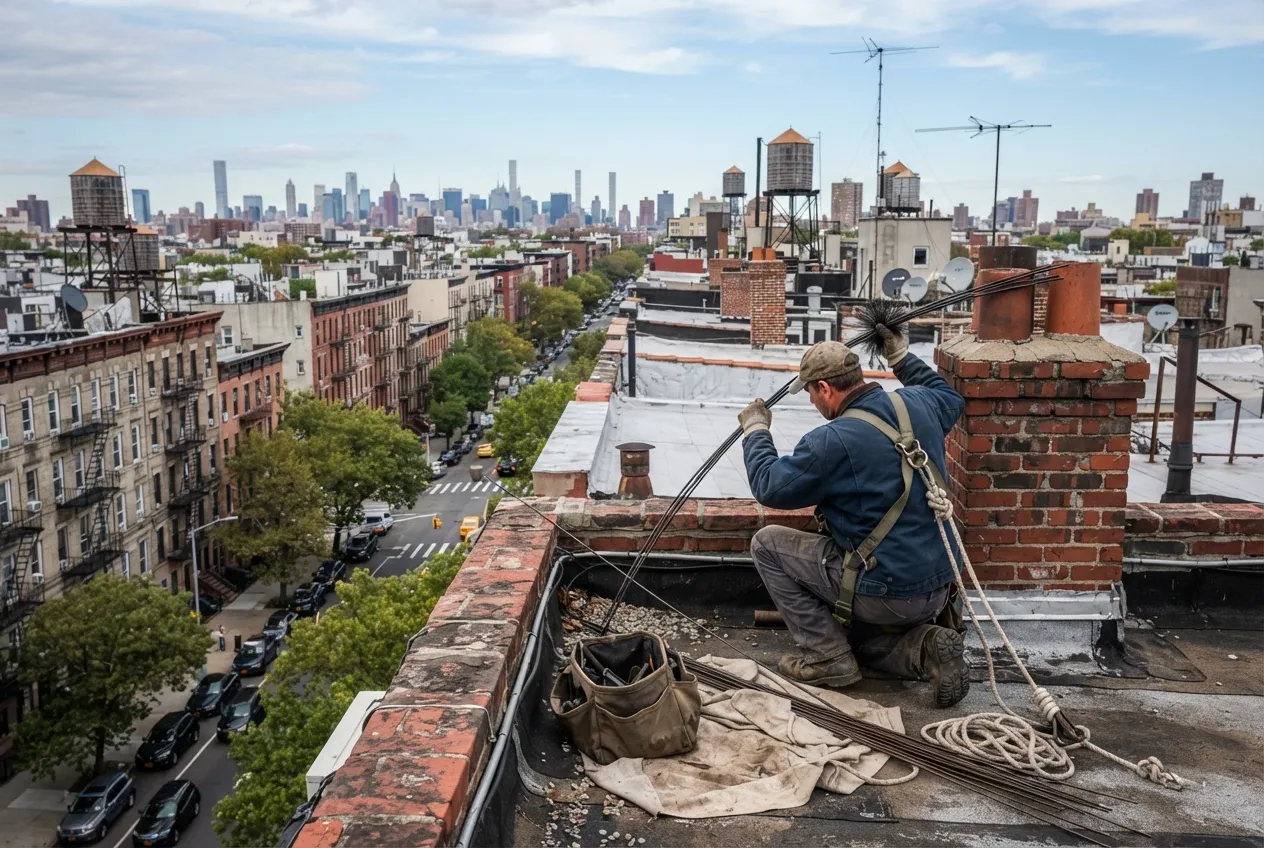
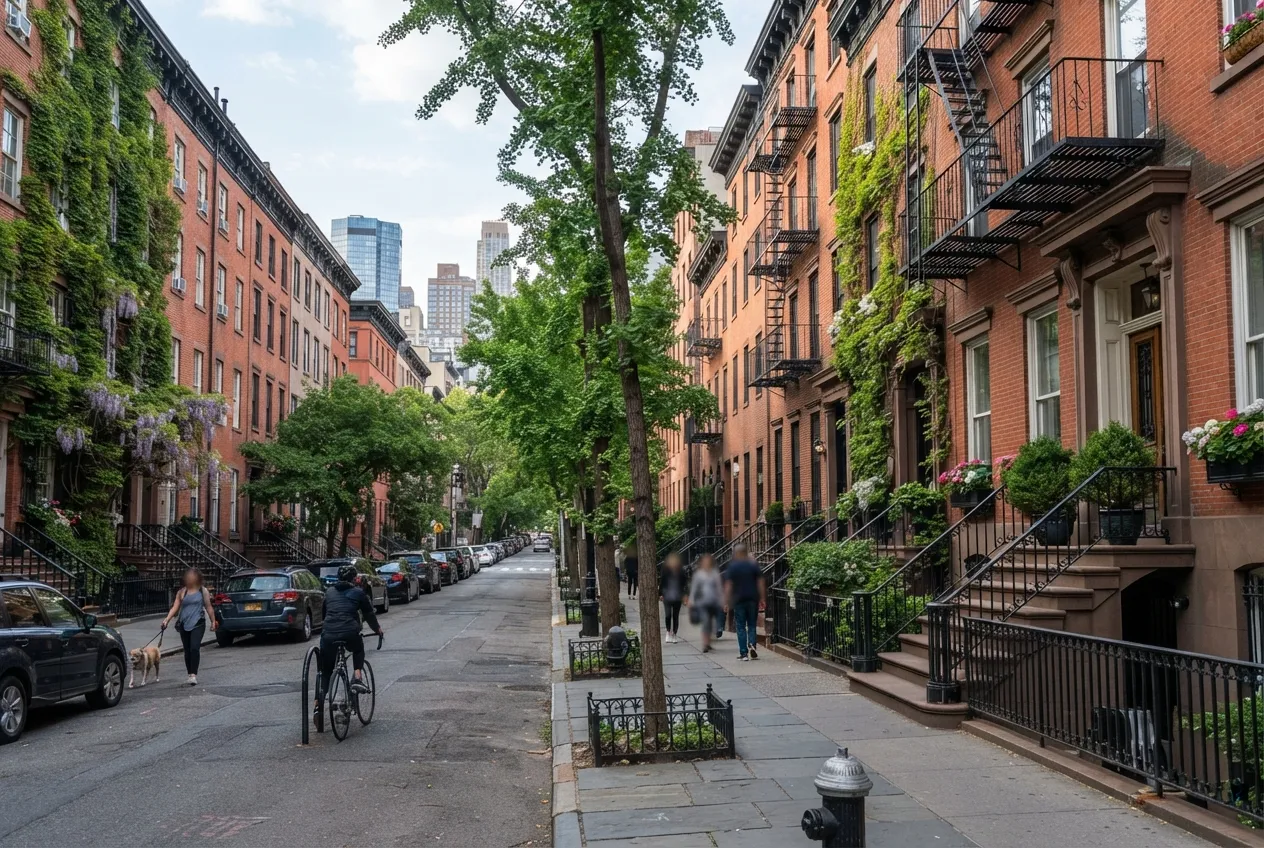
The short answer
A chimney sweep removes soot, creosote and blockages from your flue and checks the system for damage. Greenwich Village homes should have their chimney inspected once a year, as the NFPA 211 standard recommends, and swept whenever buildup or a problem is found.
Many Greenwich Village homes still burn wood in the fireplace on cold nights, and many more rely on a chimney to vent a boiler or furnace all winter. Either way, the flue collects soot, creosote and debris over time. EmberGuard Chimney Sweep is based about a mile southwest of the Village, so our certified technicians can get to brownstones, rowhouses, walk-ups and pre-war apartment buildings in the neighborhood without a long trip across town. This page explains what a sweep involves here, what we tend to look for in older Village chimneys, and how to plan around the heating season.
What a Chimney Sweep Covers in a Village Home
A sweep is more than running a brush up the flue. Our technicians protect the room around the fireplace or appliance, clean the chimney from the bottom, the top or both depending on access, and look over each part of the system as they work. In a narrow rowhouse or a top-floor apartment, roof access and stairwell space shape how we set up, so we plan the visit around your building's layout.
During a standard visit we typically:
- Remove soot and creosote from the flue, smoke chamber and firebox
- Clear nests, leaves and fallen debris from the flue and smoke shelf
- Check that the damper opens, closes and seals properly
- Look at the chimney cap and crown for gaps that let in rain or animals
- Note cracks, missing mortar or liner damage that need a closer look
- Explain what we found in plain terms before we leave
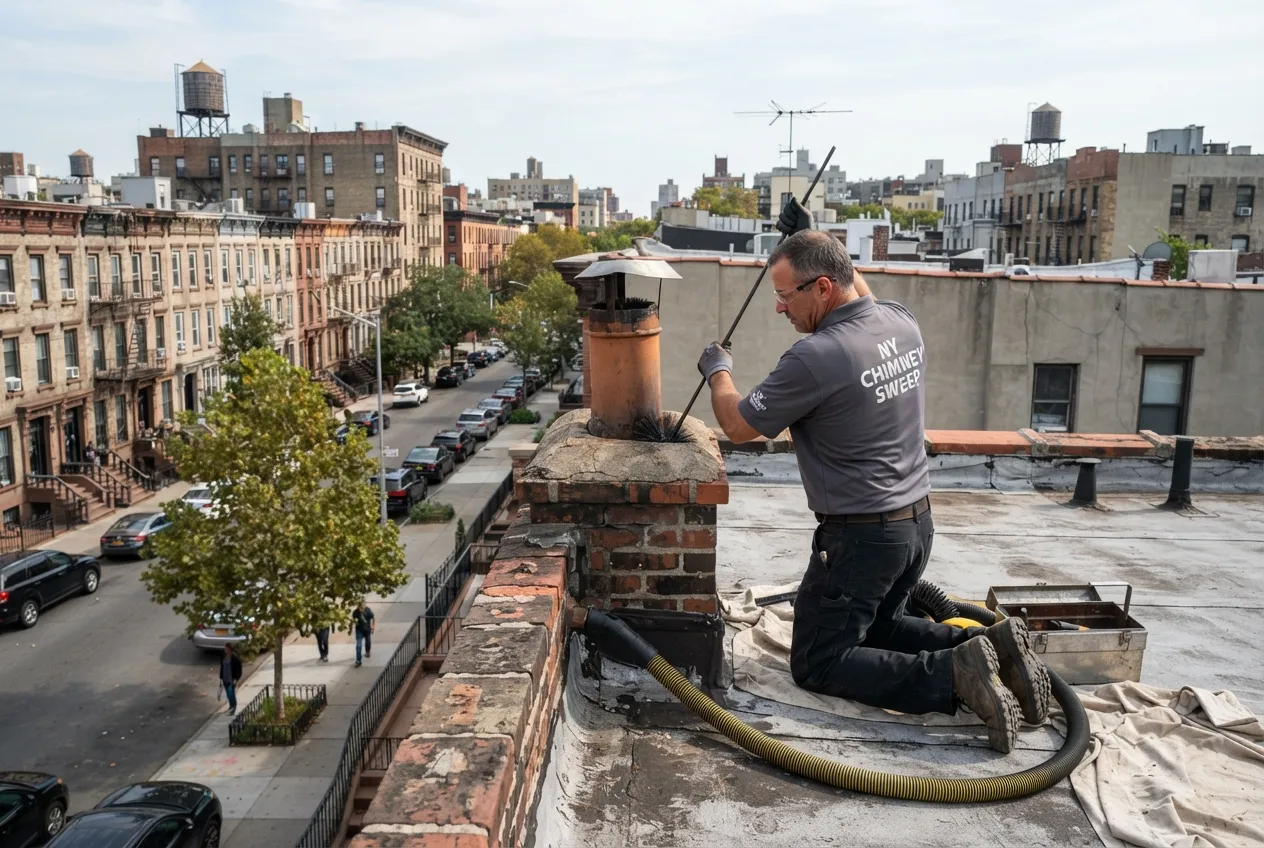
Older Masonry Chimneys in Brownstones and Rowhouses
Much of the Village's housing is older masonry, and chimneys in these buildings have often been through decades of freeze-thaw cycles, repairs and changes in use. A fireplace that sat unused for years may have a flue full of debris, a rusted damper, or an unlined or deteriorated clay liner. Some homes have several flues running up a shared chimney stack, which makes it important to confirm which flue serves which fireplace or appliance.
If you are reopening a fireplace that hasn't been used in a long time, schedule a sweep and inspection before the first fire. It is the simplest way to find out whether the flue is clear and whether the liner is in condition to handle heat and smoke.
Yearly Inspections and When a Deeper Look Is Needed
The NFPA 211 standard calls for chimneys, fireplaces and vents to be inspected once a year. Chimney professionals use three levels of inspection. A Level 1 inspection fits when nothing about the system has changed. A Level 2 inspection is called for when the system changes, such as a new appliance or a switch to a different fuel, or when the home is sold. A Level 3 inspection is reserved for situations where a suspected hidden hazard can only be reached by opening part of the chimney or the building.
Most Village homeowners need a yearly Level 1 inspection along with a sweep when buildup calls for it. If you are buying or selling a brownstone, or you have just replaced your heating equipment, ask about a Level 2 inspection instead.
Time for your annual chimney check?
Boiler Flues, Gas Conversions and Pre-War Buildings
Chimneys in Greenwich Village don't only serve fireplaces. In many pre-war apartment buildings and townhouses, the chimney vents the boiler that heats the whole building. When a New York City building converts its boiler from oil to gas, the chimney has to be evaluated as part of the work, and a new liner is often needed because gas exhaust produces acidic condensate that can corrode a masonry flue. If your building has converted or is planning to, we can inspect the flue and tell you what condition it is in.
Timing matters for building owners. New York City's heat season runs from October 1 through May 31, and during that stretch apartments must be kept heated to the city's minimum temperatures. Scheduling chimney and flue work in late spring or summer helps avoid taking a boiler offline when tenants depend on it.
Scheduling a Sweep in Greenwich Village and Nearby
Late summer and early fall are the most practical times to book, before fireplaces get regular use and before heating demand picks up. Before we arrive, let the fireplace or appliance cool completely, clear a path to it, and let us know about roof access or any building rules for contractors. Co-op and condo residents may need to check with building management first.
Along with Greenwich Village, we also serve nearby SoHo, Little Italy, Hudson Square, the West Village and the East Village.
More services in Greenwich Village
- Chimney Inspection in Greenwich VillageLocal service & repairs
- Chimney Repair in Greenwich VillageLocal service & repairs
- Air Duct Cleaning in Greenwich VillageLocal service & repairs
- Chimney Liner Installation in Greenwich VillageLocal service & repairs