The short answer
Most chimney repairs in Greenwich Village involve weathered masonry, cracked crowns, failed flashing, or flue liners that no longer protect the brick. EmberGuard inspects the chimney first, shows you what is wrong, and recommends repairs based on the condition of your system and how you use it.
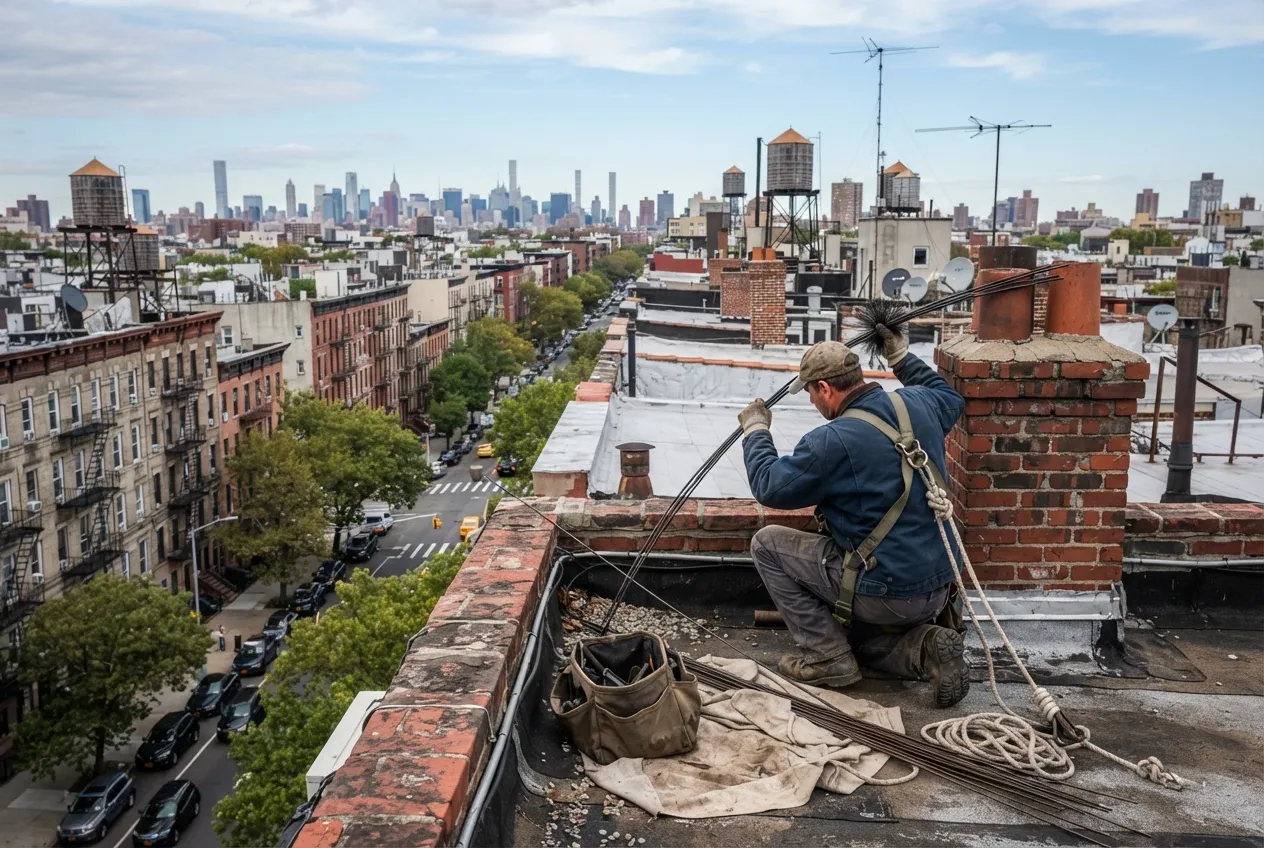
Chimneys in Greenwich Village tend to be old, tall, and tucked between buildings, which makes small problems easy to miss until water shows up on a ceiling or smoke drifts back into a room. EmberGuard Chimney Sweep repairs chimneys on the neighborhood's brownstones, rowhouses, townhouses and pre-war apartment buildings, about a mile northeast of our Manhattan office. Our certified technicians find the cause of the problem, explain what they found in plain terms, and fix what actually needs fixing.
Why chimneys in Greenwich Village need repair
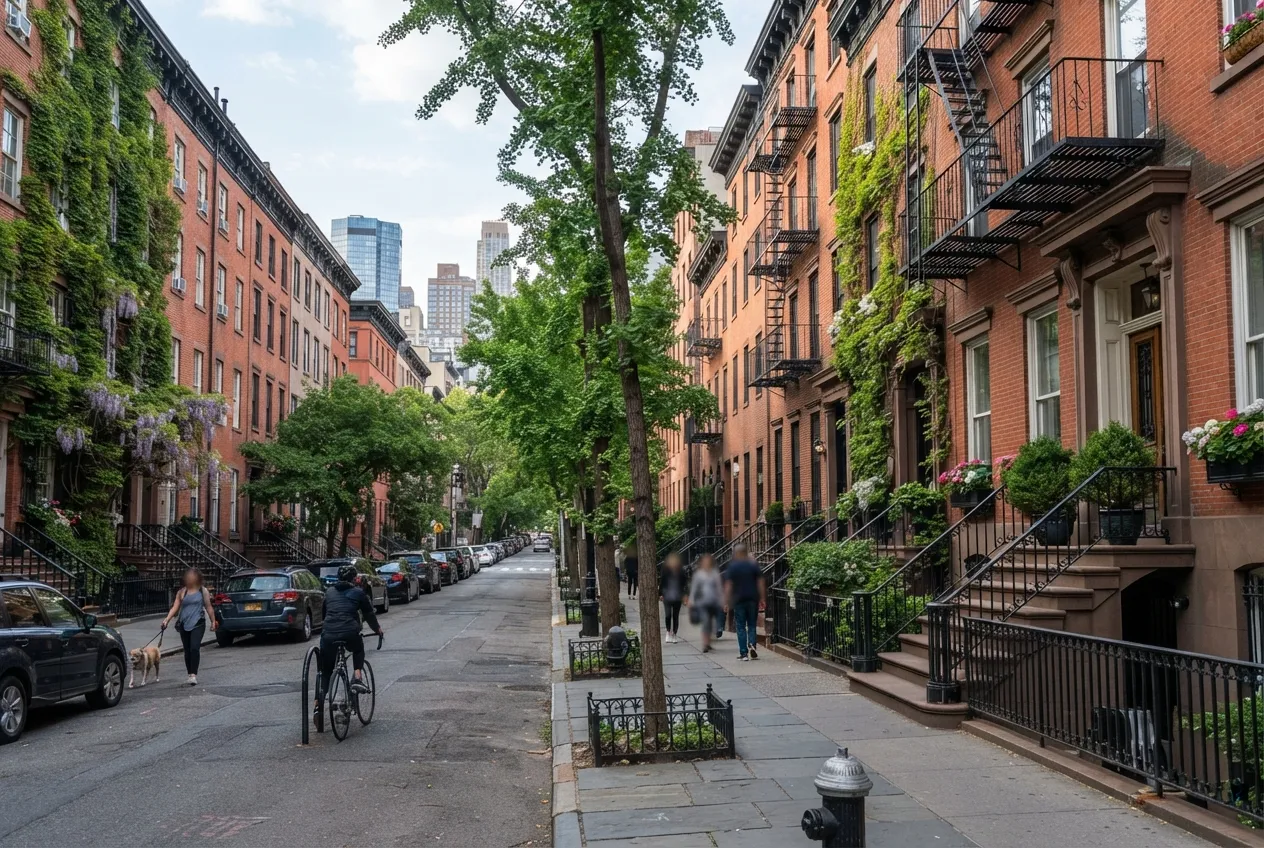
Much of the housing in Greenwich Village is masonry built long before modern heating equipment. Many brownstones and rowhouses have several flues in one stack, some serving fireplaces and others venting a boiler or water heater. Pre-war apartment buildings often have a large shared chimney that runs the full height of the building.
Over decades, freeze-thaw cycles, wind-driven rain and flue gases wear down mortar joints, crack chimney crowns and loosen the seal where the chimney meets the roof. Because stacks are often hard to see from the street and sit beside neighboring walls, damage can go unnoticed for years. Water stains near the fireplace, crumbling brick on the roof, a musty smell from the hearth, or debris falling into the firebox are common signs that it is time for a closer look.
Chimney repairs we handle
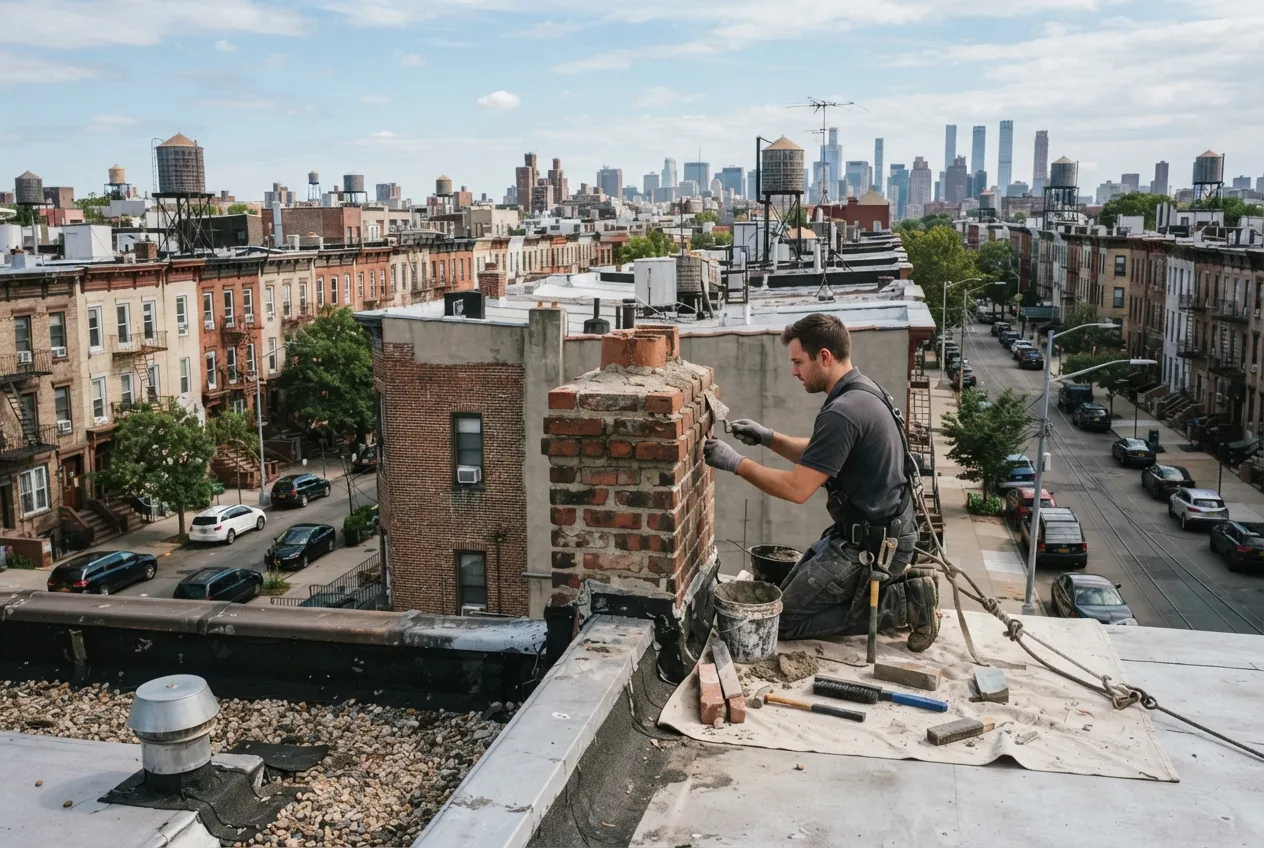
Every repair starts with an inspection so we are working on the actual cause, not just the symptom. Common work on Village homes includes:
- Repointing deteriorated mortar joints and replacing spalled or broken brick
- Rebuilding or resealing cracked chimney crowns
- Repairing or replacing flashing where the chimney meets the roof
- Installing or replacing chimney caps to keep out rain, debris and animals
- Repairing or replacing fireplace dampers that stick, leak air or will not close
- Repairing firebox mortar and damaged firebrick
- Installing new flue liners when the existing flue is cracked, missing or unsuitable
Flue liners and oil-to-gas conversions
Liner work comes up often in Manhattan. When a New York City building converts its boiler from oil to gas, the chimney has to be evaluated as part of the job. A new liner is often needed because gas exhaust produces acidic condensate that can corrode a masonry flue that was built for oil.
If your building or brownstone is planning a conversion, or has already switched fuels, we can inspect the flue and tell you whether the existing liner is in good shape or needs to be replaced. Liners also matter for wood-burning fireplaces: a cracked clay tile liner lets heat and gases reach the surrounding brick and framing, and that kind of damage should be repaired before the fireplace is used again.
Time for your annual chimney check?
Inspections and timing around heat season
The NFPA 211 standard calls for chimneys, fireplaces and vents to be inspected once a year. A Level 1 inspection fits when nothing has changed. A Level 2 inspection applies when the system changes, such as a new appliance or a switch of fuel, or when the home is sold. A Level 3 inspection is used when a hidden hazard can only be reached by opening part of the chimney or building.
New York City's heat season runs from October 1 through May 31, and building owners must keep apartments heated to the city's minimum temperatures during that time. For chimneys that vent a boiler, it makes sense to schedule inspections and repairs in late spring or summer so the heating system is not interrupted when tenants depend on it.
What to expect from a repair visit
We start by asking how the chimney is used and what you have noticed. A technician then inspects the flue, firebox, damper, crown, cap and flashing, using a camera where needed to see inside the flue. You will get a clear explanation of what we found, with photos where possible, and a written recommendation that separates urgent safety repairs from items that can be planned for later.
We protect floors and furnishings during the work and clean up when we finish. In attached rowhouses and apartment buildings, we coordinate roof access with you or your building staff ahead of time. We also serve nearby SoHo, Little Italy, Hudson Square, the West Village and the East Village.
More services in Greenwich Village
- Chimney Sweep in Greenwich VillageLocal service & repairs
- Chimney Inspection in Greenwich VillageLocal service & repairs
- Air Duct Cleaning in Greenwich VillageLocal service & repairs
- Chimney Liner Installation in Greenwich VillageLocal service & repairs