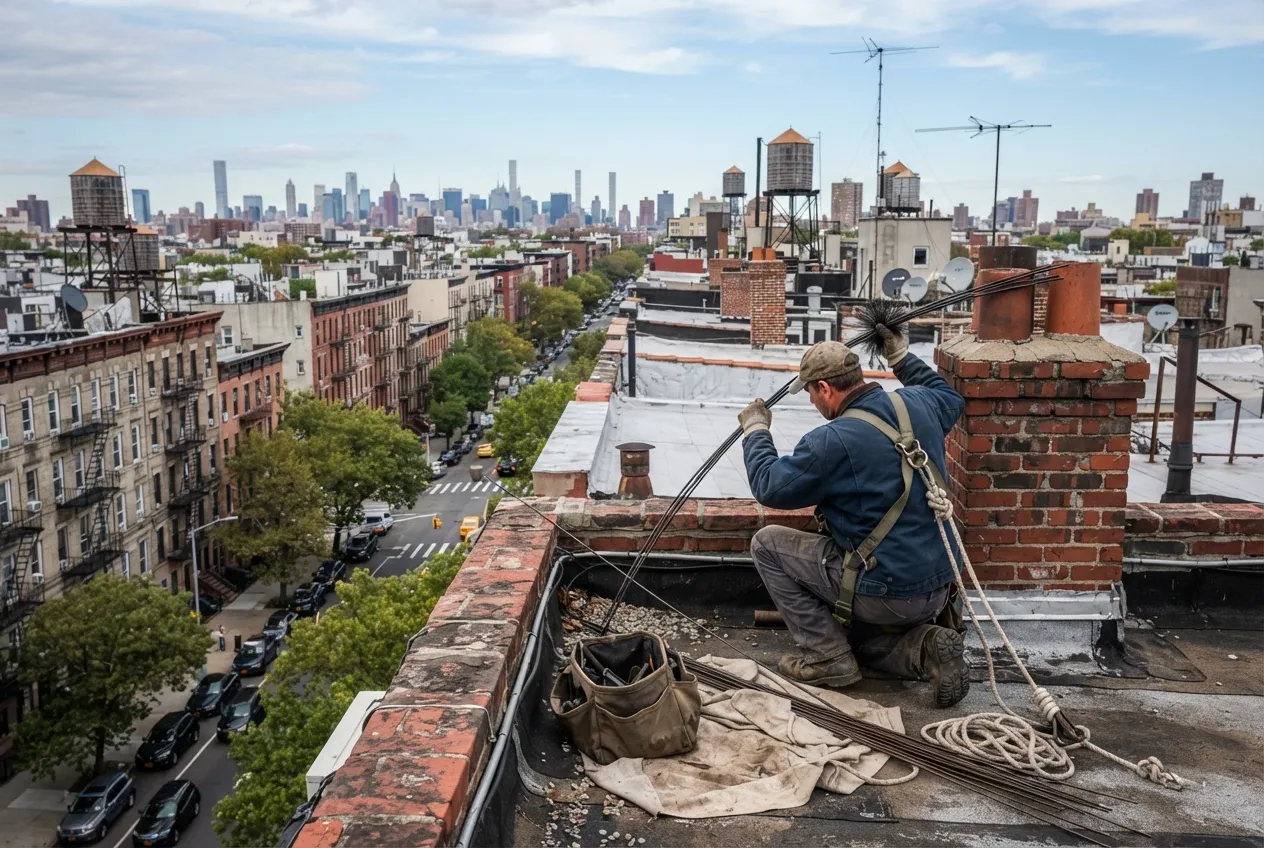
The short answer
Yes, Financial District apartments with working fireplaces should have the chimney inspected once a year, as the NFPA 211 standard recommends, and swept when buildup is found. EmberGuard's certified technicians handle sweeping and inspections and coordinate with building management for access.
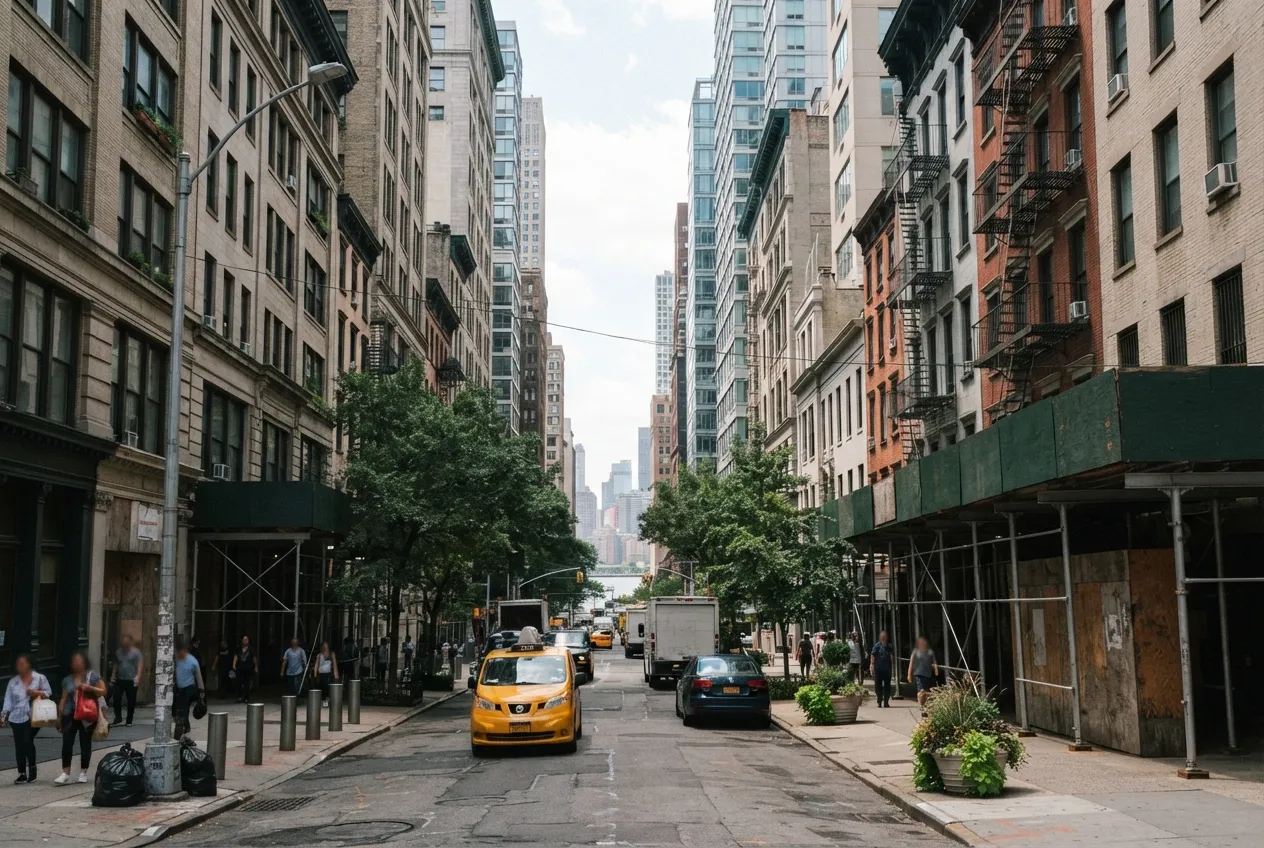
Most homes in the Financial District are apartments in pre-war buildings, converted older commercial buildings and newer high-rises, not detached houses. Fireplaces here are often decorative, gas-fired, or one of a limited number of wood-burning units in a building's older stock. They still need regular care. EmberGuard Chimney Sweep is based about a mile north in Manhattan, and our certified technicians clean and inspect fireplaces and flues in the 10005, 10006, 10038, 10271, 10280 and 10282 ZIP codes.
What a Chimney Sweep Includes for Downtown Apartments
A sweep removes soot, creosote and debris from the firebox, smoke chamber and flue so smoke and combustion gases can leave the home freely. In a wood-burning fireplace, creosote is the main concern. It builds up in layers, and if it ignites it can damage the flue. In gas fireplaces, the issues are more often debris, blocked vents and liner condition.
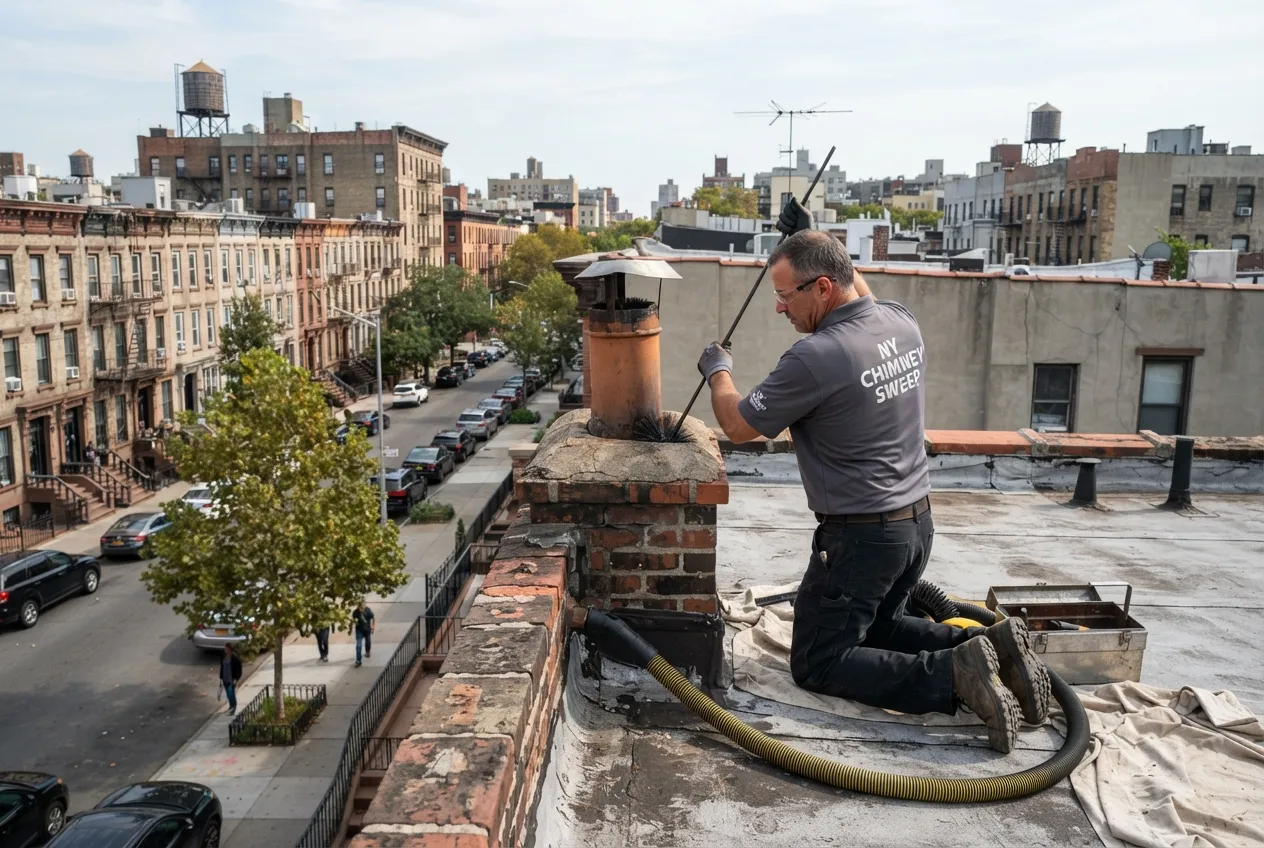
Before we start, we cover the hearth area and nearby floors and use containment and vacuums to keep soot out of the apartment. That matters in finished units with hardwood, light carpeting or open layouts. After cleaning, we check the damper, firebox and visible flue surfaces. We then tell you what we found in plain terms, including whether anything should be fixed before you use the fireplace again.
Annual Inspections and When a Closer Look Is Needed
The NFPA 211 standard calls for chimneys, fireplaces and vents to be inspected once a year. Chimney professionals use three levels of inspection, and the right one depends on your situation.
For most Financial District residents, the yearly visit is a Level 1 inspection plus a sweep if buildup is present. If you are buying or selling a unit, or if you have changed appliances or fuel, ask about a Level 2 inspection when you book.
- Level 1: the system hasn't changed and you use it the same way as before.
- Level 2: the system has changed, such as a new appliance or a switch in fuel, or the home is being sold.
- Level 3: a hidden hazard has to be reached by opening part of the chimney or building.
Older Buildings That Switched From Oil to Gas
Many older buildings in Lower Manhattan once burned oil for heat. When a New York City building converts its boiler from oil to gas, the chimney has to be evaluated as part of the work. A new liner is often needed because gas exhaust produces acidic condensate that can corrode a masonry flue.
If your building converted in the past, or a conversion is being planned, we can inspect the relevant flues and report on their condition. That gives owners, boards and managing agents clear information to plan with. We can also check the flue serving an individual fireplace to confirm it is separate from the heating system and in sound condition.
Time for your annual chimney check?
Scheduling Around Heat Season and Building Rules
New York City's heat season runs from October 1 through May 31. Building owners must keep apartments heated to the city's minimum temperatures during those months. Booking a sweep and inspection in late summer or early fall means boilers, flues and fireplaces get checked before demand peaks and while there is time to make repairs.
Downtown buildings usually have rules about contractors. We work with your doorman, superintendent or managing agent on service elevator reservations, certificate requests and approved work hours. If roof access is needed to reach the top of a flue, we arrange it through the building in advance so the visit runs on schedule.
Signs Your Fireplace Needs Attention
Call for a sweep or inspection sooner than your yearly visit if you notice any of the following:
- A strong smoky or tar-like smell, especially on humid days
- Smoke drifting into the room instead of drawing up the flue
- Black, flaky or glossy deposits inside the firebox or on the damper
- Debris, nesting material or bits of masonry falling into the firebox
- A damper that sticks, won't close, or lets in cold drafts
- A fireplace that hasn't been used or checked since you moved in
More services in Financial District
- Chimney Inspection in Financial DistrictLocal service & repairs
- Chimney Repair in Financial DistrictLocal service & repairs
- Air Duct Cleaning in Financial DistrictLocal service & repairs
- Chimney Liner Installation in Financial DistrictLocal service & repairs