The short answer
Chimneys, fireplaces and vents in Financial District homes should be inspected once a year, as the NFPA 211 standard calls for. The right inspection level depends on whether anything has changed, such as a new appliance, a switch from oil to gas, or a sale. EmberGuard's certified technicians handle both unit fireplaces and building boiler chimneys in the neighborhood.
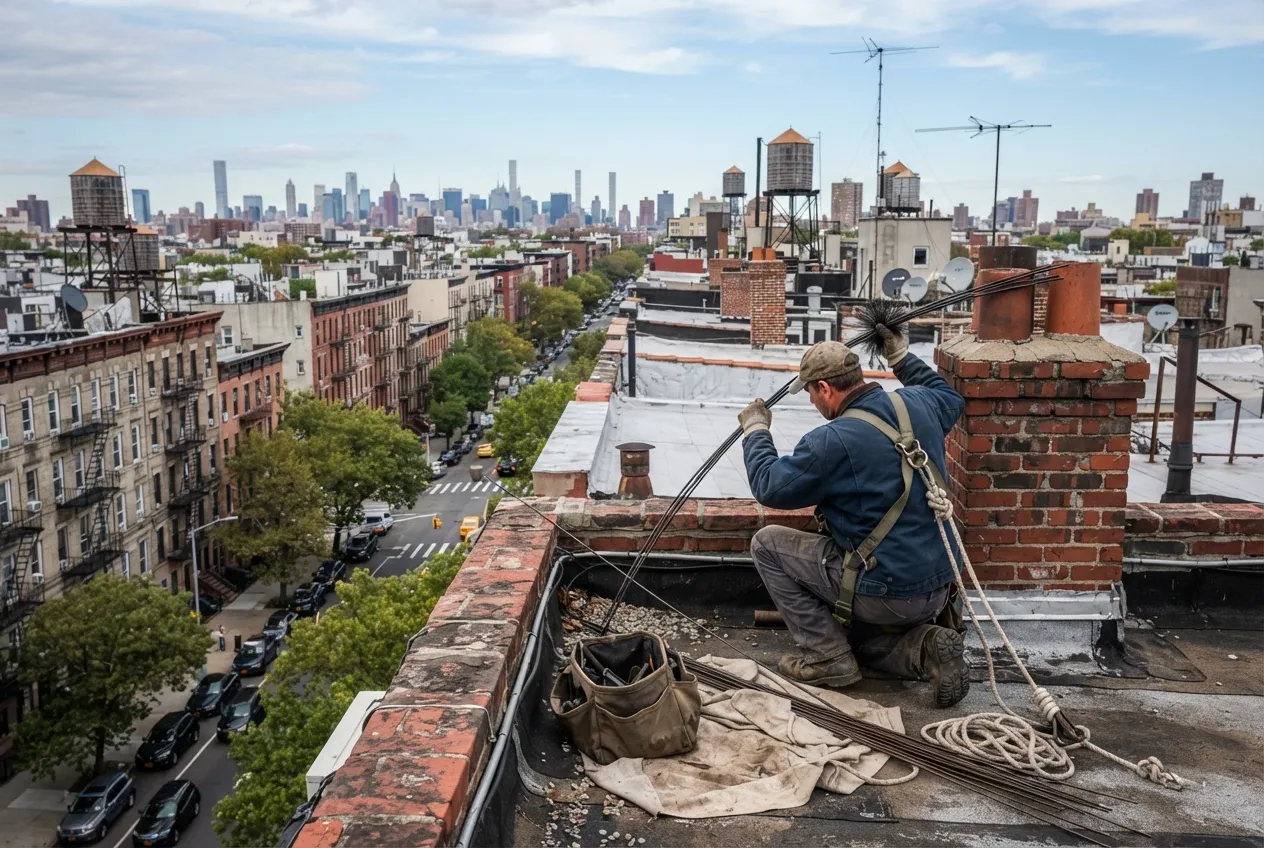
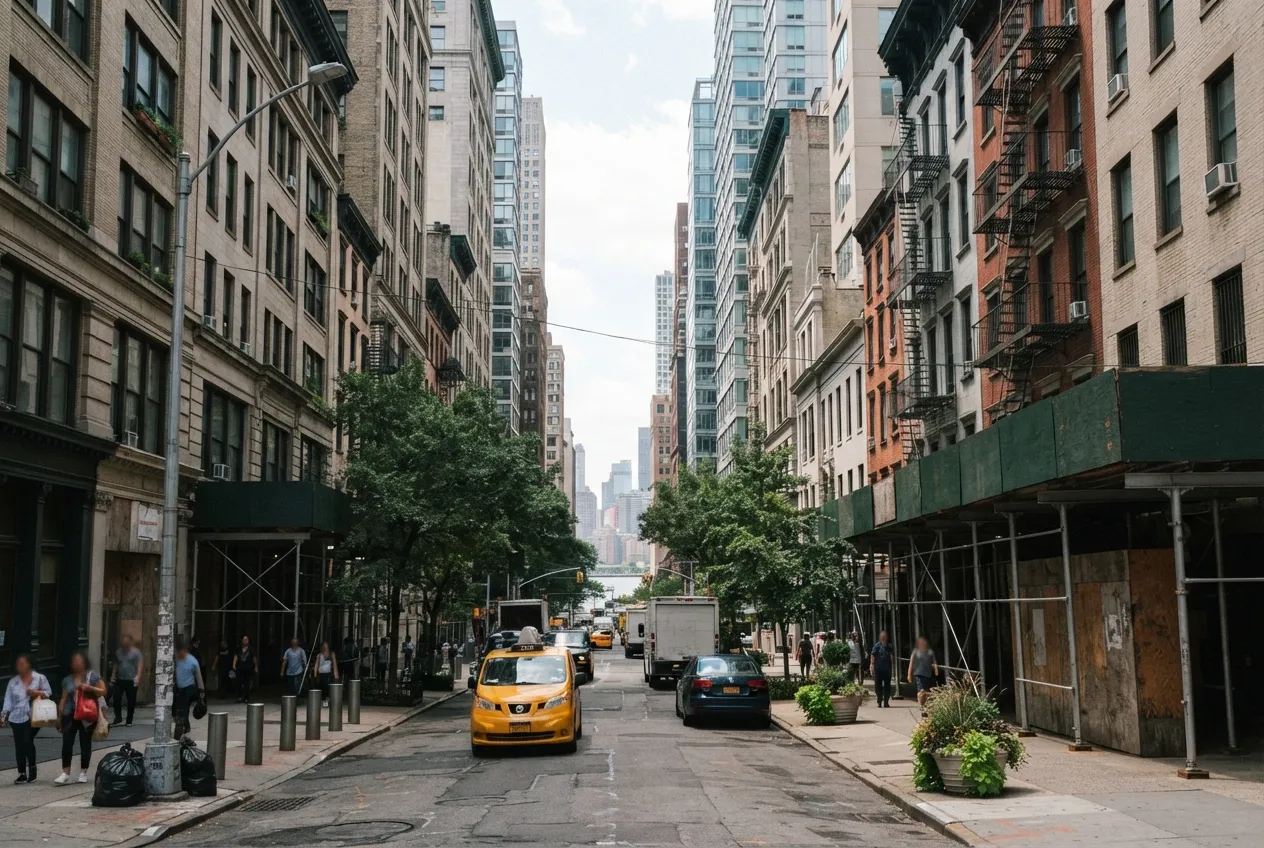
Homes in the Financial District sit in a mix of pre-war apartment buildings, older commercial buildings converted to residences, and newer condo and co-op towers. Some units have working wood-burning or gas fireplaces, and many buildings rely on a central boiler that vents through a tall masonry chimney. EmberGuard Chimney Sweep's Manhattan office is about a mile north, so we can reach residents and building managers in the neighborhood without a long trip. Our certified technicians inspect fireplace flues in individual units and boiler chimneys that serve a whole building, then explain what they found in plain terms: what is in good shape, what needs attention, and what can wait.
Why a yearly inspection matters in Financial District buildings
The NFPA 211 standard calls for chimneys, fireplaces and vents to be inspected once a year. That applies whether you light a fireplace a few times each winter or your building's boiler runs every day of the cold months.
Timing matters in New York City. The city's heat season runs from October 1 through May 31, and during those months building owners have to keep apartments heated to the city's minimum temperatures. A boiler chimney problem found in January is much harder to deal with than one found in late summer. For co-op boards, condo associations and owners of smaller buildings, booking the inspection before October leaves time for any repairs before the heat has to stay on.
Which inspection level fits your situation
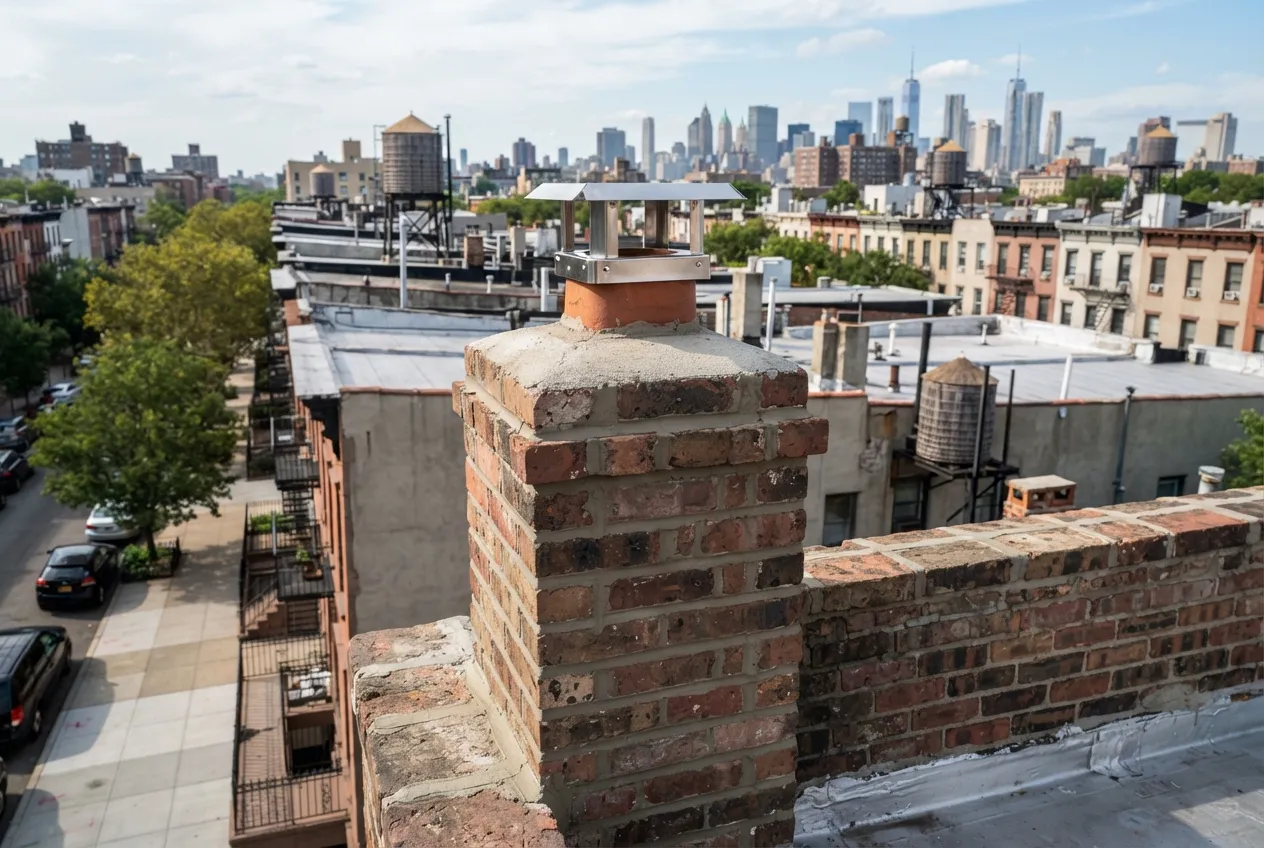
Chimney professionals use three inspection levels. We will recommend the one that matches what is happening with your chimney, not the most involved option by default.
- Level 1: The routine yearly inspection when nothing about the chimney, the appliance or the fuel has changed. We check the readily accessible parts of the chimney, flue and connections.
- Level 2: Called for when the system changes, such as a new boiler, water heater or fireplace insert, or a switch of fuel, and when a home is sold. This is common in co-op and condo sales and in buildings updating their heating equipment.
- Level 3: Needed when a hidden hazard has to be reached by opening part of the chimney or building, for example behind a wall or inside a chase. We only recommend this when earlier findings point to a concealed problem.
Oil-to-gas conversions and chimney liners
Many older buildings in Lower Manhattan once burned heating oil and have since moved, or are planning to move, to natural gas. When a New York City building converts its boiler from oil to gas, the chimney has to be evaluated as part of the work.
A new liner is often needed. Gas exhaust produces acidic condensate, and over time that moisture can corrode a masonry flue that was built for oil. During a conversion inspection we look at the flue's size, condition and existing lining so the building's team and its heating contractor know whether the chimney is ready or needs relining first.
Time for your annual chimney check?
What we check during a chimney inspection
Every inspection covers the parts of the system that affect safe venting. After the visit you get a clear account of conditions and any recommended next steps.
- Flue liner condition, including cracks, gaps, missing sections and signs of corrosion
- Soot and creosote buildup in wood-burning fireplace flues
- Firebox, smoke chamber and damper in unit fireplaces
- Connector pipes and breeching from boilers and water heaters
- Chimney crown, cap and exterior masonry where roof access allows
- Blockages from debris, nesting material or fallen masonry
- Signs of water entry, such as staining, efflorescence or rust
Scheduling an inspection in the Financial District
Most Financial District buildings have management offices, doormen or supers who coordinate contractor visits. We work with them on access to the roof, the boiler room and individual units, and we follow building rules on elevator use and work hours. If you are a unit owner, let us know who manages your building so we can arrange access ahead of time.
We serve homes and buildings in ZIP codes 10005, 10006, 10038, 10271, 10280 and 10282, as well as nearby Tribeca, Civic Center, Chinatown, Two Bridges and SoHo.
More services in Financial District
- Chimney Sweep in Financial DistrictLocal service & repairs
- Chimney Repair in Financial DistrictLocal service & repairs
- Air Duct Cleaning in Financial DistrictLocal service & repairs
- Chimney Liner Installation in Financial DistrictLocal service & repairs