The short answer
A chimney sweep removes soot and creosote from your fireplace and flue and checks the system for damage, blockages and draft problems. Civic Center homeowners should have the chimney inspected once a year, as the NFPA 211 standard recommends, and cleaned when the inspection shows buildup.
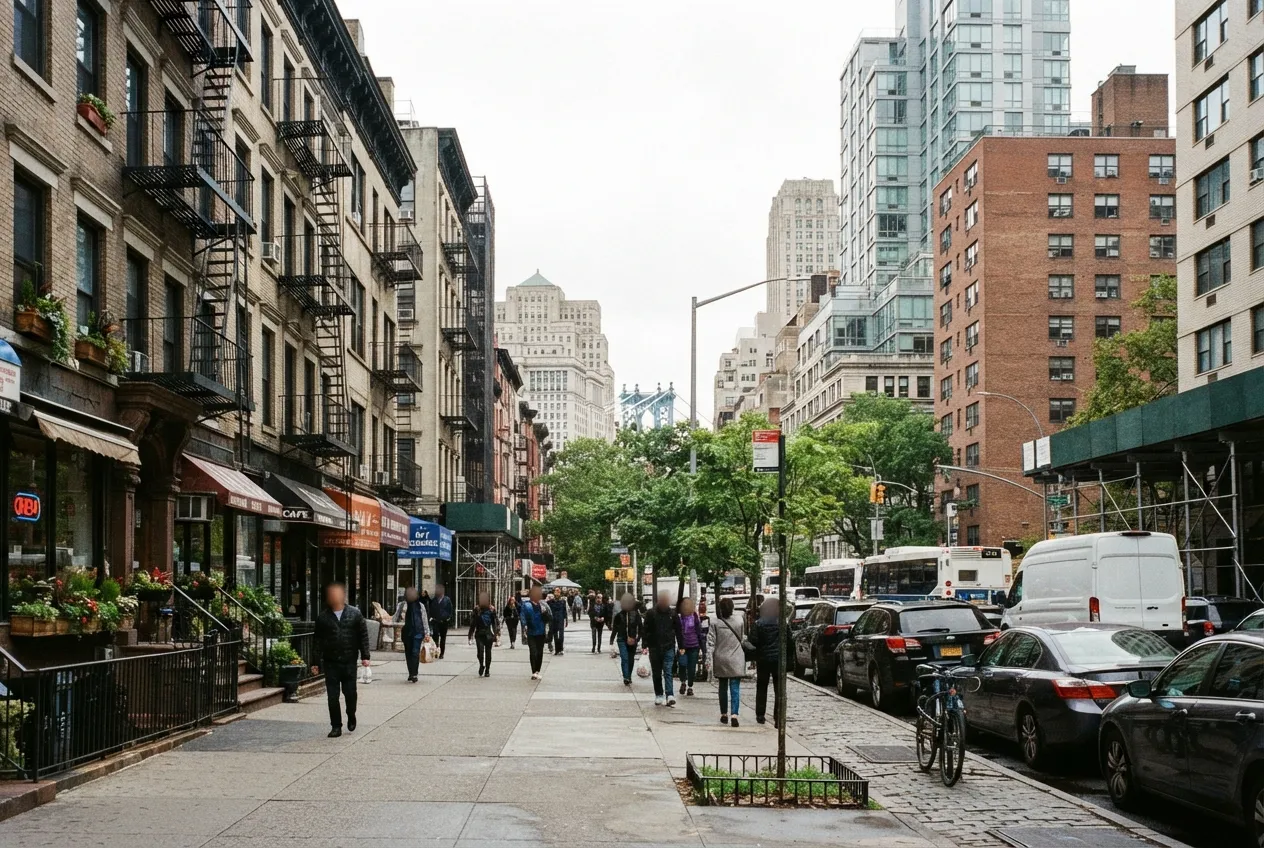
Civic Center sits about a mile southwest of our Manhattan office, so EmberGuard Chimney Sweep technicians reach homes in ZIP codes 10007, 10013, 10278 and 10279 without a long trip across town. The neighborhood's housing is mostly pre-war apartment buildings, converted commercial and industrial buildings now used as lofts, and a smaller number of older walk-ups. Many of these homes have working fireplaces, decorative fireplaces that owners want to bring back into use, or flues shared with a building boiler. Our certified technicians clean and inspect the chimney so you know what you have and whether it is safe to use.
What a Chimney Sweep Covers in a Civic Center Home
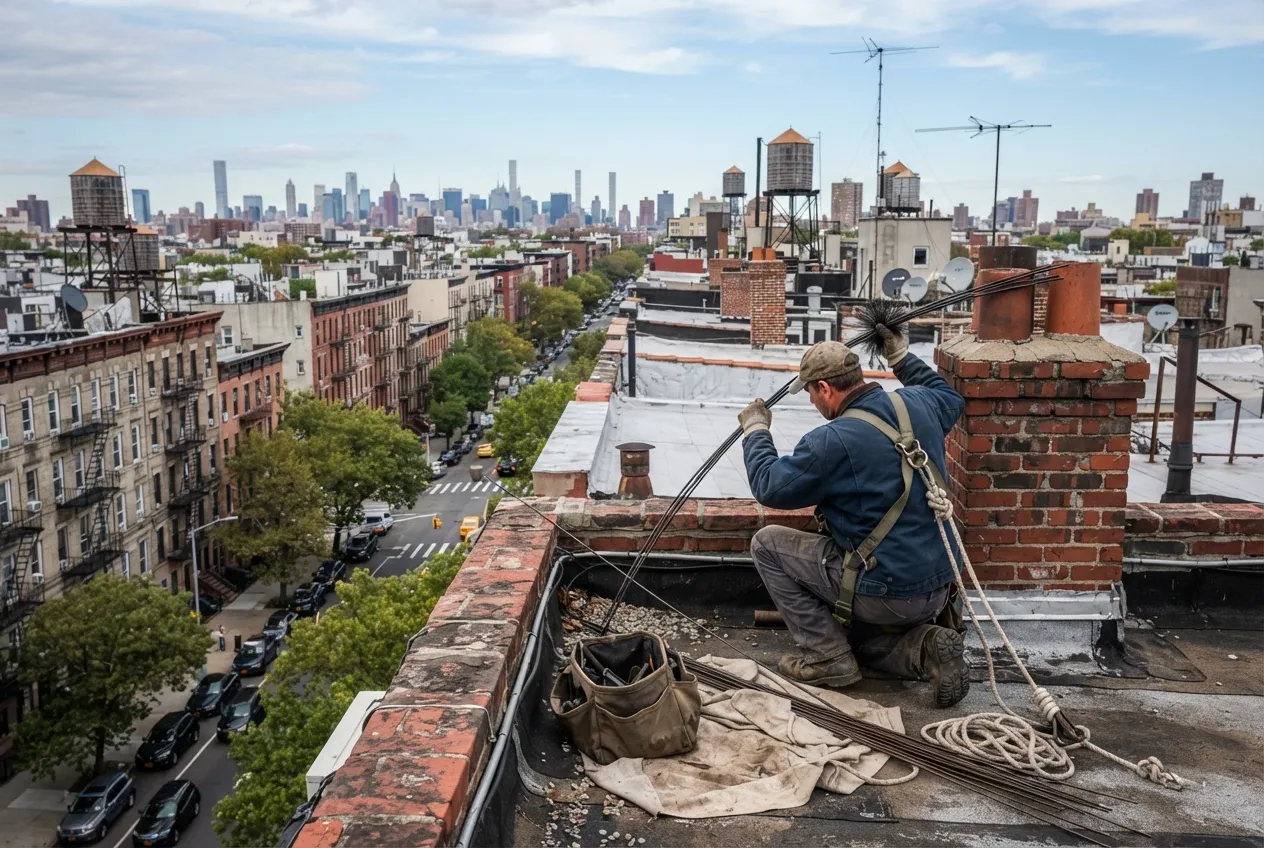
A sweep is more than brushing out the flue. Our technicians lay down drop cloths, set up containment and a vacuum so soot stays out of your living space, then clean the firebox, smoke chamber and flue. Afterward we look at the parts that affect safety and draft and explain what we found in plain terms.
In loft and apartment buildings the chimney often runs through several floors before it reaches the roof. We clean from inside the unit when that is the practical approach, and we coordinate roof access with your building when the work requires it.
- Removal of soot and creosote from the firebox, smoke chamber and flue
- Check of the damper, smoke shelf and firebox walls for cracks or gaps
- Check for nests, fallen debris or other blockages
- Look at the chimney cap and crown where roof access allows
- A written summary of the system's condition and any recommended repairs
Older Buildings and Fireplaces That Have Sat Unused
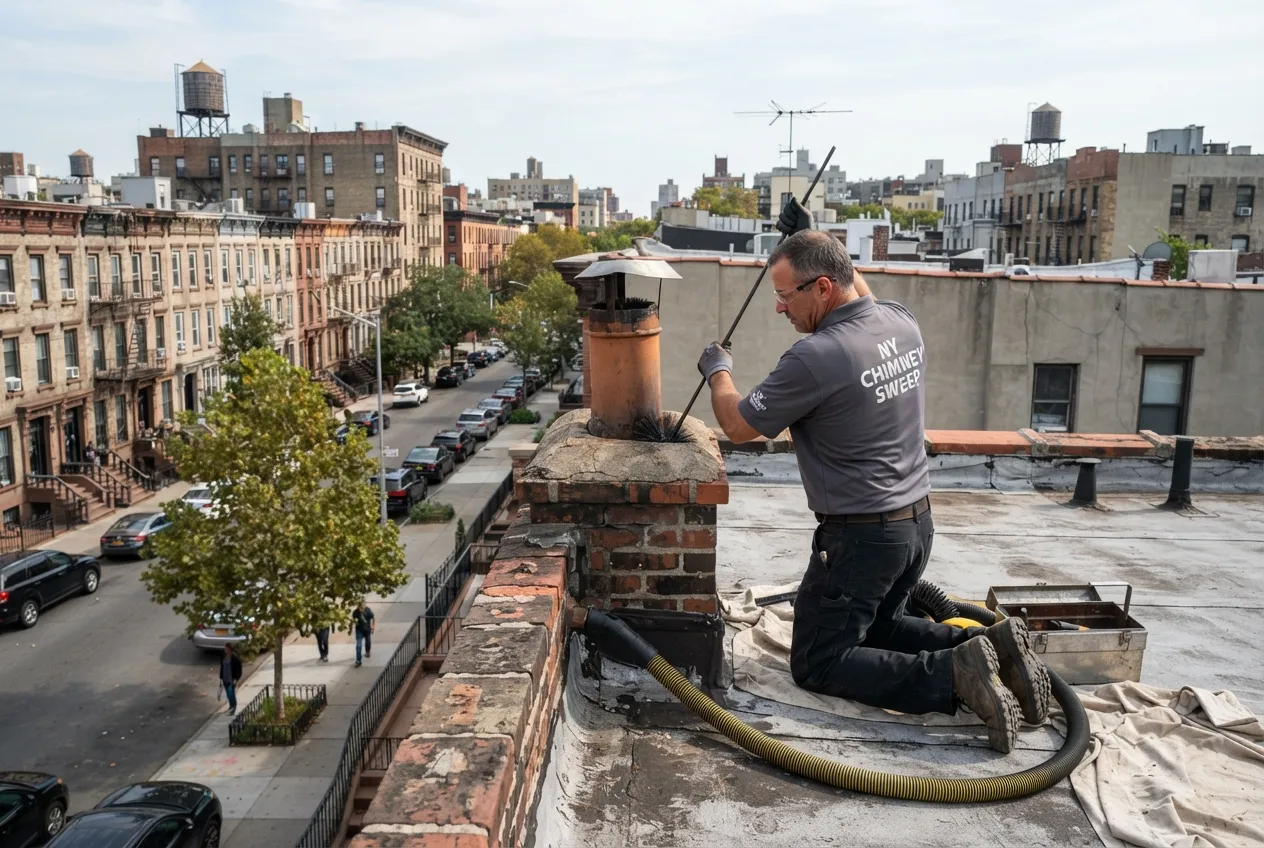
Many fireplaces in pre-war and converted buildings went unused for long stretches. A flue that has been closed off can collect debris, lose mortar or develop cracks that nobody noticed. If you have moved into a home with a fireplace you have never lit, or you are thinking about reopening one, start with a cleaning and inspection before you build a fire.
The NFPA 211 standard describes three inspection levels. A Level 1 inspection fits a system you already use with no changes. A Level 2 inspection applies when the system changes, such as a new insert or a switch to a different fuel, or when the home is sold. A Level 3 inspection is needed only when a suspected hidden hazard can be reached only by opening part of the chimney or the building. We will tell you which level fits your situation and why.
Shared Flues and Oil-to-Gas Conversions
In apartment and mixed-use buildings, a boiler often vents through a masonry chimney. When a New York City building converts its boiler from oil to gas, the chimney has to be evaluated as part of that work. A new liner is often needed, because gas exhaust produces acidic condensate that can corrode an unlined or poorly lined masonry flue.
If your building is planning a conversion or has finished one, our technicians can inspect the flue, report on its condition and explain whether a liner is likely to be part of the job. This gives owners and boards clear information before they commit to the next step.
Time for your annual chimney check?
When to Schedule Your Sweep
New York City's heat season runs from October 1 through May 31. Boilers and fireplaces see the most use during those months, so late spring and summer are good times to book a sweep. Scheduling then gives you time to handle any repairs before the cold weather starts and before buildings need their heating systems running.
Between yearly inspections, call us sooner if you notice smoke coming into the room, a strong smell from the fireplace when it is not in use, flakes of black material in the firebox, or animal sounds in the flue.
Serving Civic Center and Nearby Neighborhoods
Along with Civic Center, we sweep chimneys in Tribeca, SoHo, Little Italy, Hudson Square and the Financial District. These neighborhoods share much of the same building stock, including lofts, pre-war apartment buildings and older walk-ups, so our technicians are used to the access, scheduling and building rules that come with Lower Manhattan work.
More services in Civic Center
- Chimney Inspection in Civic CenterLocal service & repairs
- Chimney Repair in Civic CenterLocal service & repairs
- Air Duct Cleaning in Civic CenterLocal service & repairs
- Chimney Liner Installation in Civic CenterLocal service & repairs