The short answer
You usually need a new chimney liner when a flue is cracked, unlined, the wrong size for the appliance, or being converted from oil to gas. EmberGuard's certified technicians inspect the flue first, then fit a liner matched to the appliance and fuel in your Civic Center building.
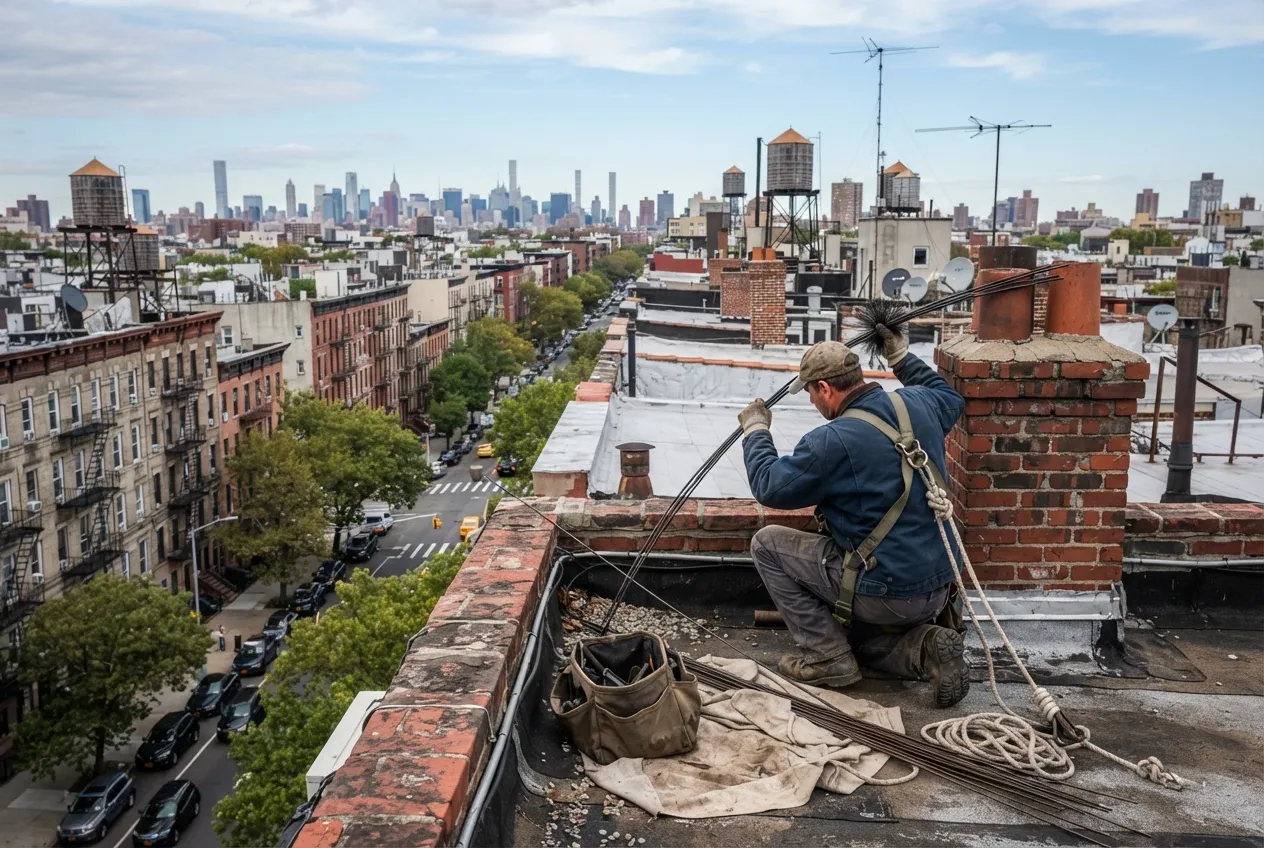
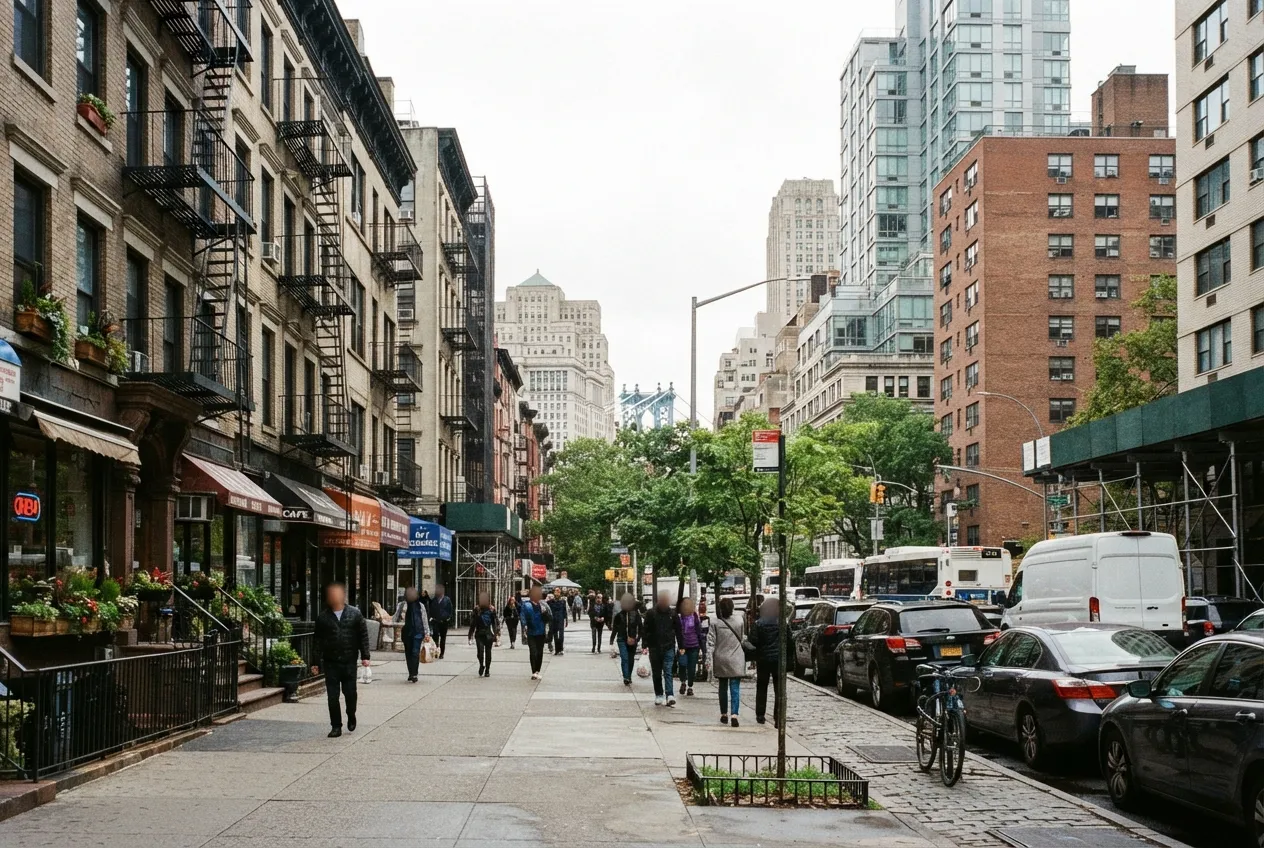
A chimney liner keeps heat, smoke and exhaust gases inside the flue and away from the masonry and framing around it. In Civic Center, many homes are in older masonry buildings: pre-war apartment buildings, converted loft and commercial buildings, and co-ops with shared boiler chimneys. Many of these flues were built for coal or oil and have never had a modern liner. EmberGuard Chimney Sweep installs liners for homeowners, co-op boards and building managers throughout the 10007, 10013, 10278 and 10279 ZIP codes, about a mile southwest of our Manhattan office. This page explains when a liner is needed, how we decide which type fits your chimney, and how the work usually goes in a dense downtown neighborhood.
Why Older Civic Center Chimneys Often Need Liners
Many residential buildings in Civic Center have tall masonry chimneys that serve a central boiler, a fireplace, or both. Over decades, heat cycling, moisture and acidic combustion byproducts wear down mortar joints and clay tiles. Some older chimneys were never lined at all. Their exhaust touches bare brick, and gaps in that brick can let gases or heat move into the walls.
A damaged or missing liner is hard to see from inside the apartment. The usual signs are flaking or crumbling material at the base of the flue, water staining on nearby walls, a smoky or sour smell when the system runs, and poor draft. In a shared building, these problems can affect several units at once, so liner work often starts as a building-wide decision.
Oil-to-Gas Conversions and New Liners
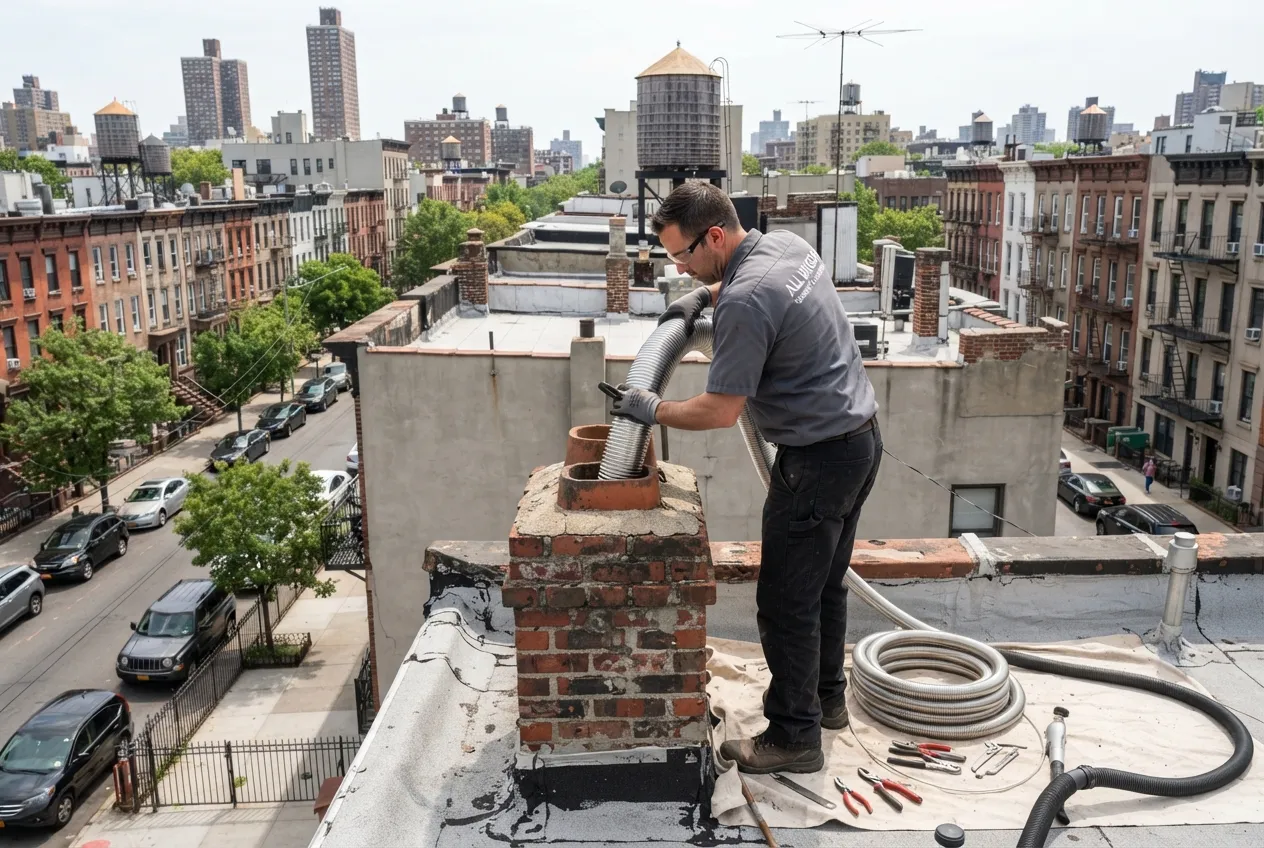
Many Manhattan buildings have switched their boilers from heating oil to natural gas. When a New York City building makes that conversion, the chimney has to be evaluated as part of the job. A new liner is often required because gas exhaust produces acidic condensate. That condensate can corrode a masonry flue that held up fine under oil.
We work with building owners, managers and their heating contractors to size and install a liner that suits the new appliance. A flue that is too large for a modern, efficient boiler can cool the exhaust too much, which leads to more condensation and weak draft. Getting the diameter and material right is as important as the installation itself.
How We Evaluate a Chimney Before Lining It
The NFPA 211 standard calls for chimneys, fireplaces and vents to be inspected once a year. It also defines three inspection levels. A Level 2 inspection applies when the system changes, such as a new appliance or a switch of fuel, or when a home is sold. Most liner projects fall into that category. A Level 3 inspection is used when a suspected hidden hazard can only be reached by opening part of the chimney or building.
Before recommending a liner, our certified technicians typically:
- Run a camera through the full length of the flue to document cracks, gaps and deterioration
- Confirm which appliances vent into the chimney and what fuel each one burns
- Measure the flue to determine what liner size and shape will fit
- Check the crown, cap and roof-level masonry for water entry
- Review access to the roof and the appliance location inside the building
Time for your annual chimney check?
Choosing the Right Liner Type
No single liner suits every chimney. The right choice depends on the fuel, the appliance, the flue's shape and how much damage is already there. Common options include:
- Stainless steel liners, rigid or flexible, which are widely used for gas and oil boilers and for many wood-burning fireplaces
- Insulated stainless liners, which help keep exhaust warm in tall or exterior chimneys and reduce condensation
- Cast-in-place liners, where a cement-like material is formed inside the existing flue to seal it and add strength
- Clay tile replacement, which is sometimes practical in shorter chimneys where the masonry can be opened
Scheduling Liner Work Around the Heat Season
New York City's heat season runs from October 1 through May 31. During those months, building owners must keep apartments heated to the city's minimum temperatures. That makes boiler chimney work much easier to plan for late spring and summer, when the heating system can be shut down without leaving residents in the cold.
If a problem turns up during the heat season, we discuss options with you and your heating contractor to keep downtime short. We also serve nearby Tribeca, SoHo, Little Italy, Hudson Square and the Financial District. Many buildings there have similar chimneys, so the same planning applies.
More services in Civic Center
- Chimney Sweep in Civic CenterLocal service & repairs
- Chimney Inspection in Civic CenterLocal service & repairs
- Chimney Repair in Civic CenterLocal service & repairs
- Air Duct Cleaning in Civic CenterLocal service & repairs