The short answer
Two Bridges chimneys should be inspected once a year under the NFPA 211 standard and swept when soot or creosote has built up. EmberGuard's certified technicians clean fireplace and boiler flues in walk-ups, rowhouses and pre-war apartment buildings across the neighborhood and nearby Lower Manhattan.
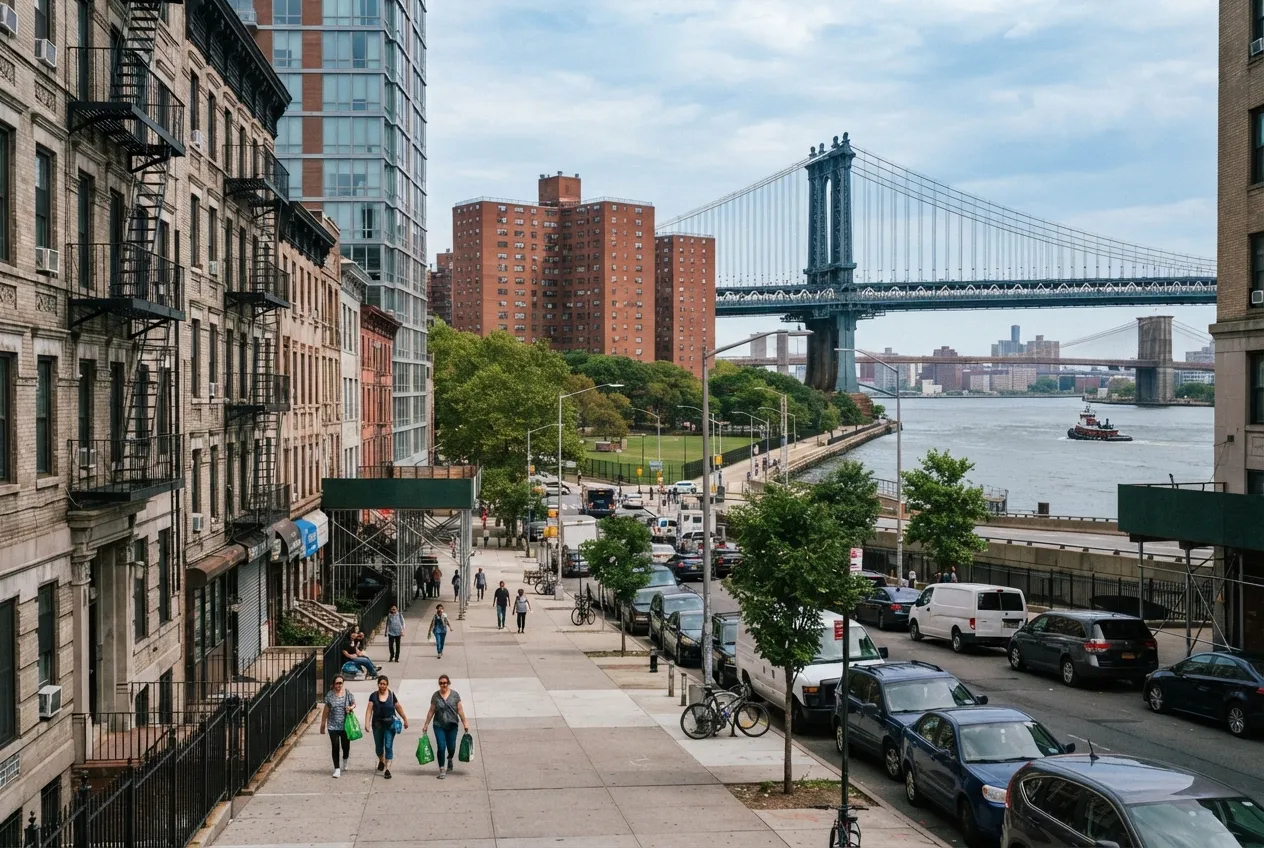
EmberGuard Chimney Sweep cleans and inspects chimneys in Two Bridges, about a mile southeast of our Manhattan office. Most of the neighborhood's housing is older walk-up buildings, pre-war apartment buildings, a scattering of rowhouses, and larger multifamily buildings. Many of them still have working fireplaces or masonry flues that serve a boiler. Whether you own a building with a shared flue or a single apartment with a fireplace you use a few times a winter, a sweep removes buildup and gives you a clear look at the chimney's condition.
Why Chimney Sweeping Matters in Older Lower Manhattan Buildings
Burning wood leaves creosote, a sticky, flammable residue that coats the inside of the flue. Over a season it can harden into layers that narrow the passage and can catch fire. Oil and gas appliances leave soot and scale instead, and debris from crumbling mortar or old clay liners can collect at the base of the chimney or block the flue.
Many buildings in Two Bridges have masonry chimneys that have outlasted several heating systems. Some flues are tall and narrow, run through several floors, or have sat unused for years. Bird nests, fallen brick and leftover debris are common in chimneys like these. A sweep clears the flue, and the inspection that comes with it shows whether the chimney is still safe to use.
What a Chimney Sweep Visit Includes
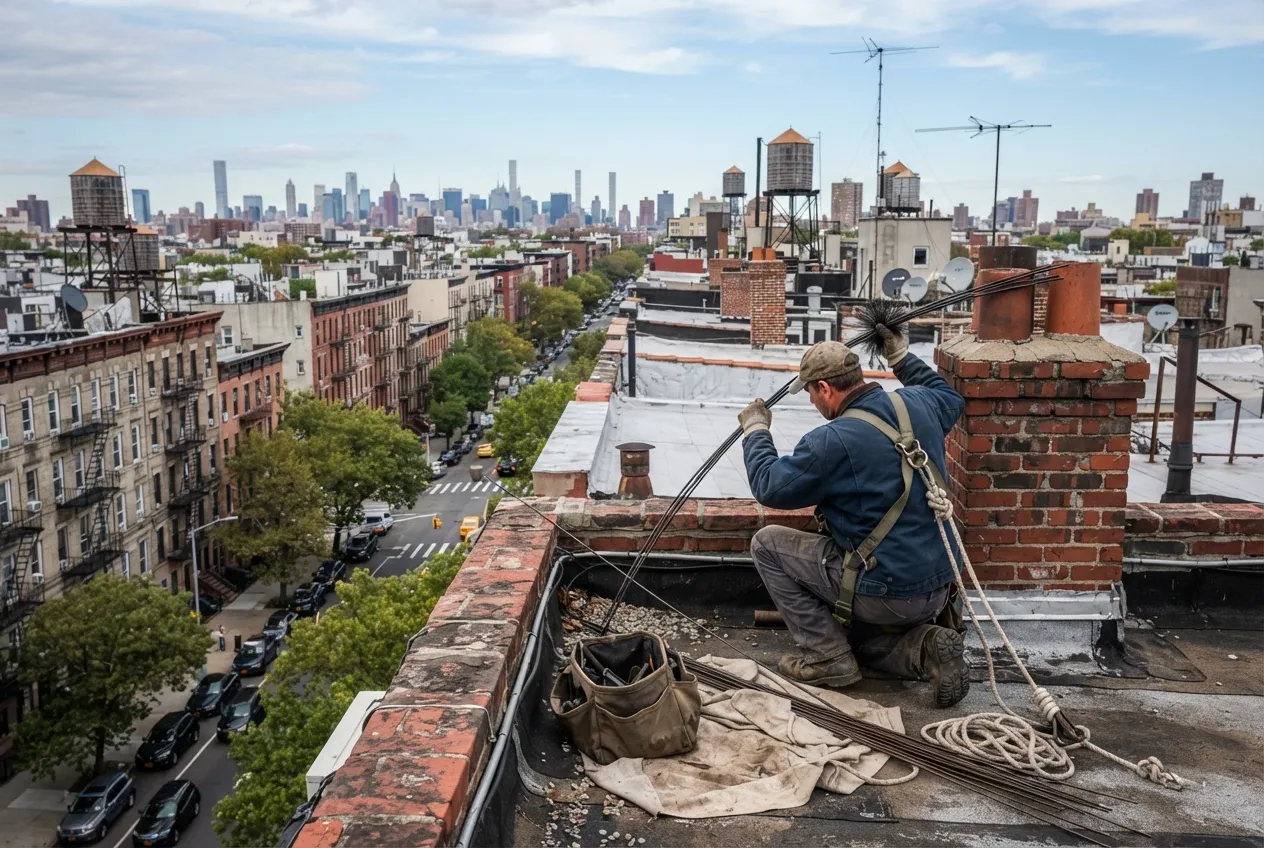
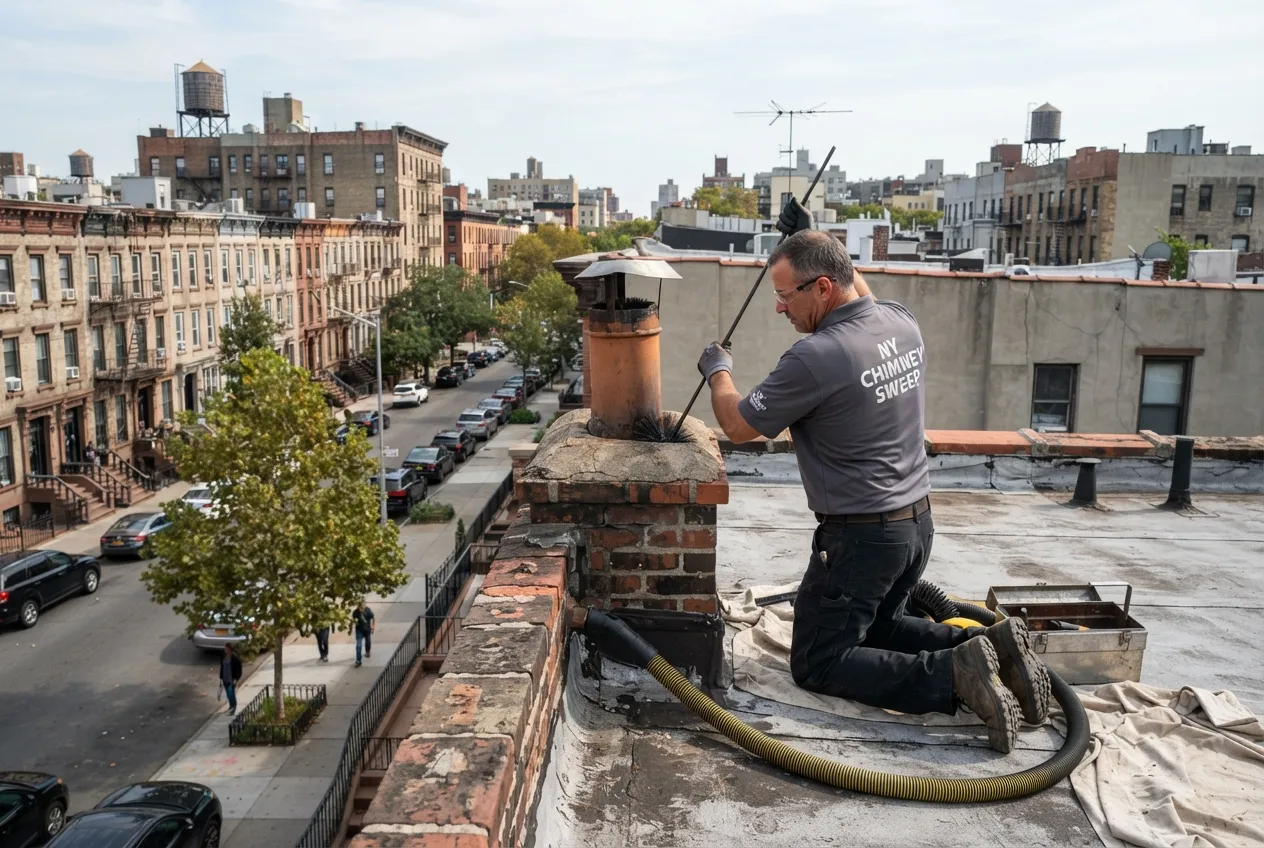
Our technicians protect the area around the fireplace or appliance before starting, since tight apartment layouts leave little room for mess. We work from inside, from the roof, or both, depending on the building and where we can reach the flue.
A standard visit covers:
- Drop cloths and containment around the fireplace or clean-out door
- Brushing the flue from top to bottom to remove soot and creosote
- Cleaning the smoke chamber, smoke shelf and firebox
- Checking the damper for smooth operation and a proper seal
- Looking at the crown, cap and visible masonry where they are reachable
- Clearing debris, nests and fallen material from the base of the chimney
- Walking you through what we found, with photos when they help explain a problem
Annual Inspections and the Three Inspection Levels
The NFPA 211 standard calls for chimneys, fireplaces and vents to be inspected once a year. Chimney professionals use three inspection levels, and the right one depends on what has changed.
A Level 1 inspection fits most homes where the system hasn't changed and the chimney is used the same way as before. A Level 2 inspection is called for when the system changes, such as a new appliance or a switch to a different fuel, or when the home is being sold. That makes it common in a neighborhood where buildings change hands and get renovated. A Level 3 inspection is needed only when a hidden hazard has to be reached by opening part of the chimney or the building. We'll tell you which level applies before we start.
Time for your annual chimney check?
Boiler Flues and Oil-to-Gas Conversions
In many multifamily buildings the chimney's main job is venting the boiler, not serving a fireplace. When a New York City building converts its boiler from oil to gas, the chimney has to be evaluated as part of the work. A new liner is often needed because gas exhaust produces acidic condensate that can corrode a masonry flue. If your building is planning a conversion, cleaning and inspecting the flue early gives you a clearer picture of what the chimney will need.
Timing Your Sweep Around the Heat Season
New York City's heat season runs from October 1 through May 31. During those months, building owners must keep apartments heated to the city's minimum temperatures. For a building that relies on its boiler, a chimney problem in the middle of winter is more than an inconvenience.
Late spring and summer are good times to schedule a boiler flue sweep, after the heating load drops and before October. Fireplace owners often book in late summer or early fall so the chimney is ready for the first cold night. We also serve nearby Chinatown, the Lower East Side, Tribeca, Civic Center and SoHo, so neighbors in shared or adjoining buildings can coordinate visits.
More services in Two Bridges
- Chimney Inspection in Two BridgesLocal service & repairs
- Chimney Repair in Two BridgesLocal service & repairs
- Air Duct Cleaning in Two BridgesLocal service & repairs
- Chimney Liner Installation in Two BridgesLocal service & repairs