The short answer
A chimney inspection in Two Bridges checks whether your flue, masonry, and appliance connections are safe to use, following the yearly inspection called for by the NFPA 211 standard. Most homes need a Level 1 inspection. A Level 2 is needed after a fuel switch, a new appliance, or a sale, which is common in older Manhattan buildings.
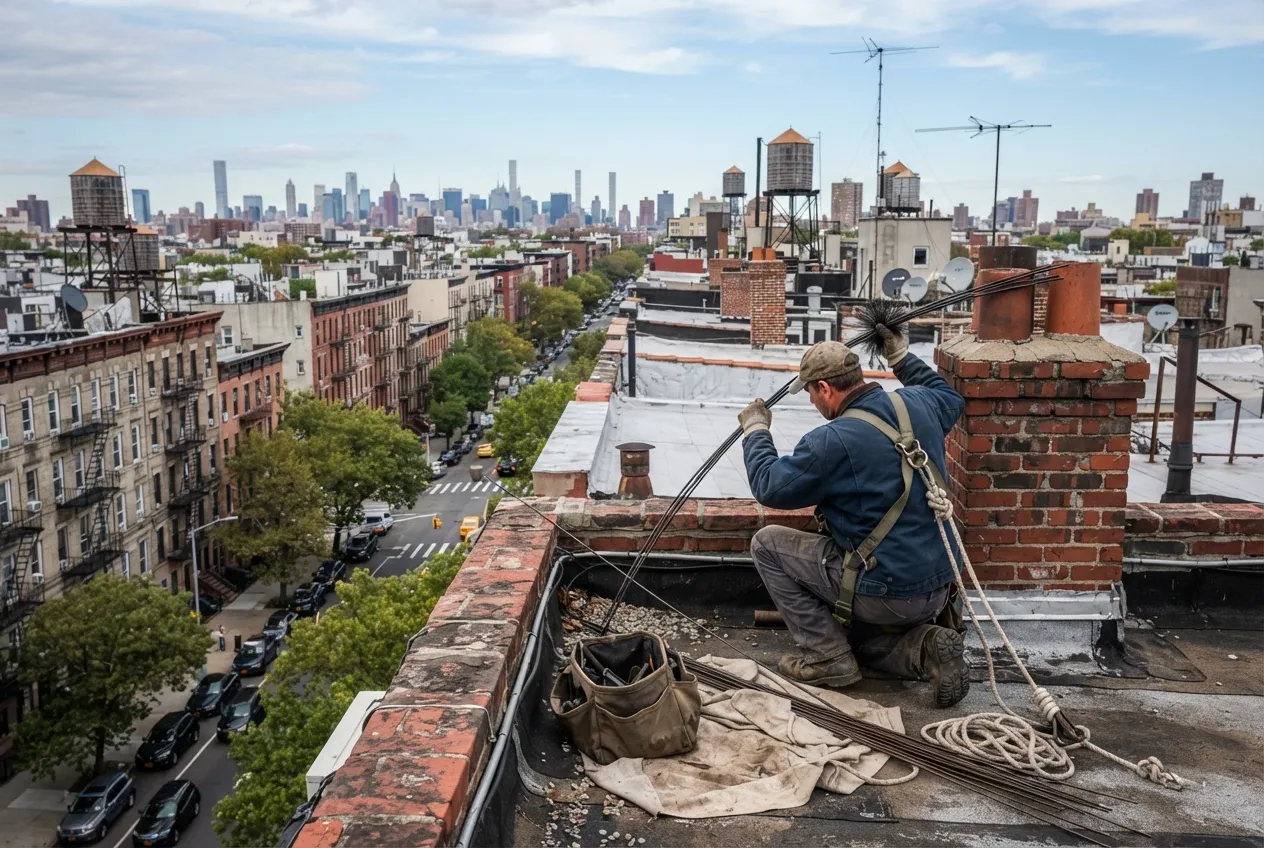
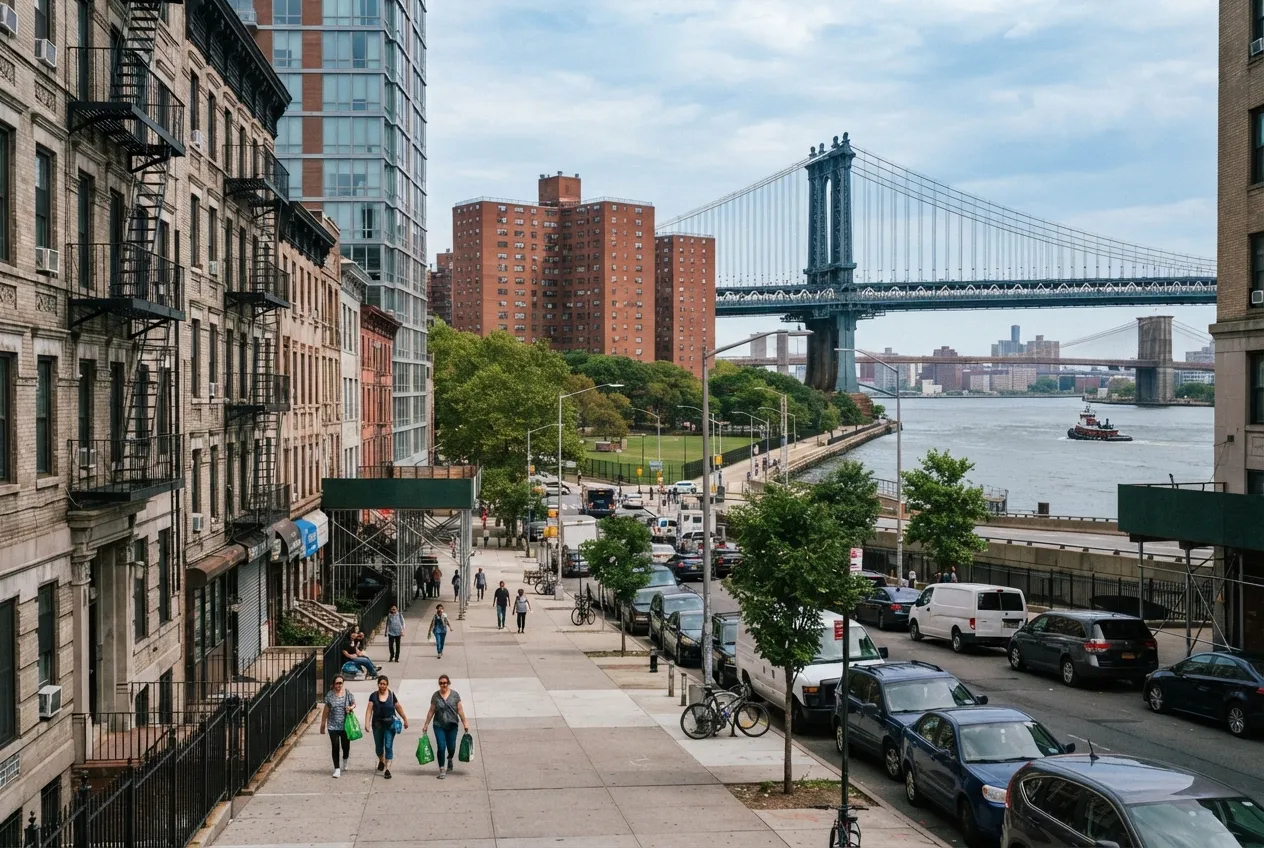
Two Bridges is about a mile southeast of our Manhattan office, so EmberGuard Chimney Sweep can reach homes and buildings there without a long wait. Much of the neighborhood's housing is older: pre-war walk-ups, mixed-use buildings with apartments over storefronts, a few rowhouses, and larger apartment buildings with central boilers. Many of these chimneys have served several heating systems over their lives, and some flues have been closed off, shared, or partly rebuilt. A chimney inspection tells you whether the system is safe to use as it stands today. Our certified technicians check the flue, the masonry, and the connections to your fireplace, stove, or boiler, then explain what they found in plain terms.
Which inspection level your chimney needs
The NFPA 211 standard calls for chimneys, fireplaces, and vents to be inspected once a year. Chimney professionals use three levels of inspection, and the right one depends on what has happened to your system since it was last checked.
Most Two Bridges homeowners with a working fireplace or a boiler flue that hasn't changed need a Level 1 inspection. If you are buying or selling, or you have changed something about how the chimney is used, a Level 2 is the right starting point. We tell you which level applies before we begin.
- Level 1: nothing about the system has changed since the last inspection. We check the accessible parts of the chimney, the appliance, and the connection between them.
- Level 2: the system has changed, such as a new appliance or a switch of fuel, or the home is being sold. This adds a closer look at the flue interior, usually with a video scan.
- Level 3: a hidden hazard is suspected and the only way to reach it is to open part of the chimney or the building. We recommend this only when a Level 2 points to a problem we can't otherwise see.
What we look for in older Two Bridges buildings
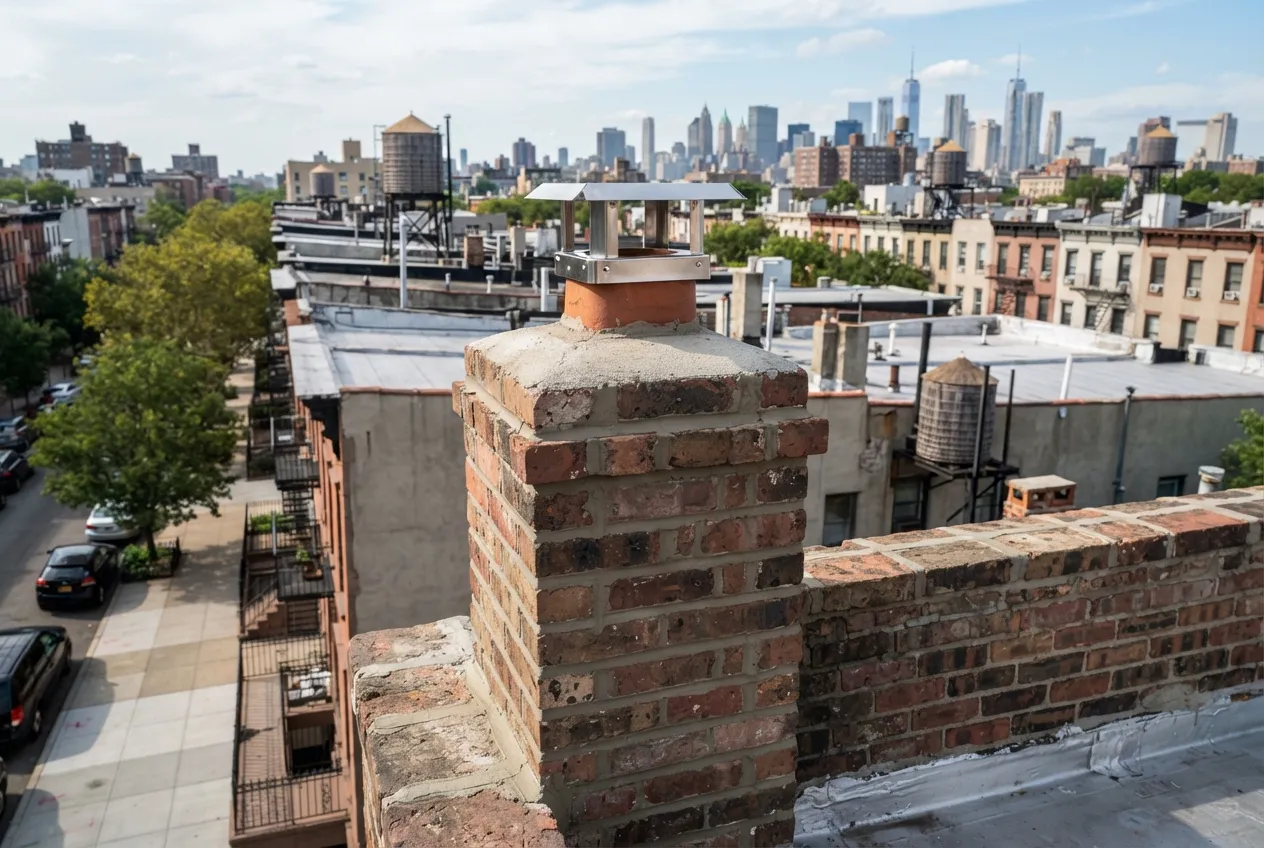
Pre-war masonry chimneys in this part of Manhattan tend to have their own set of problems. Brick and mortar that have gone through many freeze-thaw winters can crumble at the top of the stack, where the crown and cap take the most weather. Inside, clay tile liners can crack or shift. Some flues were never lined at all.
In walk-ups and mixed-use buildings, we also check for flues that serve more than one appliance, old openings that were sealed poorly, and connector pipes that have rusted or pulled loose at the thimble. In a fireplace, we look at the damper, the firebox, the smoke chamber, and creosote buildup. In each case the goal is the same: make sure smoke and combustion gases leave the building and heat stays away from nearby wood framing.
Oil-to-gas conversions and flue liners
Many older New York City buildings have converted their boilers from oil to gas. When that happens, the chimney has to be evaluated as part of the work. A new liner is often needed because gas exhaust produces acidic condensate, which can corrode a masonry flue that was built for a different fuel.
If your building has converted, or plans to, a Level 2 inspection shows the condition of the existing flue and whether it is sized and lined for the new equipment. We can coordinate with your heating contractor so the chimney findings are ready when they need them.
Time for your annual chimney check?
Timing your inspection around heat season
New York City's heat season runs from October 1 through May 31. During those months, building owners must keep apartments heated to the city's minimum temperatures. A boiler flue problem found in January is much harder to deal with than one found in August, because the heat can't simply be turned off for repairs.
For that reason, late summer and early fall are good times to schedule. Fireplace owners benefit from the same timing, since an inspection before the first fire of the season catches blockages from nests, fallen debris, or loose masonry.
What to expect during the visit
We arrive with drop cloths and protect the floor around the fireplace or boiler room. Your technician works through the system from the appliance to the top of the stack, as access allows. Roof access in Manhattan buildings sometimes needs the super or management to unlock a door, so it helps to arrange that ahead of time.
When the inspection is done, we go over the findings with you, show photos or video of anything that needs attention, and give you a written summary. If repairs are needed, we explain which ones affect safety now and which can be planned for later.
Serving Two Bridges and nearby neighborhoods
Along with Two Bridges, we inspect chimneys in Chinatown, the Lower East Side, Tribeca, Civic Center, and SoHo. The housing across these neighborhoods varies, from walk-ups to loft buildings to rowhouses. We look at each chimney on its own terms and don't apply a one-size-fits-all checklist.
More services in Two Bridges
- Chimney Sweep in Two BridgesLocal service & repairs
- Chimney Repair in Two BridgesLocal service & repairs
- Air Duct Cleaning in Two BridgesLocal service & repairs
- Chimney Liner Installation in Two BridgesLocal service & repairs