The short answer
A chimney liner protects the masonry from heat and corrosive exhaust and helps the appliance vent properly. Two Bridges buildings often need a new liner after an oil-to-gas boiler conversion, when an old clay or masonry flue has deteriorated, or when an inspection finds the flue is the wrong size for the equipment.
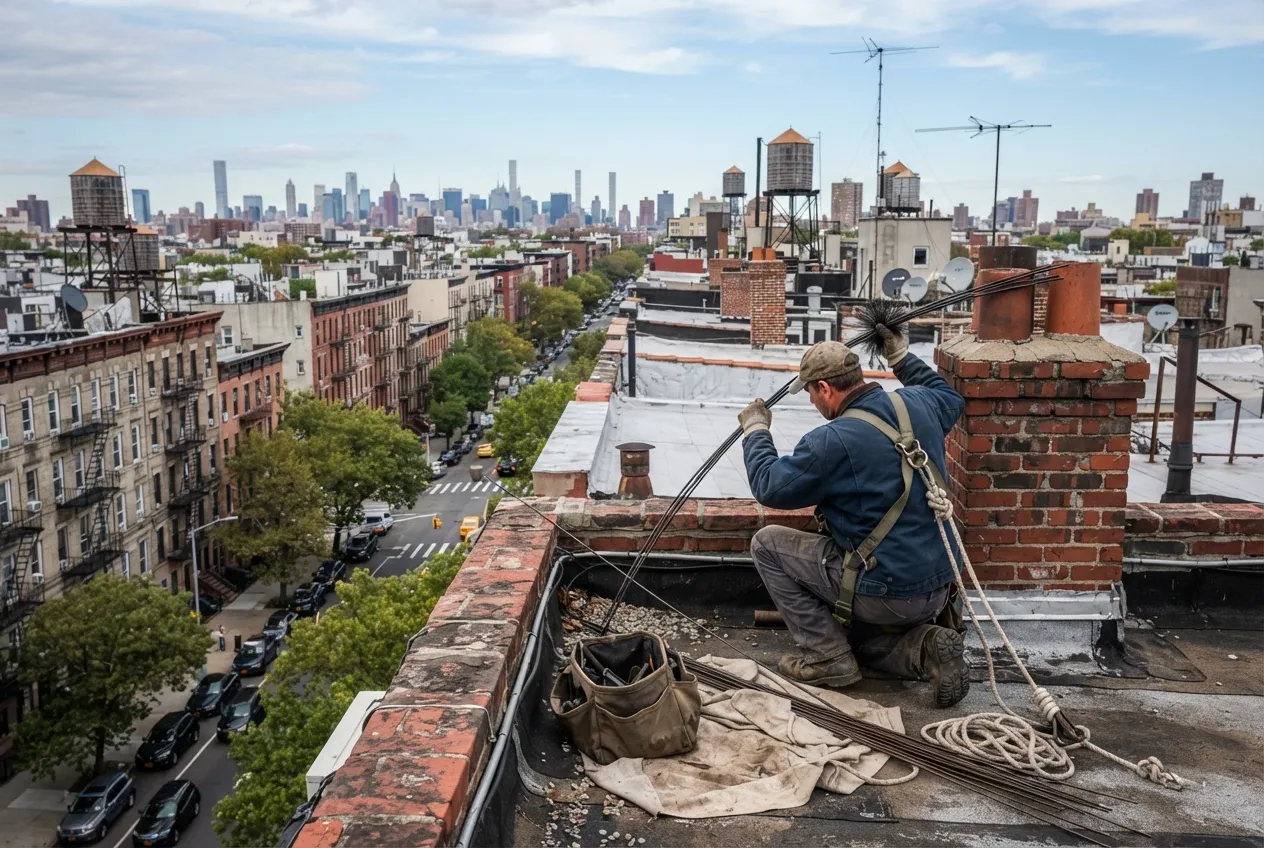
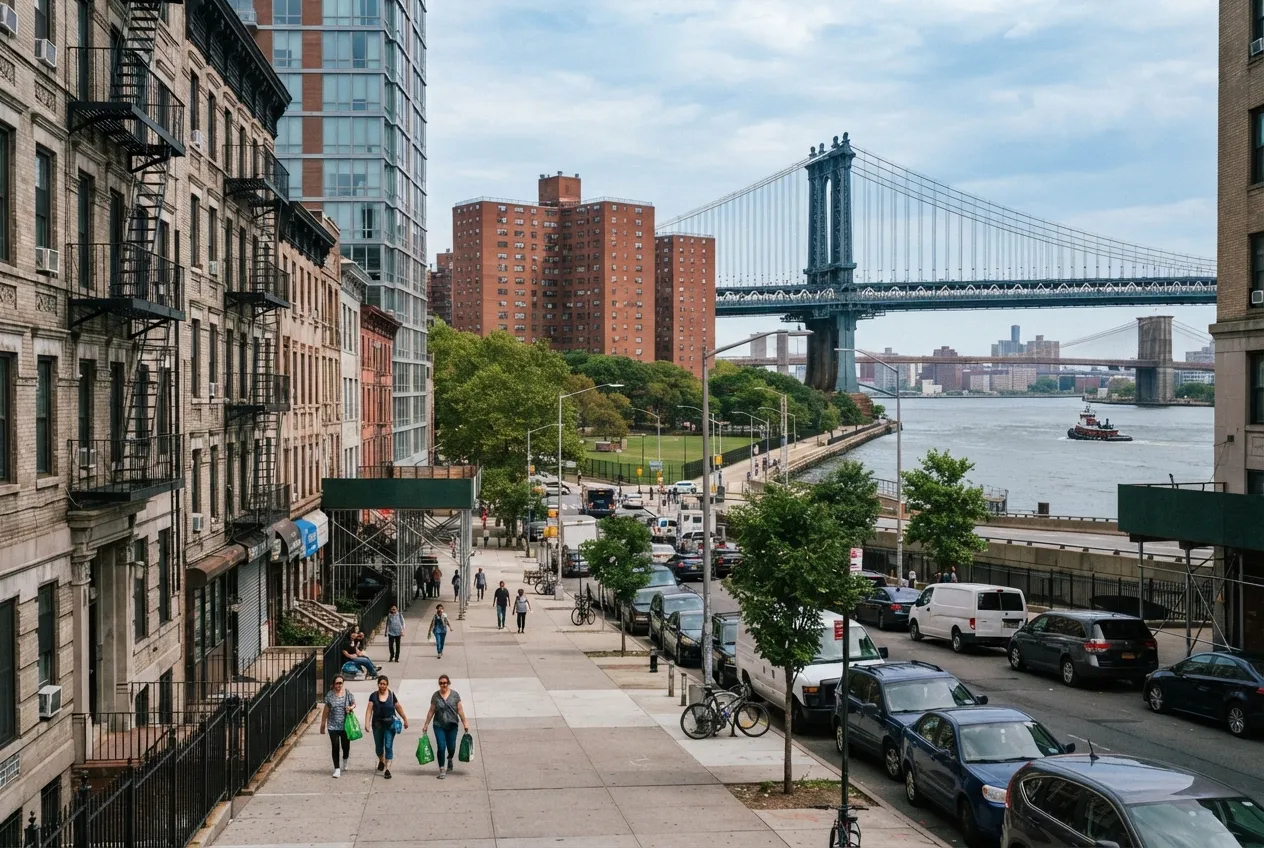
Many chimneys in Two Bridges serve older buildings: pre-war apartment buildings, walk-ups, mixed-use buildings with shops below, and the occasional rowhouse. In much of this stock, the flue lining is original, was patched years ago, or was never sized for the boiler or water heater it now vents. EmberGuard Chimney Sweep installs chimney liners for owners and managers in Two Bridges, about a mile southeast of our Manhattan office. Our certified technicians start by finding out what is actually inside your chimney, then recommend a liner that fits the appliance, the fuel and the flue.
Why older Two Bridges chimneys often need relining
A liner is the channel that carries smoke and exhaust from the appliance to the top of the chimney. It keeps heat away from the surrounding masonry and framing and keeps acidic byproducts from soaking into brick and mortar. In older buildings, the original lining may be cracked clay tile, crumbling parging, or bare brick that was never meant to handle modern equipment.
Problems we commonly look for in this neighborhood's older buildings include:
- Cracked, shifted or missing clay flue tiles
- Mortar joints eroded by years of exhaust condensation
- Flues that are too large for a newer, more efficient boiler or water heater, which can lead to poor draft and condensation
- Staining, spalling brick or white residue on the outside of the chimney
- Debris at the base of the flue that points to deterioration higher up
Oil-to-gas conversions and new liners
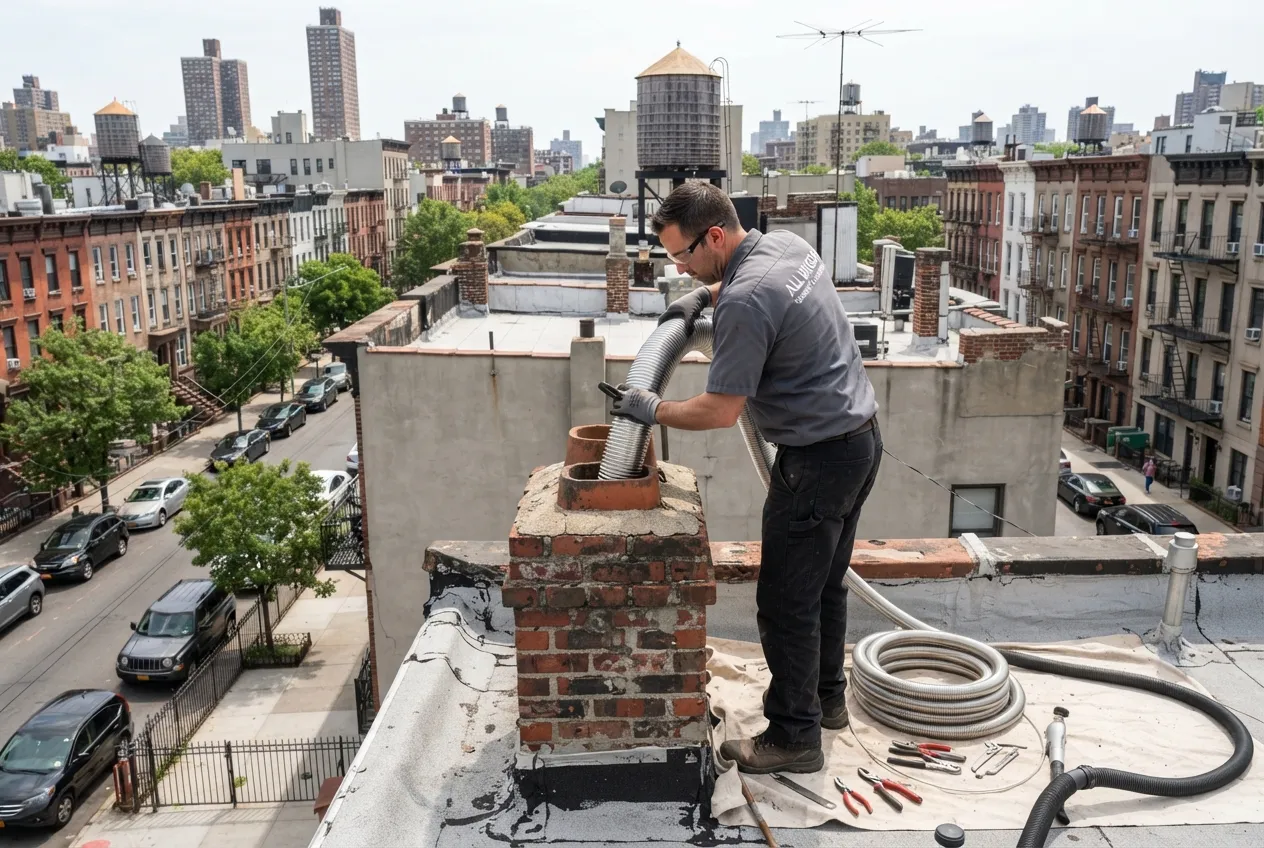
Many Manhattan buildings have switched their boilers from oil to gas. When a New York City building converts its boiler from oil to gas, the chimney has to be evaluated as part of the work. A new liner is often needed because gas exhaust produces acidic condensate that can corrode a masonry flue that handled oil without trouble.
If you are planning a conversion, it helps to involve us early. We can evaluate the existing flue, confirm whether it can be reused, and if not, size and install a liner suited to the new gas equipment so the chimney work fits into the boiler project schedule instead of holding it up.
How we approach a liner installation
The NFPA 211 standard calls for chimneys, fireplaces and vents to be inspected once a year, and it describes three inspection levels. A Level 2 inspection applies when the system changes, such as a new appliance or a switch of fuel, or when the home is sold. A Level 3 inspection is used when a hidden hazard can only be reached by opening part of the chimney or building. Most liner jobs begin with a Level 2 inspection, which usually includes a camera look down the full length of the flue.
From there, the work generally follows these steps:
- Inspect the flue, including a video scan, and document its condition
- Measure the flue and match the liner size to the appliance's venting needs
- Recommend a liner type, such as a stainless steel liner, a cast-in-place liner, or replacement tiles, based on fuel, flue shape and condition
- Clean the existing flue before installation
- Install the liner with the needed connections, insulation where appropriate, and a cap at the top
- Check the finished system and show you what was done
Time for your annual chimney check?
Planning liner work around heat season
New York City's heat season runs from October 1 through May 31. During that time, building owners must keep apartments heated to the city's minimum temperatures. For a building whose boiler vents through the chimney, relining means the heating system will be off for part of the job.
If you own or manage a multi-unit building in Two Bridges, late spring and summer are usually the easiest time to schedule relining. If an inspection during the heating months turns up a failed liner, we will talk through the options and timing with you so you can make an informed decision about tenants' heat and safety.
Serving Two Bridges and nearby neighborhoods
Two Bridges is close to our Manhattan office, so getting a technician out for an inspection or estimate visit is straightforward. We also install chimney liners in nearby Chinatown, the Lower East Side, Tribeca, Civic Center and SoHo, where many buildings have similar older chimneys and similar conversion and relining needs.
Whether you have a single fireplace flue in a rowhouse or a boiler chimney serving a full apartment building, we will explain what we find in plain terms and recommend only the work the chimney actually needs.
More services in Two Bridges
- Chimney Sweep in Two BridgesLocal service & repairs
- Chimney Inspection in Two BridgesLocal service & repairs
- Chimney Repair in Two BridgesLocal service & repairs
- Air Duct Cleaning in Two BridgesLocal service & repairs