The short answer
EmberGuard Chimney Sweep repairs masonry chimneys, crowns, flashing, caps, and flue liners for Chinatown homes and buildings. We inspect first, show you what we find, and recommend only the repairs the chimney needs to vent safely and stay watertight.
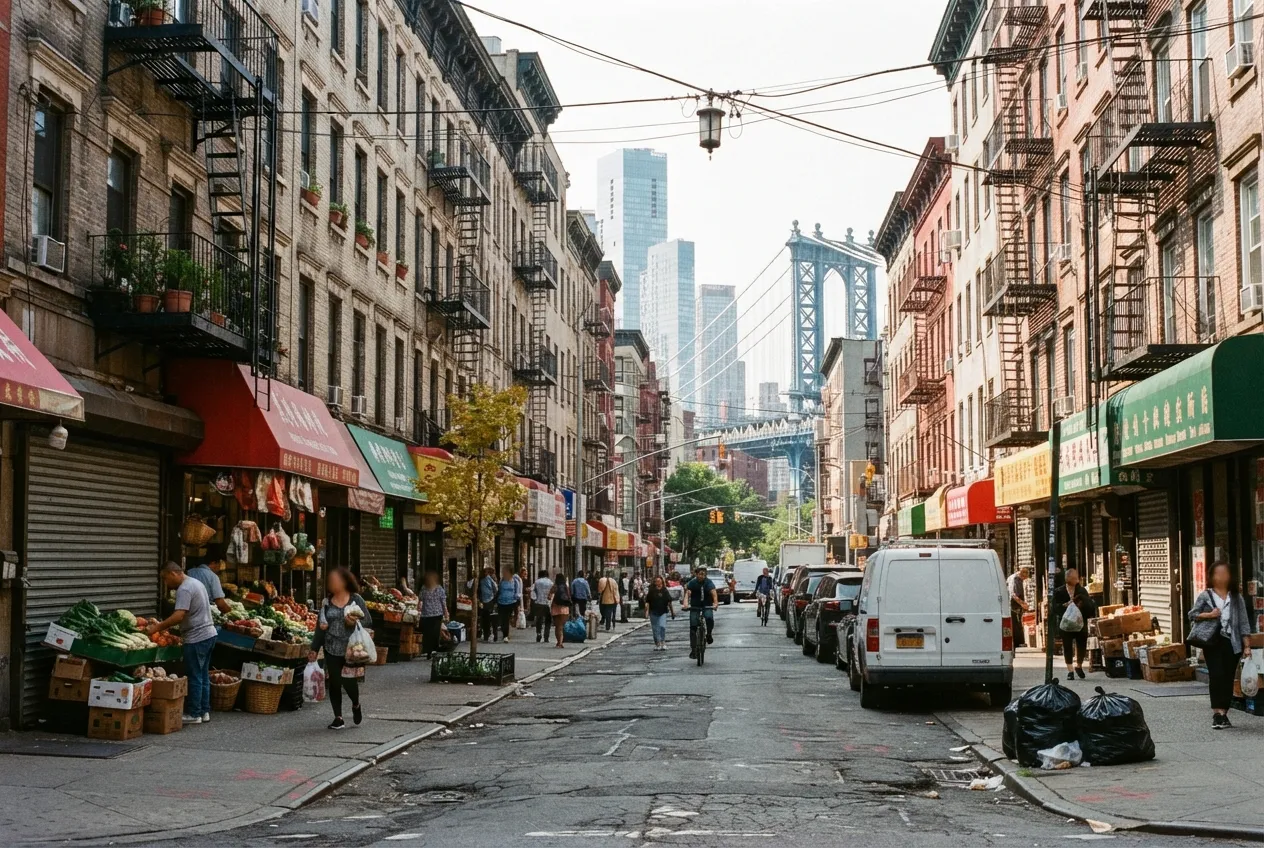
Many Chinatown chimneys have served the same building for generations. Masonry stacks rise above walk-up apartment buildings, mixed-use buildings with shops at street level, and older rowhouses, and they take a beating from freeze-thaw cycles, wind-driven rain, and decades of heating exhaust. EmberGuard Chimney Sweep repairs chimneys throughout Chinatown, about a mile southeast of our Manhattan office. Our certified technicians find what is actually failing, explain it in plain terms, and fix the problem so your chimney vents safely and keeps water out of the building.
What Chimney Repair Covers in Chinatown Buildings
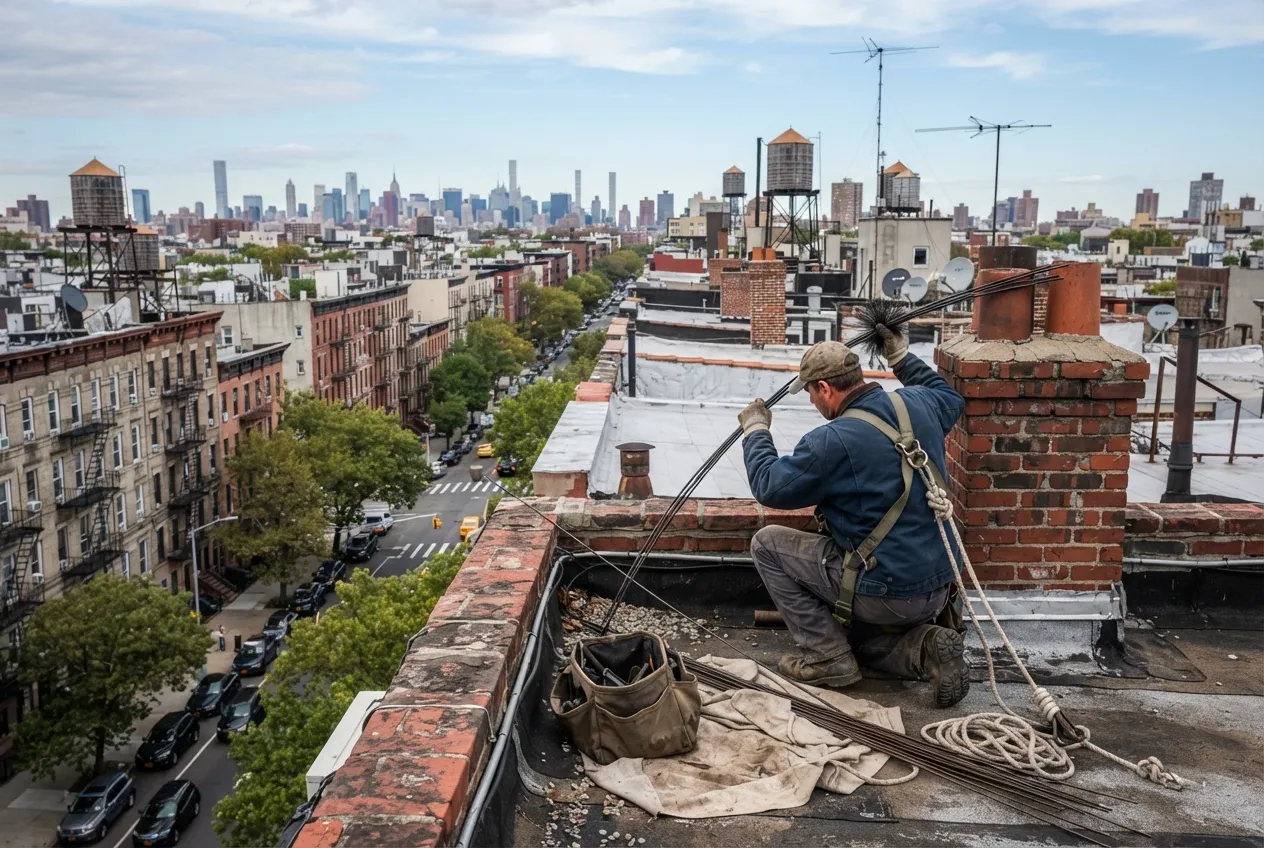
Most chimneys in Chinatown are brick, built into pre-war apartment buildings and rowhouses. Some still vent a boiler or water heater, while others serve a fireplace or have sat unused for years. Each setup wears out differently, so we start by looking at the whole system, from the roof down to the appliance connection.
Common repairs we handle include:
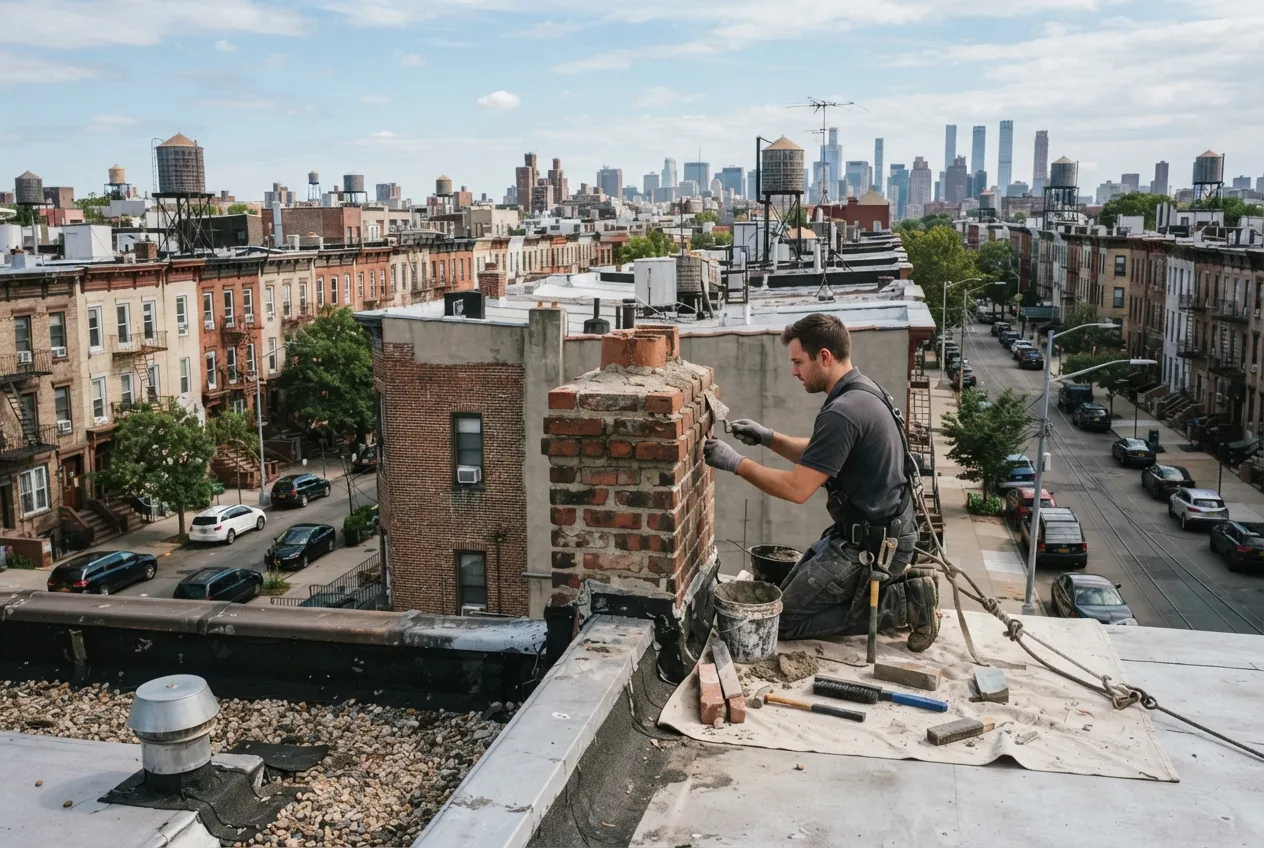
- Repointing loose or crumbling mortar joints
- Rebuilding damaged brick at the top of the stack
- Repairing or replacing cracked chimney crowns
- Resealing or replacing flashing where the chimney meets the roof
- Installing caps to keep out rain, birds, and debris
- Repairing or relining damaged flues
- Fixing fireplace dampers and firebox masonry
Signs Your Chimney Needs Repair
Chimney damage often shows up somewhere other than the chimney itself. In a multi-story building, a leak at the roof can appear as a stain on a top-floor ceiling or a damp wall well below the stack. Call us if you notice any of the following:
- Water stains or peeling paint on walls or ceilings near the chimney
- Bits of brick, mortar, or tile in the fireplace or at the base of the flue
- White, chalky deposits on exterior brick
- Gaps, rust, or lifted edges in roof flashing
- Smoke or odors coming back into the room
- A chimney that looks like it is leaning or separating from the building
Oil-to-Gas Conversions and Flue Liners
Many older Manhattan buildings have switched their boilers from oil to gas. When a New York City building makes that conversion, the chimney has to be evaluated as part of the work. A new liner is often needed, because gas exhaust produces acidic condensate that can corrode a masonry flue that was never designed for it.
If your building has already converted and the flue was not relined, or if you are planning a conversion, we can inspect the chimney and tell you whether the existing flue is suitable. When a liner is needed, we size it to the appliance it serves so exhaust moves out of the building properly.
Time for your annual chimney check?
Planning Repairs Around the Heating Season
New York City's heat season runs from October 1 through May 31. During those months, building owners must keep apartments heated to the city's minimum temperatures. A chimney problem that takes the boiler offline in January is far harder to deal with than one fixed in summer.
The NFPA 211 standard calls for chimneys, fireplaces, and vents to be inspected once a year. A Level 1 inspection fits when nothing has changed. A Level 2 inspection is used when the system changes, such as a new appliance or a fuel switch, or when the home is sold. A Level 3 inspection is needed when a hidden hazard can only be reached by opening part of the chimney or building. Scheduling your inspection in late spring or summer leaves time to finish any repairs before heat season begins.
How a Chimney Repair Visit Works
We start with an inspection, at the level the situation calls for. You get a clear explanation of what we found, with photos when they help, and a description of the repair we recommend. We do not push work the chimney does not need.
Once you approve the repair, we protect the work area, complete the job, and walk you through what was done. In shared buildings, we can coordinate access with superintendents or building managers.
Along with Chinatown, we repair chimneys in nearby Two Bridges, the Lower East Side, Tribeca, Civic Center, and SoHo.
More services in Chinatown
- Chimney Sweep in ChinatownLocal service & repairs
- Chimney Inspection in ChinatownLocal service & repairs
- Air Duct Cleaning in ChinatownLocal service & repairs
- Chimney Liner Installation in ChinatownLocal service & repairs