The short answer
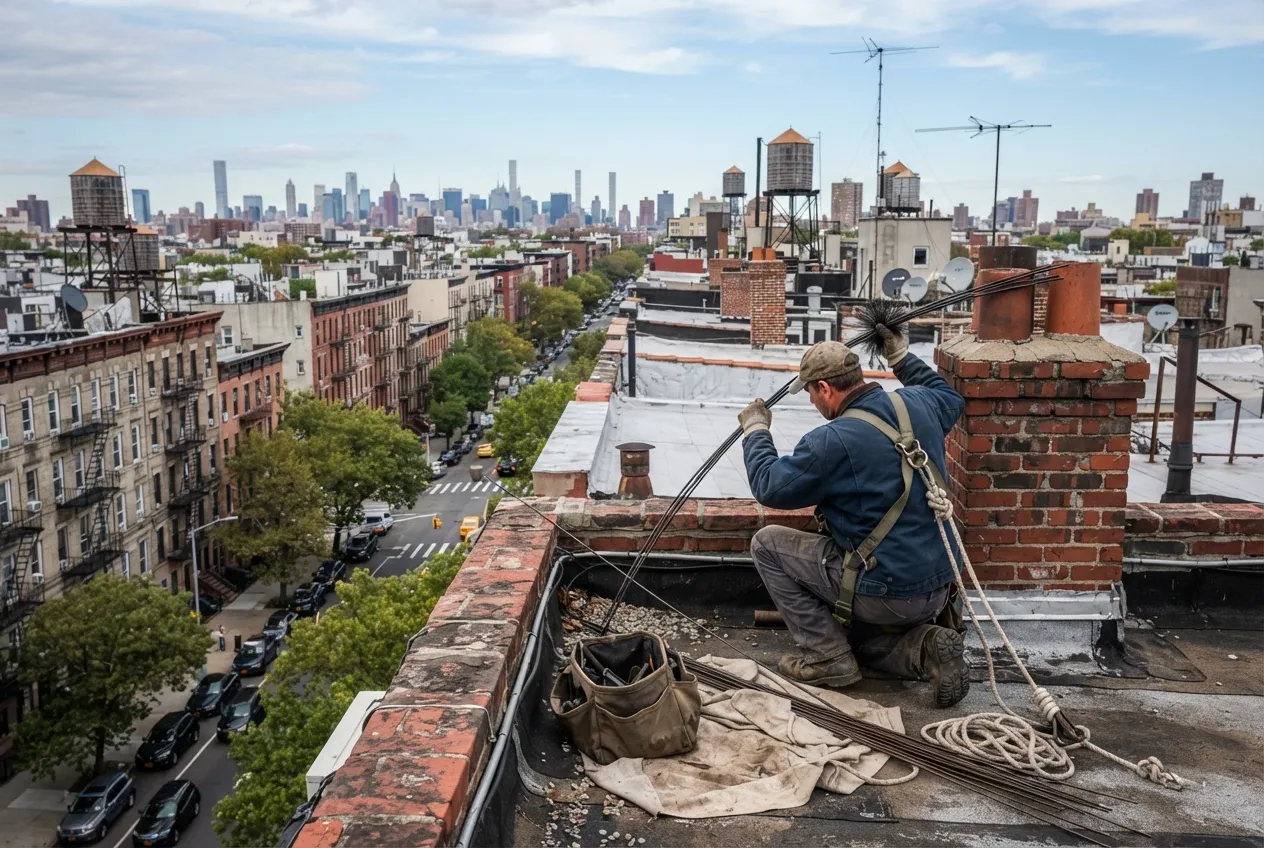
Chimney repair in Tribeca usually means fixing cracked crowns, worn mortar joints, damaged flue liners, and leaking flashing or caps on older masonry buildings. EmberGuard's certified technicians inspect the chimney first, then repair what is actually failing, including liner work after an oil-to-gas boiler conversion.
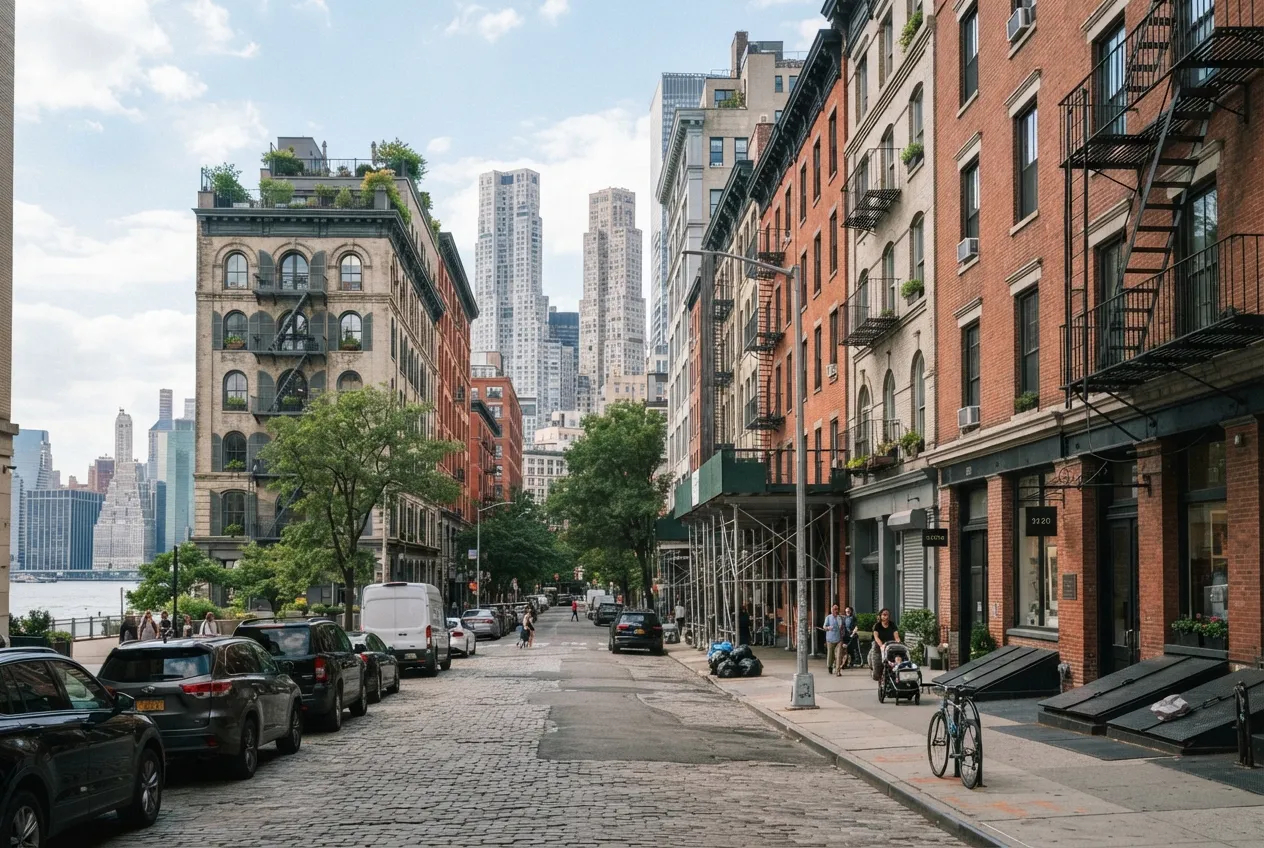
Tribeca's chimneys work in older masonry buildings: converted industrial lofts, pre-war apartment buildings, and a smaller number of rowhouses. Many of these flues were built for coal or oil and now serve gas boilers, wood-burning fireplaces, or nothing at all. That history shapes what breaks and how it should be fixed. EmberGuard Chimney Sweep is based about a mile northeast of Tribeca in Manhattan, and our certified technicians repair chimneys throughout ZIP codes 10007, 10013, 10278 and 10279. We inspect first, explain what we find in plain terms, and repair only what the chimney needs.
Repairs we see most often in Tribeca buildings
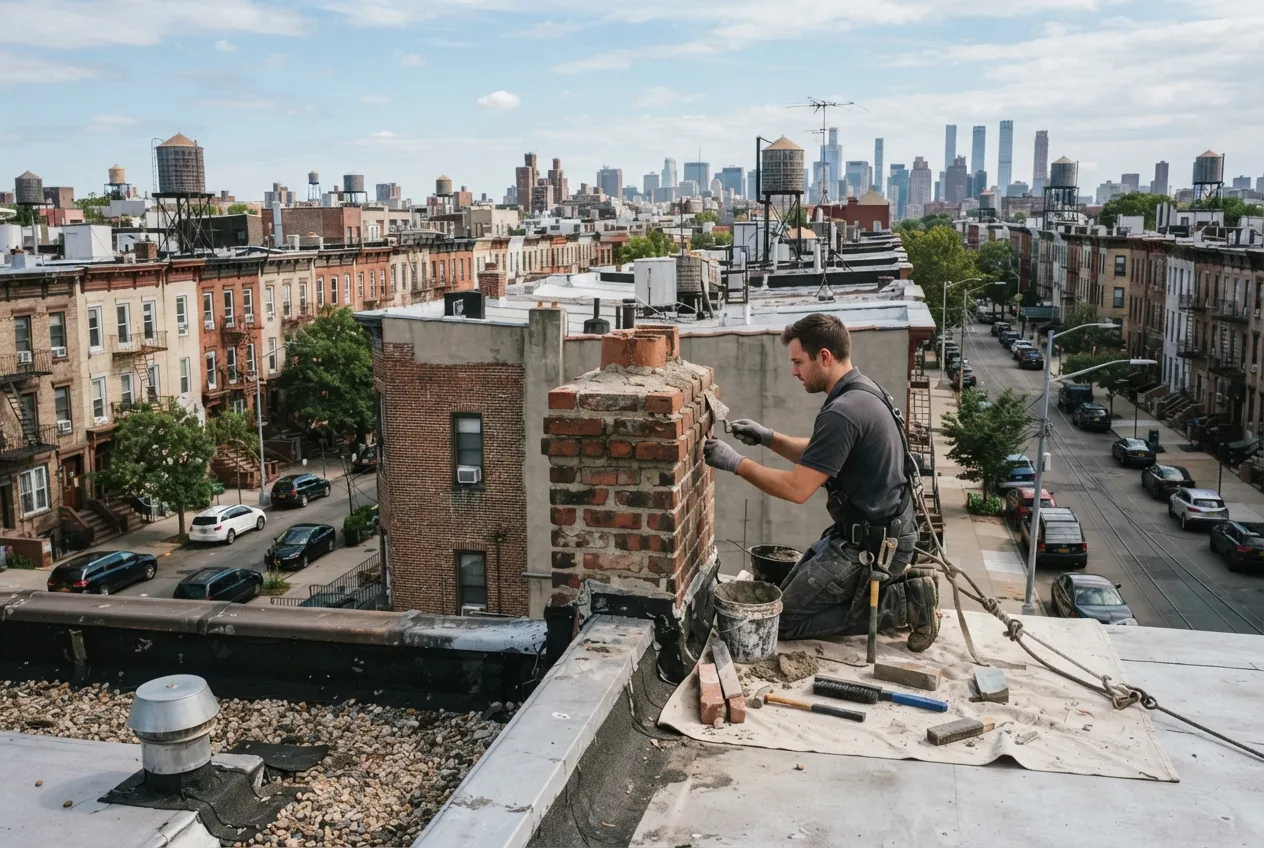
Most chimney damage here starts at the top. A crown or cap that has cracked lets water into the masonry. Freeze-and-thaw cycles then widen the gaps and push out mortar. In loft and pre-war buildings, a chimney may share a roofline with mechanical equipment, so flashing and roof-to-chimney joints take a lot of wear.
Inside the flue, the common problems are cracked clay tile liners, eroded mortar between tiles, and corrosion from boiler exhaust. Fireplaces in rowhouses and loft units often need damper or smoke chamber work after years of light, irregular use.
- Crown repair or rebuilding, and new chimney caps
- Repointing deteriorated mortar joints and replacing spalled brick
- Flashing repair where the chimney meets the roof
- Flue liner repair or full relining
- Damper, smoke chamber and firebox repairs
Inspection comes before any repair
The NFPA 211 standard calls for chimneys, fireplaces and vents to be inspected once a year, and repairs should be based on what an inspection actually shows. A Level 1 inspection covers a system that has not changed. A Level 2 inspection applies when the system changes, such as a new appliance or a switch of fuel, or when the home is sold. A Level 3 inspection is used when a suspected hazard is hidden and can only be reached by opening part of the chimney or building.
We tell you which level fits your situation and why, show you what we found, and separate urgent safety problems from items that can be planned for later.
Oil-to-gas conversions and new liners
Many Tribeca buildings have converted, or are planning to convert, their boilers from oil to gas. In New York City, the chimney has to be evaluated as part of that work. A new liner is often needed. Gas exhaust produces acidic condensate, and over time that condensate can corrode an unlined or tile-lined masonry flue.
If your building is converting, we can inspect the flue, explain whether relining is needed, and install a liner sized for the new equipment. If the conversion happened years ago without a liner, signs such as crumbling tile, debris at the base of the flue, or staining on interior walls are worth checking soon.
Time for your annual chimney check?
Planning repairs around heat season
New York City's heat season runs from October 1 through May 31. During those months building owners must keep apartments heated to the city's minimum temperatures. A chimney serving the building's boiler is hard to take out of service once heat season starts, so major boiler flue work such as relining is easier to schedule in late spring and summer.
Fireplace repairs, caps and smaller masonry fixes can often be handled year-round. Still, booking before the cold weather gives time to finish any work that cannot wait.
Working in Tribeca's multi-unit buildings
Chimney repair in a loft or apartment building usually involves more than one party. We coordinate with building management, superintendents or co-op and condo boards on roof access, scheduling and protecting common areas. For a rowhouse or single-unit owner, we work directly with you.
We also serve nearby Civic Center, SoHo, Little Italy, Hudson Square and the Financial District, where the building stock and chimney problems are much the same.
More services in Tribeca
- Chimney Sweep in TribecaLocal service & repairs
- Chimney Inspection in TribecaLocal service & repairs
- Air Duct Cleaning in TribecaLocal service & repairs
- Chimney Liner Installation in TribecaLocal service & repairs