
The short answer
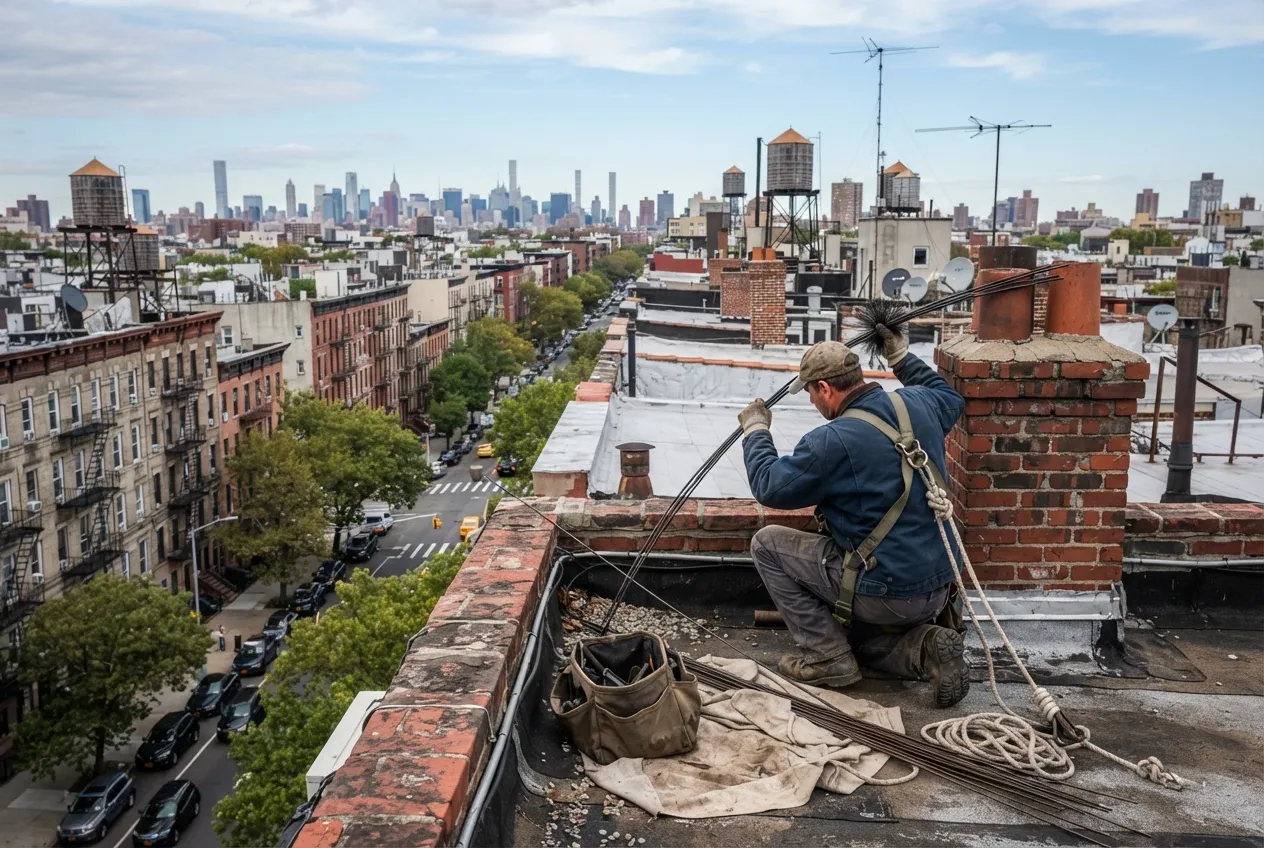
Tribeca chimneys often need a new liner when the original clay or masonry flue is cracked or deteriorated, or when a boiler converts from oil to gas and the acidic condensate from gas exhaust would damage an unlined masonry flue. EmberGuard Chimney Sweep inspects the flue first, then installs a liner sized and rated for the specific fireplace, boiler or stove it will vent.
A chimney liner is the inner wall of the flue. It carries smoke and exhaust up and out while protecting the surrounding masonry and the building around it. In Tribeca, many chimneys run through converted loft buildings, older rowhouses and pre-war apartment buildings. Over the decades they have served coal stoves, oil boilers, gas appliances and wood-burning fireplaces, sometimes all of them in turn. That history is why relining comes up so often here. EmberGuard Chimney Sweep is about a mile northeast of Tribeca in Manhattan. Our certified technicians evaluate flues, recommend the right liner for the appliance it will serve, and install it so the chimney can do its job safely.
Why Tribeca Chimneys Often Need Relining
Many Tribeca buildings were built for commercial or industrial use and later converted to homes. Others are older residential rowhouses and apartment buildings. In both cases the chimney may be older than the appliance now connected to it, and its flue may not have been built for today's heating equipment. Clay tile liners crack from heat and settling. Mortar joints erode. Some older flues were never lined at all.
A damaged or missing liner can let heat reach nearby framing, let exhaust leak into living spaces, and let moisture and acids break down the brick from the inside. Relining gives the chimney a continuous, sealed path for exhaust again.
Oil-to-Gas Conversions and Your Flue
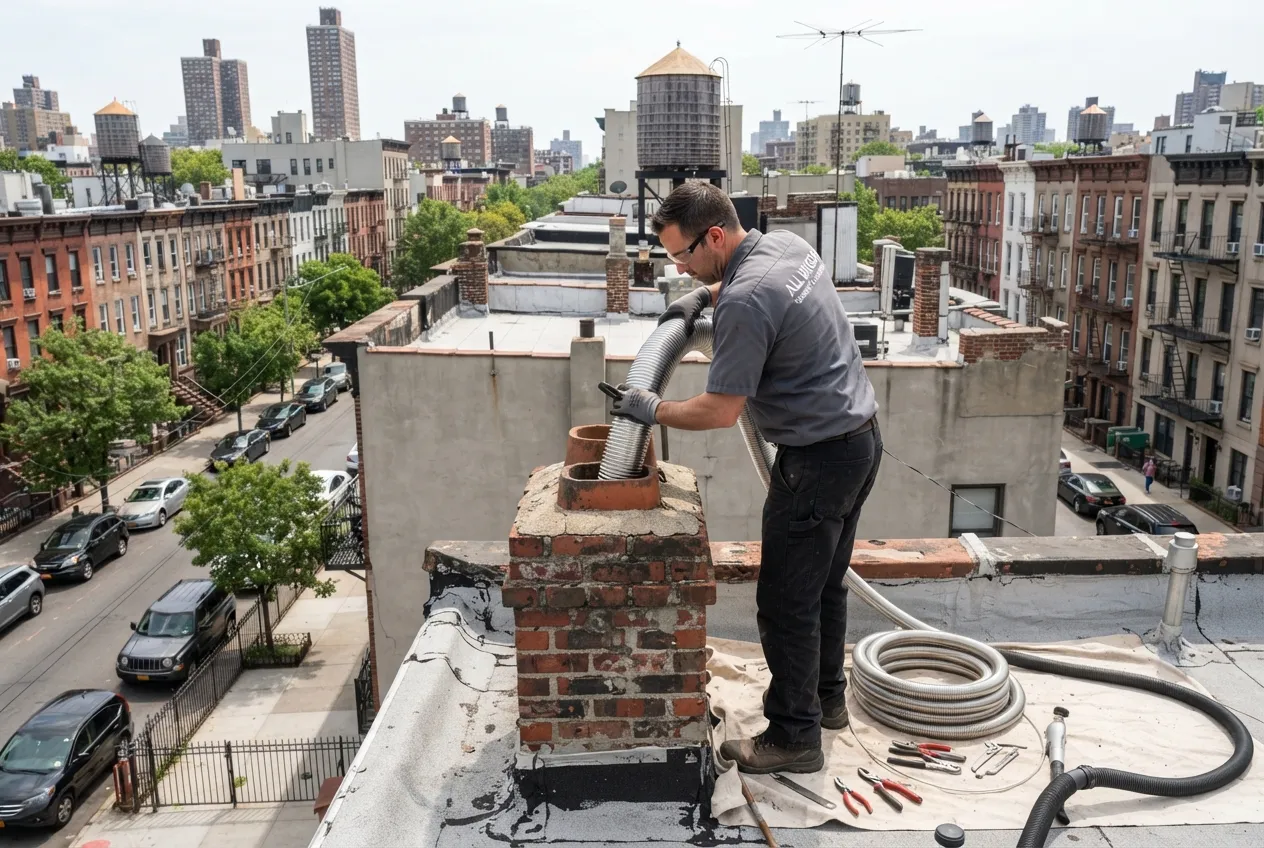
When a New York City building converts its boiler from oil to gas, the chimney has to be evaluated as part of the work. A new liner is often needed. Gas exhaust produces acidic condensate, and that condensate can corrode a masonry flue that handled oil exhaust without trouble for years.
If your building is planning a conversion, it helps to bring us in early. We can inspect the existing flue, report its condition, and size a liner for the new appliance so relining fits into the conversion schedule rather than holding it up.
How We Approach a Liner Installation
The NFPA 211 standard calls for chimneys, fireplaces and vents to be inspected once a year. It also describes inspection levels. A Level 2 inspection applies when the system changes, such as a new appliance or a switch of fuel, or when the home is sold. Relining usually follows that kind of change, so we start by looking closely at the full length of the flue.
From there, the work generally follows these steps:
- Inspect the flue, typically with a camera, to document cracks, gaps, blockages and the flue's dimensions
- Confirm what will vent into the chimney: a wood-burning fireplace, gas fireplace insert, boiler, water heater or stove
- Recommend a liner type and size matched to that appliance's exhaust and draft needs
- Clean the flue so the liner goes into a clear passage
- Install the liner with the proper connections, cap and, where called for, insulation
- Walk you through what was done and what ongoing maintenance the system needs
Time for your annual chimney check?
Choosing the Right Liner
No single liner suits every chimney. Stainless steel liners are a common choice for gas and oil appliances and for many wood-burning setups, and they can be fitted to flues with offsets. Cast-in-place liners form a new interior surface inside the existing masonry. They can make sense when the flue is irregular or the masonry needs reinforcement. Clay tile is traditional but harder to replace in an existing chimney.
Sizing matters as much as material. A liner that is too large for a modern high-efficiency boiler can cool the exhaust too quickly, which leads to condensation and weak draft. One that is too small can restrict venting. We size to the appliance, not to whatever fits.
Scheduling Around Heat Season
New York City's heat season runs from October 1 through May 31. During those months building owners must keep apartments heated to the city's minimum temperatures. Relining a boiler flue means the boiler is offline for part of the job, so for apartment buildings and multi-unit loft conversions, late spring and summer are usually the easiest time for this work.
If a problem turns up mid-winter, we will talk through options that keep the heating system's downtime as short as possible. We serve Tribeca across ZIP codes 10007, 10013, 10278 and 10279, along with nearby Civic Center, SoHo, Little Italy, Hudson Square and the Financial District.
More services in Tribeca
- Chimney Sweep in TribecaLocal service & repairs
- Chimney Inspection in TribecaLocal service & repairs
- Chimney Repair in TribecaLocal service & repairs
- Air Duct Cleaning in TribecaLocal service & repairs