The short answer
A chimney liner protects the masonry and helps exhaust leave the building safely. In Hudson Square, new liners are most often needed when an old flue has deteriorated or when a building switches appliances or converts from oil to gas. EmberGuard inspects the flue first, then installs a liner sized for the equipment it serves.
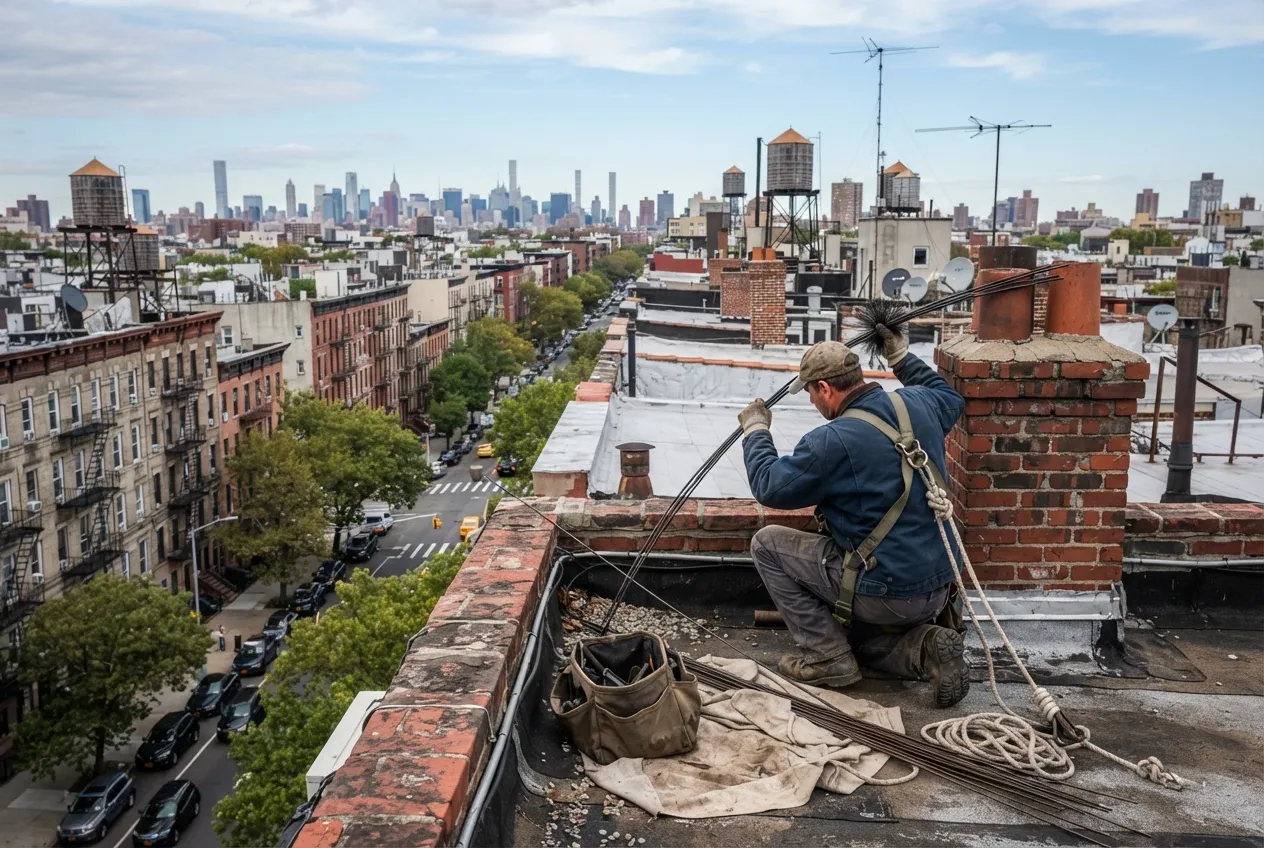
EmberGuard Chimney Sweep installs chimney liners for homes and buildings in Hudson Square, and our office is in the neighborhood at 489 Broome St. A liner is the protective channel inside a chimney that carries smoke and exhaust gases up and out of the building. When the original liner is cracked, missing, or the wrong size for the appliance it serves, heat and corrosive byproducts can reach the surrounding masonry and, in the worst cases, nearby framing or living space. It can also leave a boiler or fireplace drafting poorly. Our certified technicians inspect the flue, explain what we find in plain terms, and install a liner matched to both the appliance and the chimney.
Why liners come up so often in Hudson Square
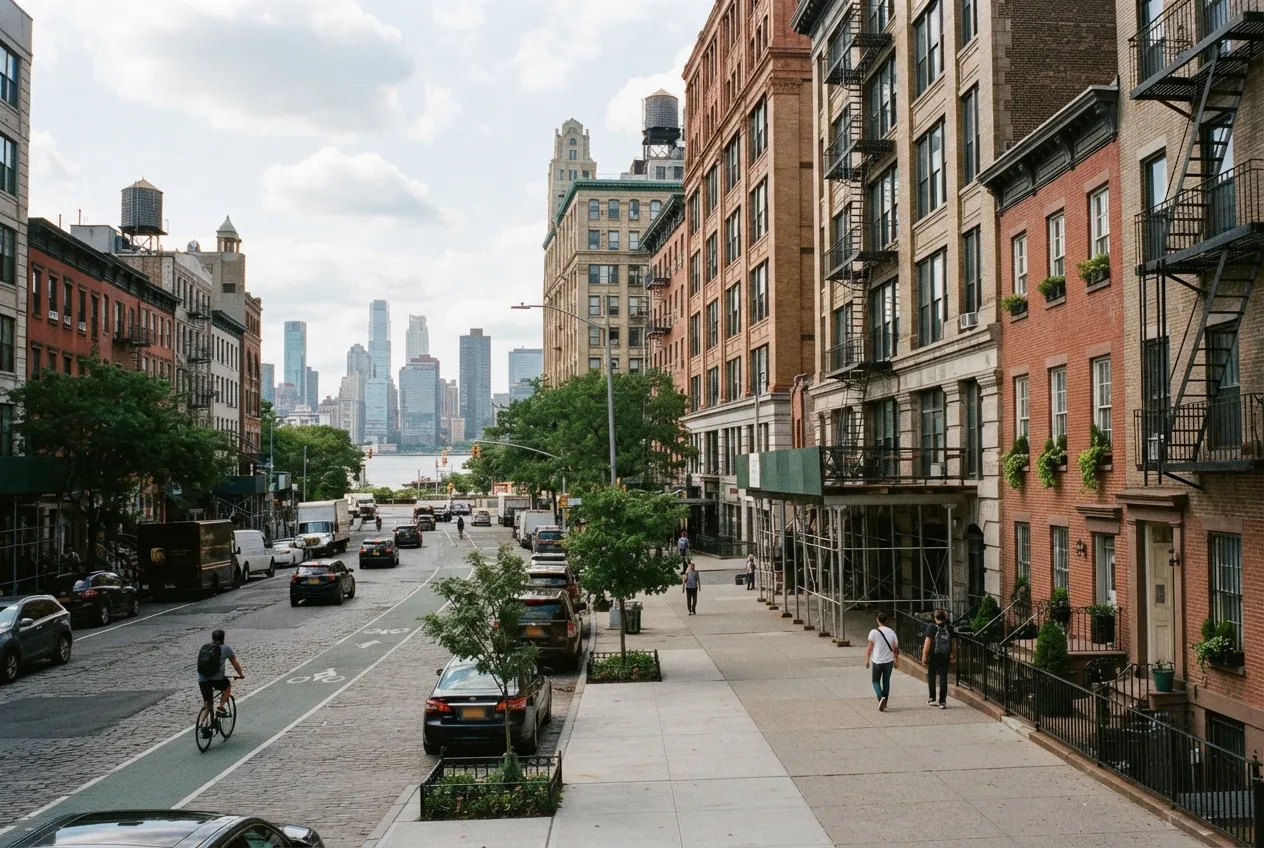
Hudson Square's housing includes pre-war apartment buildings, converted loft and commercial buildings, and older rowhouses. Many of these chimneys were built for coal or oil and have vented several generations of heating equipment since then. Over that time, clay tile liners can crack from repeated heating and cooling, mortar joints can erode, and some older flues were never lined at all.
Changes inside the building matter too. A new boiler, water heater, or fireplace insert often has different venting needs than the equipment it replaced. A flue sized for an old oil burner may be too large for a modern gas appliance to draft properly, which can lead to condensation inside the chimney and exhaust lingering where it shouldn't.
- Pieces of tile or flaking masonry collecting at the base of the flue or in the cleanout
- Staining, dampness, or white crusty deposits on walls near the chimney
- Exhaust odors or weak draft from a boiler, water heater, or fireplace
- An inspection report noting cracked, missing, or deteriorated liner sections
Oil-to-gas conversions in older Manhattan buildings
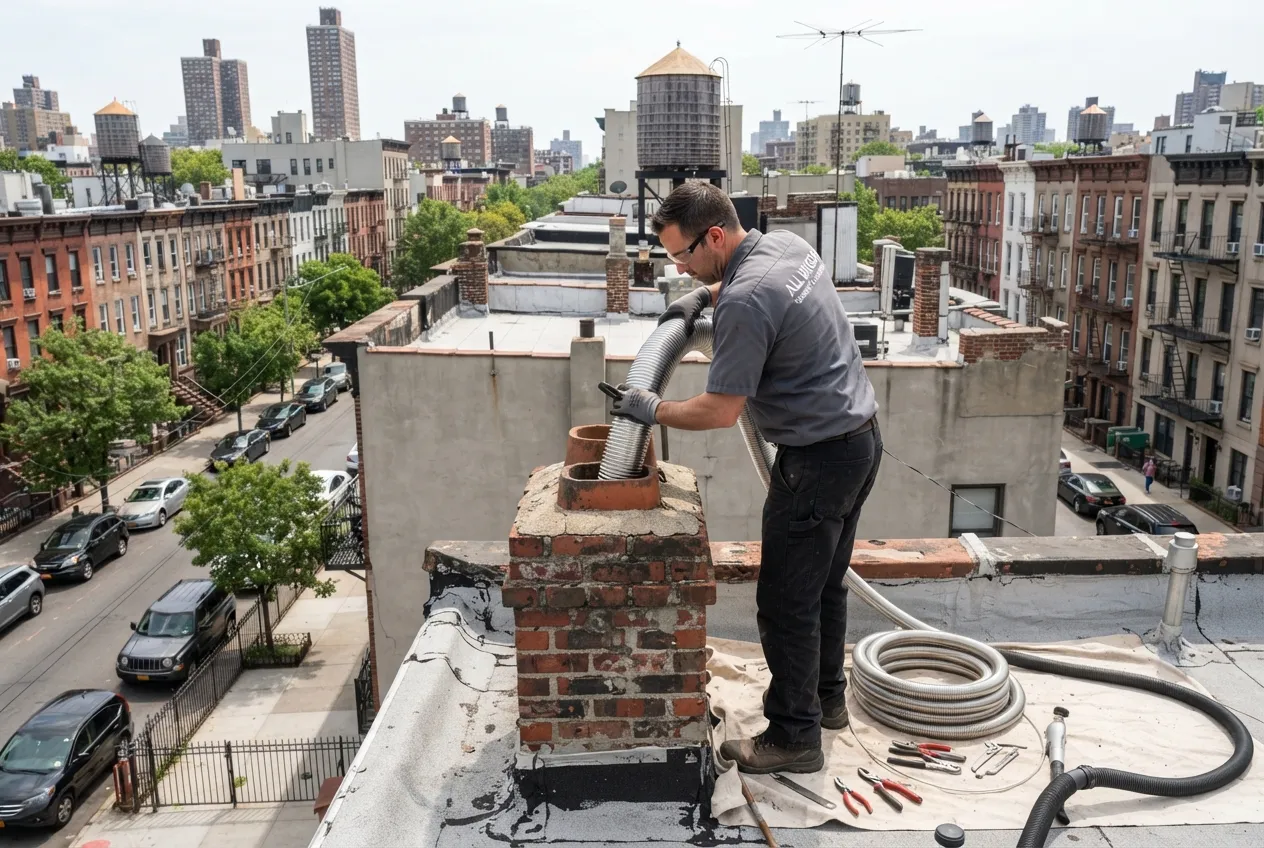
When a New York City building converts its boiler from oil to gas, the chimney has to be evaluated as part of the work. A new liner is often needed because gas exhaust produces acidic condensate that can corrode a masonry flue. A chimney that held up for decades under oil can begin to break down after the switch if it isn't lined for the new fuel.
We work with owners, building managers, and their heating contractors to evaluate the chimney, confirm what the new appliance requires, and install a liner sized for it. Coordinating early keeps the chimney work from holding up the boiler installation.
Inspection comes first
The NFPA 211 standard calls for chimneys, fireplaces, and vents to be inspected once a year. Chimney professionals use three inspection levels: Level 1 when nothing has changed, Level 2 when the system changes, such as a new appliance or a switch of fuel, or when the home is sold, and Level 3 when a hidden hazard has to be reached by opening part of the chimney or building.
Because a liner project usually involves a change to the system or a suspected problem inside the flue, we typically start with a Level 2 inspection, which commonly includes running a camera through the flue. We share photos or video of what we see and explain whether the existing liner can be repaired or should be replaced. If something can't be reached without opening a wall or the chimney, we tell you that before any further work is done.
Time for your annual chimney check?
Liner options we install
The right liner depends on the fuel, the appliance, and the shape and condition of the flue. Many chimneys in older Manhattan buildings have offsets, irregular dimensions, or shared walls, so we measure carefully before recommending a material.
- Stainless steel liners, rigid or flexible, commonly used to reline existing flues for gas and oil appliances and fireplace inserts
- Cast-in-place liners, a mortar-type material formed inside the flue, which can be useful where the masonry itself needs reinforcement
- Clay tile liners, the traditional option, mostly used when a chimney is being rebuilt
- Insulation around metal liners where it's needed for proper draft and clearance to nearby materials
Planning around heat season and serving nearby neighborhoods
New York City's heat season runs from October 1 through May 31, when building owners must keep apartments heated to the city's minimum temperatures. Because relining a boiler flue usually means shutting the boiler down during the work, many owners schedule liner projects in late spring or summer. If a problem turns up in the middle of winter, we plan the job with you and your heating contractor to keep the time without heat as short as we reasonably can.
From our Hudson Square office in ZIP code 10012, we also install chimney liners in SoHo, Little Italy, Tribeca, Civic Center, and Greenwich Village, where many buildings share the same pre-war construction and older flues.
More services in Hudson Square
- Chimney Sweep in Hudson SquareLocal service & repairs
- Chimney Inspection in Hudson SquareLocal service & repairs
- Chimney Repair in Hudson SquareLocal service & repairs
- Air Duct Cleaning in Hudson SquareLocal service & repairs