The short answer
The NFPA 211 standard calls for chimneys, fireplaces and vents to be inspected once a year. In the West Village, that usually means a Level 1 inspection, or a Level 2 if you've changed appliances or fuel or are buying or selling. EmberGuard inspects fireplaces, boiler flues and vents across the 10014 ZIP code.
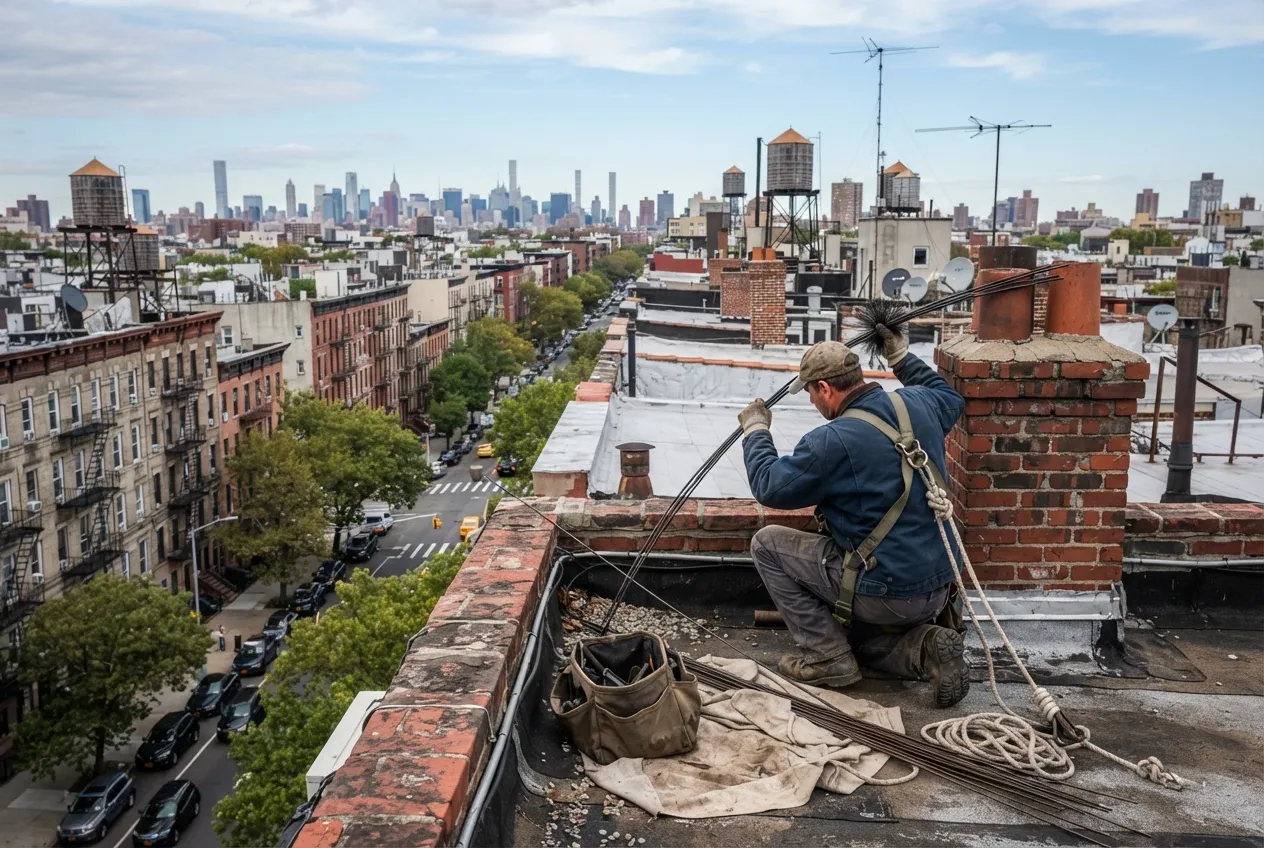
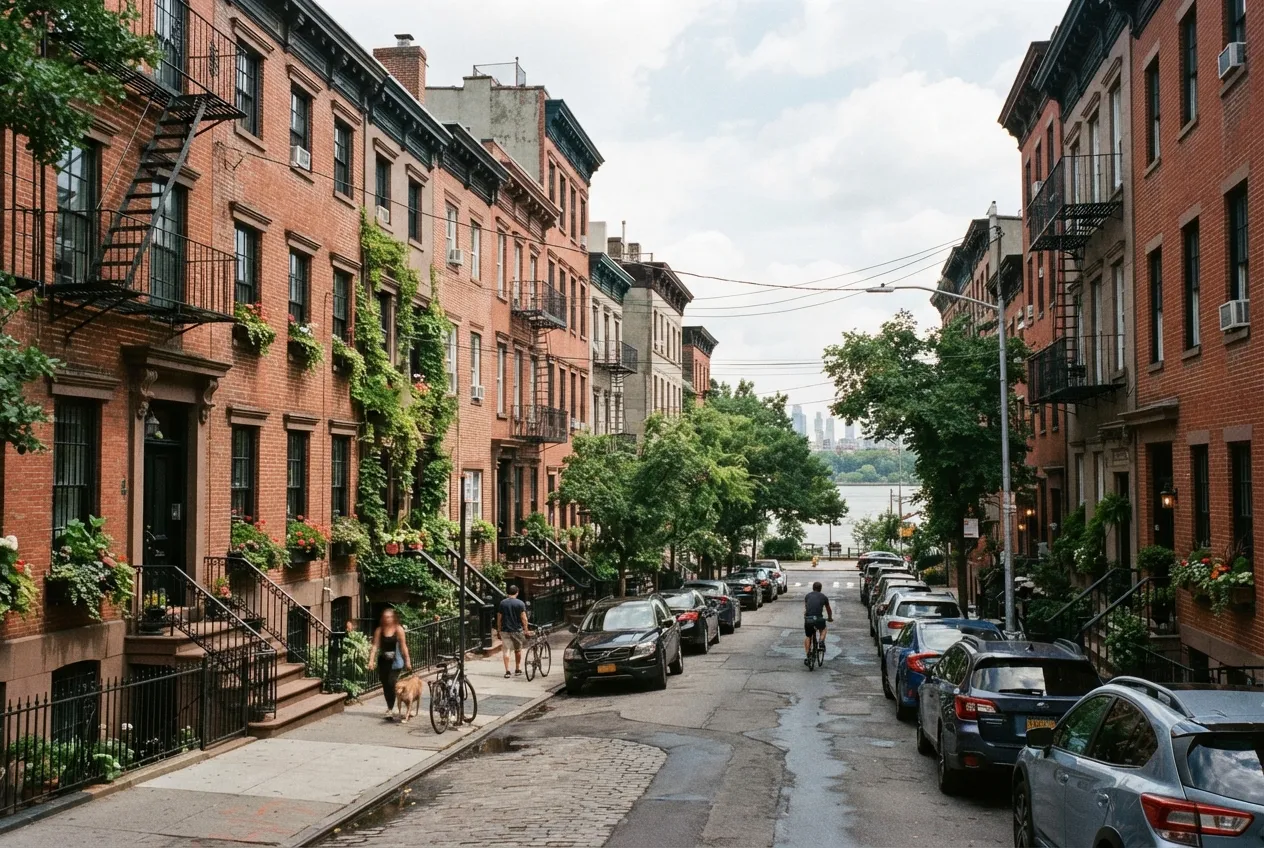
West Village homes put a lot of demands on their chimneys. Many fireplaces, boiler flues and vents in the neighborhood's rowhouses, brownstones, townhouses and pre-war apartment buildings have been in use for generations, and some have been through several changes of fuel and equipment. EmberGuard Chimney Sweep inspects chimneys throughout the 10014 ZIP code, about a mile north of our Manhattan office. Our certified technicians check that your chimney can safely carry smoke and exhaust out of your home, and they explain in plain terms what they find and what, if anything, needs attention.
Why West Village Chimneys Need a Yearly Inspection
The NFPA 211 standard calls for chimneys, fireplaces and vents to be inspected once a year, even if you rarely use the fireplace. A chimney can deteriorate whether or not you light fires in it. Weather wears on exposed masonry above the roofline. Mortar joints loosen over time. Debris, nests or fallen material can partly block a flue that hasn't been used in a while.
In older Manhattan masonry, problems often stay hidden. A flue can look fine from the hearth while a cracked tile or gap higher up lets heat or exhaust reach parts of the building it shouldn't. A yearly inspection catches these issues while they are still easier to fix and before they affect your household or your neighbors.
Choosing the Right Inspection Level
Chimney professionals use three inspection levels. Which one you need depends on what has changed in your home. We'll recommend a level based on your situation and won't push a deeper inspection than the conditions call for.
- Level 1: For a chimney in regular use when nothing about the system has changed. We examine the readily accessible parts of the chimney, the fireplace or appliance connection, and the flue for obstructions and buildup.
- Level 2: When the system changes, such as a new boiler, furnace, stove or insert, or a switch of fuel. It also applies when a home is sold. This is a more thorough check of the accessible parts of the chimney, often including a video scan of the flue's interior.
- Level 3: When a hidden hazard is suspected and the only way to reach it is to open part of the chimney or building. This level is uncommon and is only recommended when earlier findings point to a concealed problem.
What We Check in Rowhouses, Brownstones and Pre-War Buildings
West Village housing tends to share certain traits. Chimneys often serve several floors, run alongside party walls, and may have more than one flue in a single stack. Some flues were built for wood or coal and later adapted for other uses. Our inspection takes these conditions into account. We look at:
- The firebox, damper and smoke chamber for cracks, gaps and wear
- Flue liners for cracks, missing sections, corrosion or separation
- Creosote and soot buildup in wood-burning fireplaces
- Obstructions such as debris, nests or fallen masonry
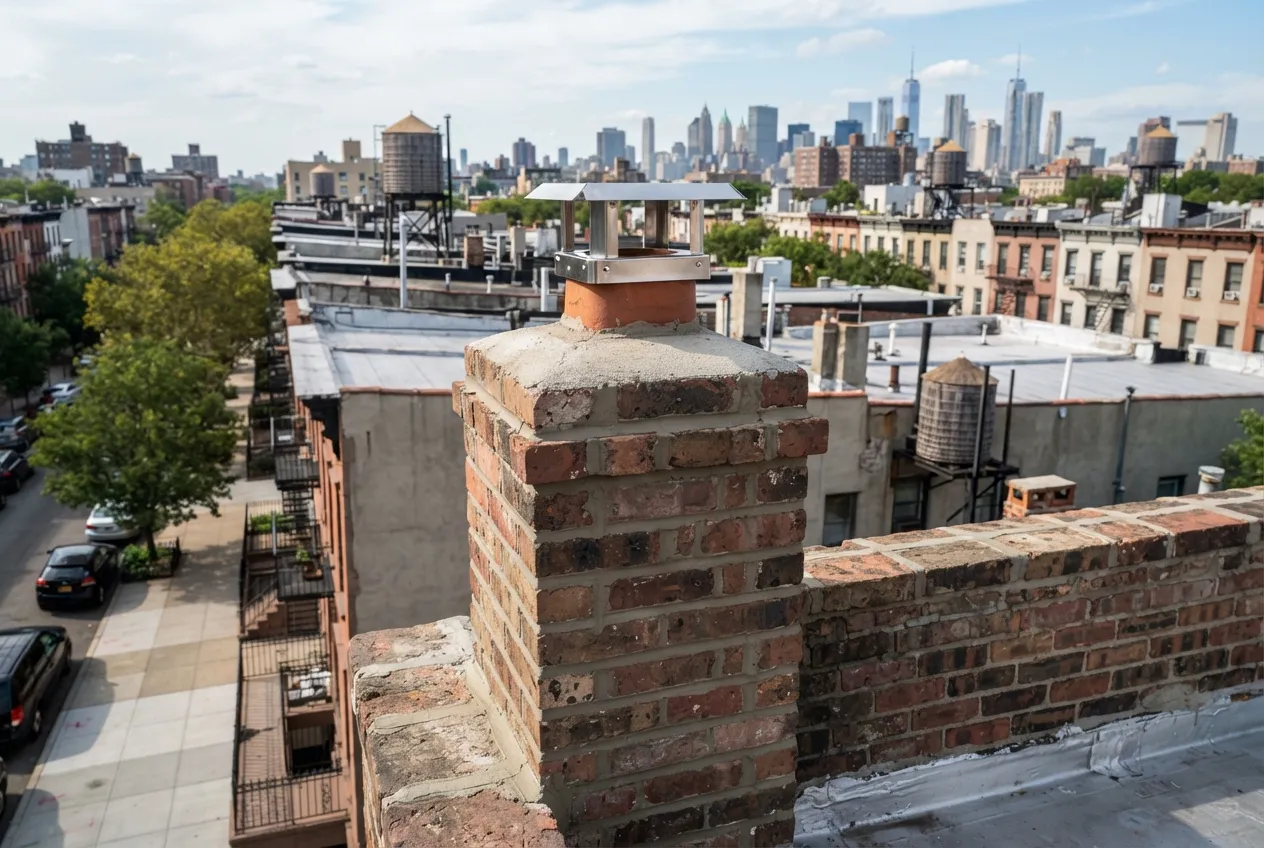
- The chimney crown, cap and exterior brick and mortar where they can be reached
- Connections between boilers, water heaters or stoves and the flue they vent into
- Signs of water getting in, such as staining, spalling brick or rust
Time for your annual chimney check?
Oil-to-Gas Conversions and Chimney Liners
Many Manhattan buildings have converted boilers from oil to gas. When a New York City building makes that switch, the chimney has to be evaluated as part of the work. A new liner is often needed because gas exhaust produces acidic condensate that can corrode a masonry flue.
If your building is planning a conversion, or has finished one and the chimney was never fully looked at, a Level 2 inspection will show whether the existing flue is suitable for the new equipment. We'll describe the condition of the flue and explain your options so you can plan the work with your contractor or building management.
Timing Your Inspection Around Heat Season
New York City's heat season runs from October 1 through May 31. During those months, building owners must keep apartments heated to the city's minimum temperatures. For buildings that rely on a boiler venting through a masonry chimney, a flue problem found in the middle of winter can be hard to deal with.
Scheduling your inspection in late spring or summer gives you time to handle repairs, liner work or cleaning before the heating system is needed again. Homeowners with wood-burning fireplaces also benefit from an off-season inspection, so the fireplace is ready for the first cold evening.
Serving West Village and Nearby Neighborhoods
We inspect chimneys throughout the West Village and in the surrounding neighborhoods of Greenwich Village, SoHo, Little Italy, Hudson Square and Tribeca. Our office is close by in Manhattan, so we know the building types in this part of the borough. We can work with homeowners, co-op and condo boards, and building managers to schedule access to roofs, cellars and shared areas. After the inspection, you'll get a clear explanation of what we found and a recommendation on next steps.
More services in West Village
- Chimney Sweep in West VillageLocal service & repairs
- Chimney Repair in West VillageLocal service & repairs
- Air Duct Cleaning in West VillageLocal service & repairs
- Chimney Liner Installation in West VillageLocal service & repairs