The short answer
A chimney liner keeps heat, exhaust and acidic condensate away from your chimney's masonry. In the West Village, liners are most often needed after an oil-to-gas boiler conversion, a new appliance, or an inspection that finds a cracked or missing flue lining.
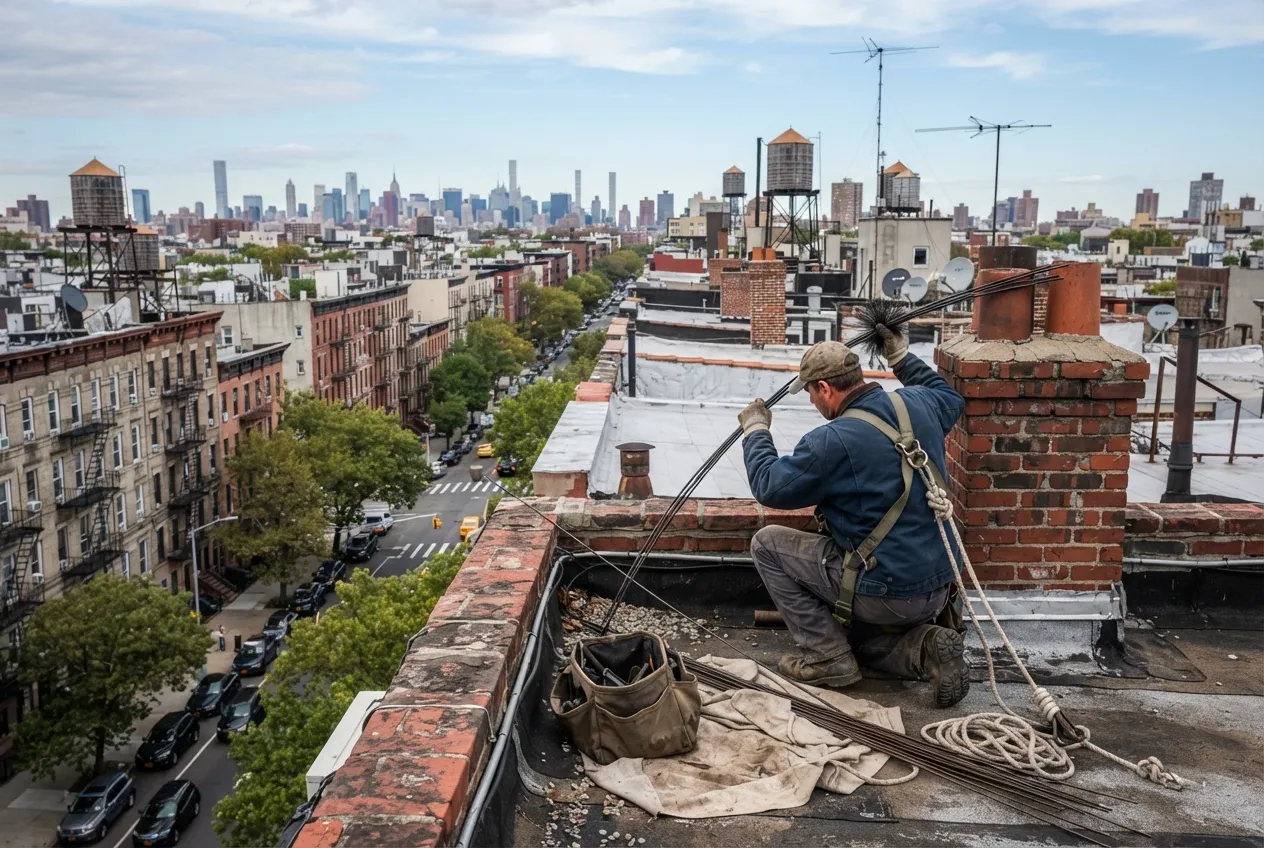
Many West Village homes have chimneys built long before today's heating equipment existed. A flue that worked for a coal grate or an old oil burner may not be safe for a modern gas boiler, a high-efficiency water heater, or a fireplace insert. A chimney liner is the protective channel inside the masonry that carries smoke and exhaust safely out of the house. EmberGuard Chimney Sweep installs and replaces chimney liners for brownstones, rowhouses and pre-war apartment buildings in the 10014 ZIP code. Our office is about a mile south, so our certified technicians can reach your home without a long trip across the city.
Why Older West Village Chimneys Often Need a New Liner
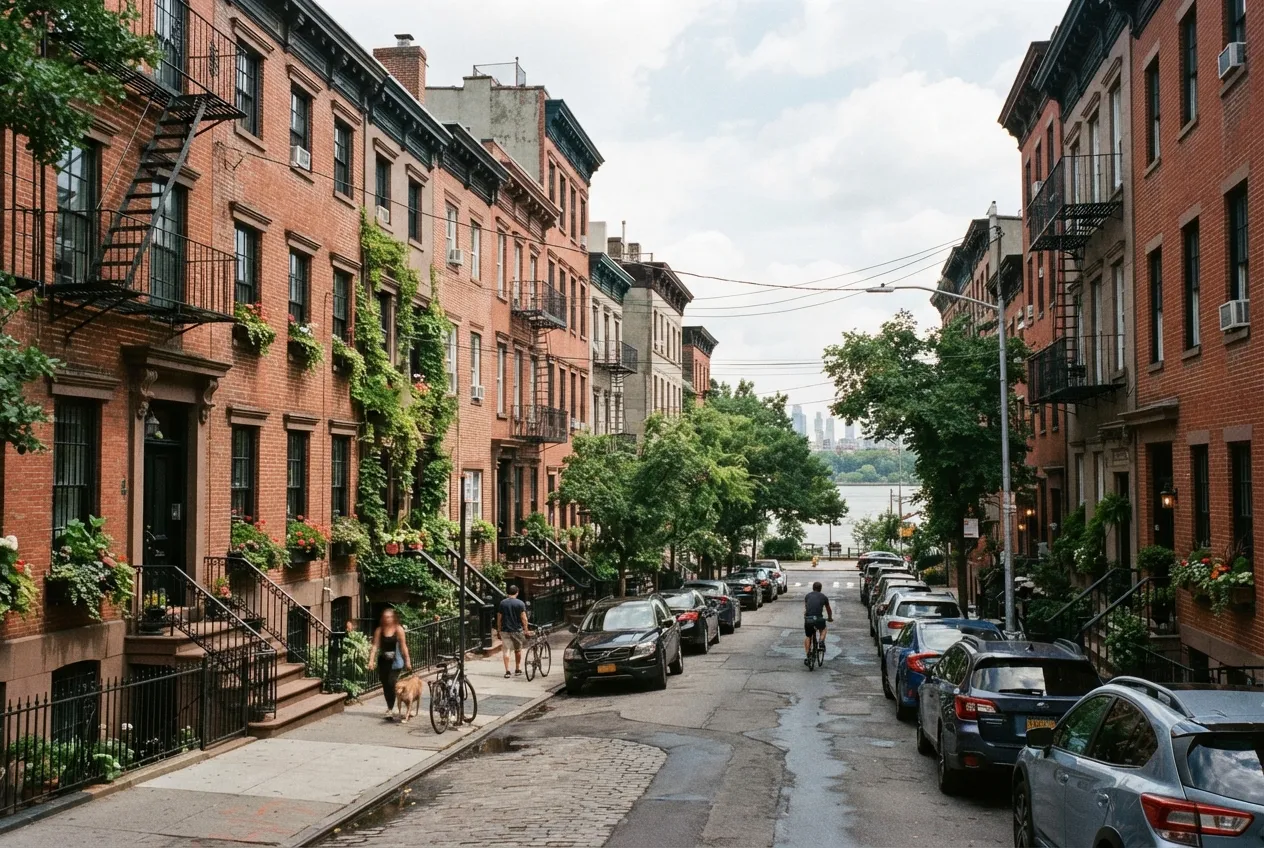
Brownstones and rowhouses in the neighborhood commonly have chimneys lined with clay tile, or with no liner at all, just the inside face of the brick. Over decades, freeze-thaw cycles, settling and repeated heating can crack tiles and wear away mortar joints. Those gaps let heat reach nearby wood framing and let exhaust, including carbon monoxide, seep into walls, attics or neighboring units.
Shared walls make this more serious. In attached homes and multi-unit buildings, one damaged flue can affect more than one household. A properly sized, continuous liner closes those gaps and gives exhaust a smooth, sealed path to the top of the chimney.
Oil-to-Gas Conversions and Your Chimney
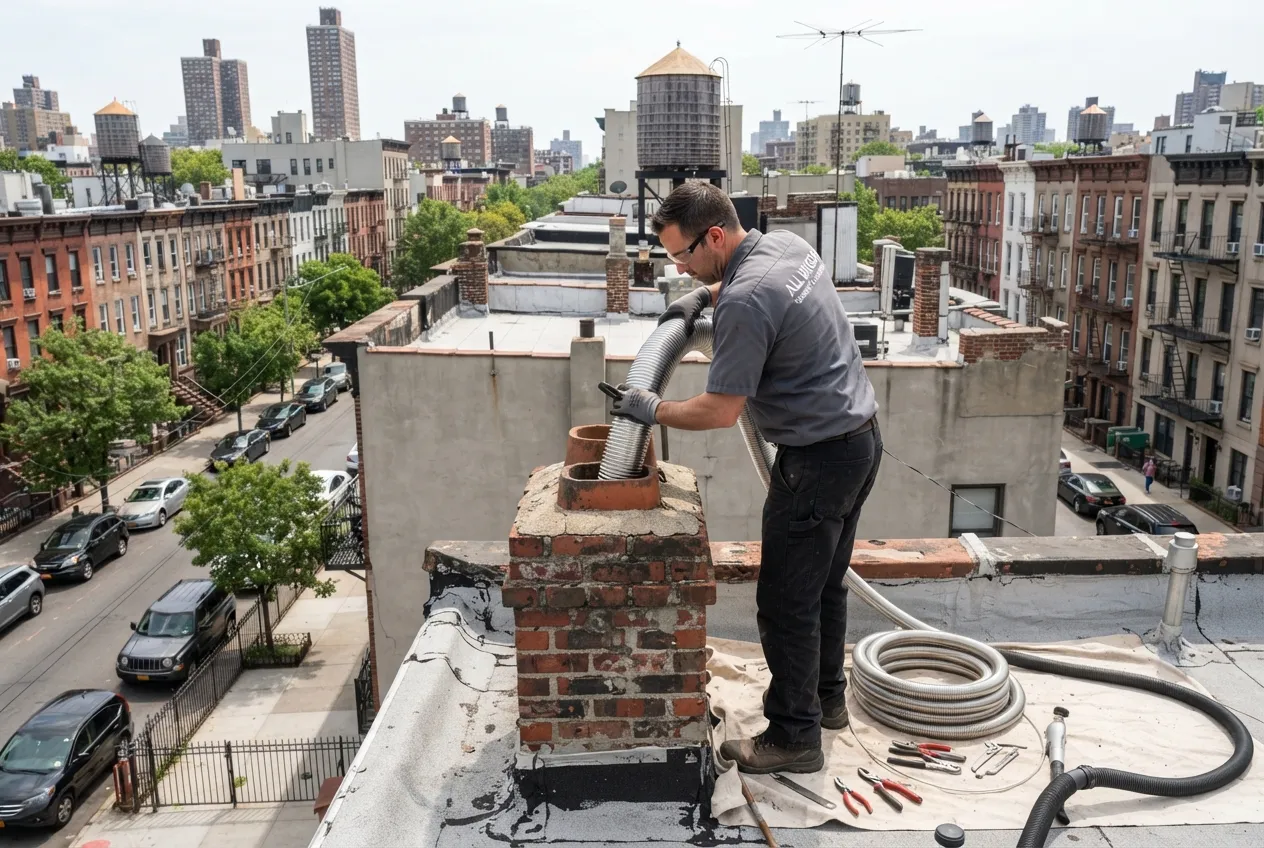
When a New York City building converts its boiler from oil to gas, the chimney has to be evaluated as part of the work. A new liner is often needed because gas exhaust produces acidic condensate. That moisture can corrode a masonry flue from the inside, breaking down mortar and tile in ways that aren't visible from the roof or the basement.
If you are planning a conversion, it helps to bring us in early. We can evaluate the existing flue, confirm what the new appliance requires, and size a liner so the boiler installation isn't held up waiting on chimney work.
How We Handle a Liner Installation
The NFPA 211 standard calls for chimneys, fireplaces and vents to be inspected once a year, and it describes three inspection levels. A Level 2 inspection applies when the system changes, such as a new appliance or a switch in fuel, or when a home is sold. That makes it the usual starting point before relining. If a hidden problem has to be reached by opening part of the chimney or building, a Level 3 inspection may be needed.
From there, a typical project looks like this:
- Inspect the flue, including a camera inspection of its interior, to document cracks, gaps, blockages and the current lining.
- Confirm the appliance type, fuel and exhaust requirements so the liner is the correct size and material.
- Clean the flue and clear debris before any new liner goes in.
- Install the liner from the top of the chimney down, connecting it to the appliance and sealing the top with a cap.
- Check draft and connections, then walk you through what was done and what to watch for.
Time for your annual chimney check?
Choosing the Right Liner Material
There isn't one liner that fits every chimney. Stainless steel liners are a common choice because they handle gas, oil and wood exhaust and can be routed through flues that shift slightly as they rise. Cast-in-place liners, which form a new interior surface inside the existing chimney, can make sense when the masonry itself needs reinforcement. Replacement clay tile is sometimes an option for straight, accessible flues.
We recommend a material based on your appliance, the condition and shape of the flue, and how the chimney is used. A liner that is too large or too small for the appliance can cause poor draft and condensation, so sizing matters as much as material.
Scheduling Around Heat Season and Building Access
New York City's heat season runs from October 1 through May 31, when building owners must keep apartments heated to the city's minimum temperatures. For buildings with a central boiler, liner work that takes the heating system offline is easiest to schedule in late spring or summer. If a problem turns up mid-season, we'll talk through ways to keep downtime as short as possible.
Roof access in attached homes and co-op or condo buildings often requires coordination with a super, board or neighbor. We're glad to work with building management on timing. Along with the West Village, we install liners in Greenwich Village, SoHo, Little Italy, Hudson Square and Tribeca.
More services in West Village
- Chimney Sweep in West VillageLocal service & repairs
- Chimney Inspection in West VillageLocal service & repairs
- Chimney Repair in West VillageLocal service & repairs
- Air Duct Cleaning in West VillageLocal service & repairs